


With 7 dead after teachers' union clash, Mexican bishop calls for prayer
Mexico City, Mexico, Jun 23, 2016 / 12:28 am (CNA) - Archbishop José Luis Chavez Botello of Antequera-Oaxaca, México, called for intensifying prayer for peace after clashes between authorities and a teachers' union left at least seven dead and more than 50 injured.
Since June 11, the National Coordinator of Education Workers (CNTE) in the state of Oaxaca in southern Mexico has held a series of demonstrations against the educational reforms undertaken by the government of President Enrique Peña Nieto. The protests included blocking highways connecting Mexico City and the states of Puebla, Veracruz, Chiapas and Guerrero.
The Oaxaca Department of Public Safety says that it deployed 800 officers on June 19. During the confrontation between demonstrators and authorities, at least seven people died and 51 were injured.
The authorities are blaming alleged infiltrators among the demonstrators, saying “civilians, so far unidentified, fired shots against elements of public safety and the civilian population.”
However, they stated that they will open investigations to “determine who is responsible for what.”
According to the teachers' union, 10 people were killed, including teachers and parents.
In a statement released June 20, the Archdiocese of Antequera-Oaxaca lamented “the fatal outcome” of June 19 and expressed its solidarity “with the families of those who died and those who were injured.”
Archbishop Chavez said that the Church “as an institution committed to the protection and defense of life, opened its doors to care for everyone without distinction to provide first aid for anyone who needed it.”
The archbishop encouraged the faithful to provide “all our knowledge, skills and the best we have to together achieve reconciliation and peace.”
“Let us intensify prayer at all levels,” he urged, “in personal prayer, as well as in families, apostolic groups and movements, and all the communities and parishes, so that God may move the hearts of everyone and dispose us to dialogue, to understanding and to the willingness to resolve the conflict in a constructive manner, with words, gestures, agreements and actions that benefit everyone.”
Starting June 21, the archbishop Saud, “I am inviting all of us to be spiritually united” so that “wherever we are, when the bells toll from all the churches and chapels we pray the Angelus at 12 noon, and at 6:00 p.m., the recitation of the Holy Rosary, preferably in the churches.”
Also on Thursdays at 6:00 p.m., “let us make a Holy Hour” and at daily Mass “at 7:00 p.m. let us remember this intention.”
“May the ringing of the bells at those times be a call from God to be sowers, artisans and guardians of reconciliation and peace from our family and community,” he urged.
We must forgive: a bishop's message after a horrendous Nigerian massacre
Abuja, Nigeria, Jun 22, 2016 / 12:54 am (CNA/EWTN News) - After the sorrow of an April massacre in southeastern Nigeria, a Catholic bishop said the killers of dozens of people must still be forgiven.
“Although we may find it hard to forgive the violent attack that has brought us so much grief, we know that an unforgiving spirit will never bring us peace,” Bishop Godfrey Igwebuike Onah of Nsukka said at a burial service for nine of the victims.
In April, invaders suspected to be Fulani herdsmen attacked the Nimbo community in the locality of Uzo-Uwani in southeastern Nigeria’s Enugu State. They killed scores of people, slaughtered livestock and destroyed several properties, including a Catholic church.
The bishop encouraged mourners to “turn to God in gratitude, with faith, hope and charity,” the Catholic News Agency of Africa reports. He prayed that the region will never witness a similar tragedy.
“Our faith assures us that those who die in the Lord are freed from the sorrows of this life and rest forever in the calm security of God's love in heaven,” he said.
His comments came at a June 17 burial service held for nine of the victims at St. Mary’s Catholic Church in Nimbo. Attendees at the memorial service included Anglican pastors and scores of Catholic clergy,
“Since that dark and terrible Monday, April 25, 2016, we have been in tears and in sorrow,” Bishop Onah continued. “How often have we wished the whole thing were just a bad dream from which we would soon wake?”
He prayed that the charity and solidarity of the community will “help us to overcome our bitterness.”
“We are grateful to God, our merciful Father, that some of us are still alive today to bury and mourn our dead,” he said. He suggested that if the attackers had their way, they would have killed everyone.
“We also thank God for the way in which he has shown us his love in these months of pain and sorrow, through the constant presence and help of persons, institutions and organizations from far and near,” the bishop added. “May he continue to bless all those who have allowed themselves to be used as instruments of his love and consolation.”
Bishop Onah called on the government not to consider laws that would deprive farmers of their farmland and sustenance to provide grazing grounds for Fulani cattle herdsmen.
He also warned that criminal elements appear to be using the cattle herdsmen “as a cover for penetrating many villages and perpetrating heinous crimes.”
Enugu State’s Gov. Ifeanyi Ugwuanyi attended the burial service. He told mourners that such killings will never happen again.
END
Who was Elizabeth of the Trinity? The story behind a new saint
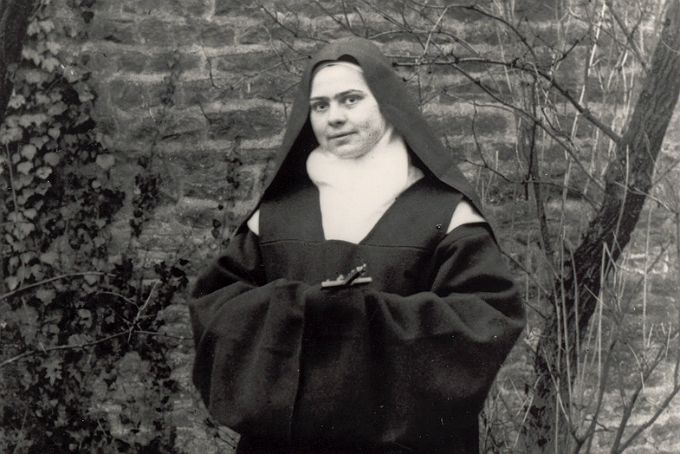
Vatican City, Jun 21, 2016 / 03:03 am (CNA/EWTN News) - Pope Francis has announced the canonization date of Blessed Elizabeth of the Trinity, a Carmelite nun of the 20th century who will be formally recognized as a saint October 16.
In March, the Pope had acknowledged a miracle worked through the intercession of Blessed Elizabeth, paving the way for her canonization.
“The Lord has chosen to answer her prayers for us…before she died, when she was suffering with Addison's disease, she wrote that it would increase her joy in heaven if people ask for her help,” said Dr. Anthony Lilles, academic dean of St. John's Seminary in Camarillo.
Lilles earned his doctorate in spiritual theology at Rome's Angelicum writing a dissertation on Bl. Elizabeth of the Trinity.
“If her friends ask for her help it would increase her joy in heaven: so it increases Elizabeth's joy when you ask her to pray for your needs,” he told CNA. "That's the first reason (to have devotion to her): the Church has recognized the power of her intercession."
Bl. Elizabeth of the Trinity was born in France in 1880, and grew up in Dijon close to the city's Carmelite monastery. Lilles recounted that when one time when Bl. Elizabeth visited the monastery when she was 17, “the mother superior there said, 'I just received this circular letter about the death of Therese of Lisieux, and I want you to read it.' That circular letter would later become the Story of a Soul; in fact, what she was given was really the first edition of Story of a Soul.”
...it was a lightning moment in her life, where everything kind of crystallized and she understood how to respond to what God was doing in her heart.
“Elizabeth read it and she was inclined towards contemplative prayer; she was a very pious person who worked with troubled youth and catechized them, but when she read Story of a Soul she knew she needed to become a Carmelite: it was a lightning moment in her life, where everything kind of crystallized and she understood how to respond to what God was doing in her heart.”
Elizabeth then told her mother she wanted to enter the Carmel, but she replied that she couldn't enter until she was 21, “which was good for the local Church,” Lilles explained, “because Elizabeth continued to work with troubled youth throughout that time, and do a lot of other good work in the city of Dijon before she entered.”
She entered the Carmel in Dijon in 1901, and died there in 1906 – at the age of 26 – from Addison's disease.
Elizabeth wrote several works while there, the best-known of which is her prayer “O My God, Trinity Whom I Adore.” Also particularly notable are her “Heaven in Faith,” a retreat she wrote three months before her death for her sister Guite; and the “Last Retreat,” her spiritual insights from the last annual retreat she was able to make.
Cardinal Albert Decourtray, who was Bishop of Dijon from 1974 to 1981, was cured of cancer through Bl. Elizabeth's intercession – a miracle that allowed her beatification in 1984.
The healing acknowledged by Pope Francis March 4 was that of Marie-Paul Stevens, a Belgian woman who had Sjögren's syndrome, a glandular disease.
In 2002 Stevens “had asked Bl. Elizabeth to help her manage the extreme discomforts of the pathology she had, and in thanksgiving, because she felt like she had received graces … she travelled to the Carmelite monastery just outside Dijon,” Lilles said. “And when she got to the monastery, she was completely healed.”
Lilles added that a second reason to have devotion to Bl. Elizabeth of the Trinity is because she died “believing that she had a spiritual mission to help lead souls to a deeper encounter with Christ Jesus.”
“You could call it contemplative prayer, or even mystical prayer. She said her mission was to lead souls out of themselves and into a great silence, where God could imprint himself in them, on their souls, so that they became more God-like.”
In prayer, he said, “we make space for (God) to transform us more fully into the image and likeness he intended us to become, but which sin has marred. Contemplative prayer is a means towards this transformation, and Bl. Elizabeth of the Trinity believed before she died that her spiritual mission would be to help souls enter into that kind of transformative, contemplative prayer, where they could become saints.”
She understood that the way she loved souls all the way was to help them find and encounter the Lord.
During her time in the Carmel of Dijon, Bl. Elizabeth found encouragement from the writings of St. Therese of Lisieux, particularly her “Offering to Merciful Love,” a prayer found in Story of a Soul, Lilles said: “You find references to the Offering to Merciful Love throughout the writings of Bl. Elizabeth of the Trinity, it was probably something she herself prayed often.”
“The second way that Elizabeth of the Trinity was influenced by Therese of Lisieux was a poem that St. Therese wrote called 'Living by Love'; in this poem Therese celebrates how the love of Jesus is the heartbeat, the deepest reality of her life, and because he lived to lay down his life for her, she wants to live to lay down her life for human love, which as the poem goes on, means loving all whom he sends her way, without reserve and all the way, giving people the generous love that we have received from Christ, sharing it with others.”
“That idea deeply, deeply influenced Elizabeth of the Trinity and in fact inspired her own way of life and her own spiritual mission to help lead souls into mystical prayer,” Lilles reflected. “She understood that the way she loved souls all the way was to help them find and encounter the Lord.”
“So, the spiritual missions of Therese of Lisieux and Elizabeth of the Trinity coincide: great theologians like Hans Urs von Balthasar recognized that. And these spiritual missions have both greatly influenced the Church in the 20th and early 21st centuries in very powerful ways.”
“I'm so glad that Elizabeth has been recognized for her part in building up the Church in the 20th century.”
You are 'artisans of wonder,' Pope Francis tells performers
Vatican City, Jun 16, 2016 / 10:14 am (CNA/EWTN News) - Pope Francis told a group of nearly 6,000 traveling performers that while their work is demanding and at times unstable, it gives them the ability to bring light to what is an often dark world.
“You are artisans of celebration, of wonder, of the beautiful: with these qualities you enrich the society of the entire world,” the Pope said June 16.
He told the group that with their work, they help to nourish “hope and confidence” through performances “that have the ability to elevate the soul.”
These performances, he said, provide the opportunity to “show the boldness of exercises that are particularly challenging, to fascinate with the wonder of beauty and to offer opportunities for healthy entertainment.”
Francis met with the audience of circus and street performers, moonlit park and fair workers, artists, designers, puppeteers, and members of band and folk groups as part of a special two-day Jubilee for the World of Traveling Shows.
The event was organized by the Pontifical Council for Migrants and Itinerant Peoples in collaboration with the “Migrantes” Foundation of the Italian Bishops Conference, the “Migrantes” office of the diocese of Rome along with various Italian associations.
Participants came on pilgrimage to Rome July 15-16 from all over Europe, the Americas and even Africa. Among wide list of countries represented were France, Germany, Italy, Holland, Romania, Spain, Switzerland, Ukraine and Hungary, Argentina, Canada, Chile, Peru, the United States and Kenya.
Complete with live performances and even a baby tiger and panther, the audience took place inside the Vatican’s Paul VI Hall.
After venturing to the front of the stage to pet the tiger himself, Pope Francis jested with the performers that “you can even scare the Pope, making him pet a tiger…you are powerful!”
"You can even scare the Pope, making him pet a tiger!" @pontifex at audience with circus performers https://t.co/0AY3SI8w6x
— Catholic News Agency (@cnalive) June 16, 2016
“You can be an itinerant Christian community and witnesses of Christ, who is always journeying to meet even those who are farthest away.”
Francis also thanked them for using the Jubilee of Mercy as an opportunity to spread charity, since many have opened their shows to the poor, needy, homeless, prisoners and disadvantaged youth free of charge.
“This is also mercy: to plant beauty and joy in a world at times somber and sad,” he said, and encouraged the performers to “always be welcoming toward the smallest and neediest, to offer words and gestures of consolation to whoever is closed in on themselves.”
Since traveling makes it hard to be a stable part of a parish community, the Pope urged the artists to make their faith a priority, and to take advantage of opportunities to receive the Sacraments and to teach the love of God to those they encounter.
“May you always carry out your work with love and with care, confident that God accompanies you with his providence, generous in works of charity, available to offer the resources and genius of your arts and of your professions,” he said, closing his speech.
Pope Francis has hosted members of the circus and other performers at the Vatican several times since his election as Bishop of Rome, most of whom come to participate in his general audiences.
On Jan. 8, 2014, members of the Golden Circus in Rome gathered in St. Peter’s Square to perform for Francis in his audience, during which he told them that those who put on circus shows “are creators of beauty.”
On Jan. 14 of this year, the Pope offered 2,000 of Rome’s poor, homeless, refugees and prisoners the opportunity to go to a performance at the Rony Roller Circus free of charge.
An initiative of the Office of the Papal Almoner, headed by Bishop Konrad Krajewski, the event was a “gift” offered by circus artists, “who with perseverance, commitment and many sacrifices are able to create and give beauty to themselves and to others,” according to the almoner.
“(It is) an encouragement to overcome the harshness and difficulties of life which many times seem too great and insurmountable,” he said.
What Catholics are doing to help victims of the Orlando shooting
Orlando, Fla., Jun 15, 2016 / 02:57 pm (CNA/EWTN News) - Following the mass shooting that claimed the lives of 49 in Orlando, Catholics have tried to be the hands and feet of Christ in showing mercy to victims and their families and loved ones.
“We’re in the Jubilee Year of Mercy. And here we have individuals who are in tremendous need of mercy – the repose of the souls of those who are deceased, the family members, the friends, the tremendous shock that has occurred personally,” Gary Tester, executive of Catholic Charities Central Florida, told CNA on Wednesday.
The Diocese of Orlando’s response to the tragedy, he added, follows the words of Pope Francis, who “has called us to remember how important it is to simply love our neighbor.”
Early Sunday morning, 29-year-old Omar Mateen opened fire at a gay Orlando nightclub and began taking hostages. He killed 49 people and injured 53 more before he himself was killed by SWAT officers responding to the scene.
Authorities are still piecing together background information on Mateen, who pledged allegiance to the Islamic State in a 911 call made inside the nightclub. Mateen’s ex-wife and one of his ex-coworkers have said they believe he was mentally unstable, while others have suggested that he was gay and had both used gay dating apps and frequented the gay nightclub socially before the attack.
Amidst the ensuing “great deal of chaos” on Sunday, the Diocese of Orlando offered prompt assistance to the victims’ families and loved ones, Tester said, including “grief support,” scheduling funeral Masses and burials, and financial aid.
“From our standpoint, we don’t discriminate in our services,” he said. “We simply serve God’s children in whatever way we’re called to do. And in this case, the corporal and spiritual works of mercy are very evident.”
In the hours after the shooting, for those who wanted an update on the victims’ conditions but could not receive one, an “aid center” was designated adjacent to the primary hospital.
Clergy “began to minister as best they could to people without much information,” Tester stated. Since some family members, friends, or loved ones were not “next-of-kin” and thus could not receive the information they wanted, “we had deacons and priests and clergy listening to folks but not able to verify anything, just really offering a consoling shoulder,” he said.
Many of the victims were Latino, and bilingual deacons and priests listened to their families and loved ones at the aid center. Bilingual staff from Catholic Charities helped some priests ask questions and receive answers.
“Immediate grief response” has been the primary focus so far, Tester said. In addition to the sudden loss of loved ones, families have their own wounds they are struggling with, compounding the grief.
“Grief support is really just about offering that shoulder, offering that consolation, offering that listening, and trying to help guide as best you can, to help them put one foot in front of the other and to sustain them in prayer,” Tester said.
Loved ones of the shooting victims have been “tremendously appreciative” of the support, he added. “At a time where they may not know where to turn, we’re simply there to offer whatever it is that they need. And it’s all very individualized, each family is different.”
The outpouring of care for the victims’ loved ones has also been national. Catholic groups and parishes have been sending their support, and one Maryland parish sent blessed prayer shawls. In addition to the local ecumenical prayer service led by Orlando Bishop John Noonan, other dioceses and Catholic groups across the country have hosted Masses, rosaries and prayer vigils.
Local Catholics are practicing other works of mercy for victims’ families as well, like helping bury the dead. Tester cited Bishop Noonan, that “there are 49 families right now that are coming to terms with the fact that they have to bury someone they weren’t expecting to lose.”
Priests are “standing by to help, in whatever way they can, these families get their loved ones buried,” Tester continued.
“Immigration professionals” will be helping victims’ family members come to the U.S. for the funerals, or help send the victims’ bodies back to their home countries for burial, he added.
Catholic Charities partnered with the St. Vincent de Paul Society to help one family schedule a funeral home and Masses at local churches. Catholics are also gathering funds to aid families who cannot afford burials, or to support those who have lost breadwinners in the shooting.
“I think it’s been a very comprehensive response, and it’s becoming more coordinated each day,” Tester said.
Christians in Aleppo offer food to poor Muslims during Ramadan
Aleppo, Syria, Jun 17, 2016 / 12:08 am (CNA/EWTN News) - Despite the war raging around them, Syriac Orthodox Christians in Aleppo have decided to provide food to poor Muslim families throughout the Islamic month of Ramadan.
According to Agenzia Fides, the information service of the Pontifical Mission Societies, faithful of the Syriac Orthodox Archdiocese of Aleppo are offering breakfast and evening meals to “the poorest Muslim families” living in the predominantly Christian and Armenian Sulaimaniyah neighborhood of the city.
The distribution center for the food, which is prepared by the Christian families themselves, is located at the archdiocese’s Cathedral of St. Ephrem the Syrian.
Ramadan is a Muslim month of intense prayer and fasting which commemorates the revelation of the Quran to Islam’s Prophet Muhammad. Meals are not taken during daylight hours, though food and drink are served before dawn and after sunset.
This year, Ramadan lasts from June 5-July 5. It ends with the holiday Eid al-Fitr, which breaks the fast.
A communique released by Syriac Orthodox archdiocese said the initiative is a simple gesture aimed at expressing solidarity between people of different religious backgrounds with the hope that it will, in time, help to restore the peaceful coexistence that existed among Syria’s various religious and ethnic communities before the war.
The Syriac Orthodox Church is an Oriental Orthodox Church. These Churches reject the 451 Council of Chalcedon, and its followers were historically considered monophysites – those who believe Christ has only one nature – by Catholics and the Eastern Orthodox.
The Syriac Orthodox Archdiocese of Aleppo is still formally under the authority of Archbishop Gregorios Yohanna Ibrahim, who was kidnapped near Turkey in April 2013 along with the Greek Orthodox Archbishop of Aleppo, Boulos Yazigi.
Aleppo is a hotly-contested city in Syria's north: with a pre-war population of 2.3 million, it was Syria's largest, but the population has now dwindled to around 1 million. The Syrian civil war, which began in the spring of 2011, spread to Aleppo in July 2012. It has been divided into government- and rebel-controlled sectors for years.
Three hospitals in the rebel-held portion of the city were hit by air strikes earlier this month.
Since the Syrian civil war began it has claimed the lives of more than 270,000 people. There are more than 4.6 million Syrian refugees in nearby countries, and an additional 8 million Syrian people are believed to have been internally displaced by the war.
Men on trial for alleged mock crucifixion of teen at work
London, England, Jun 17, 2016 / 03:02 am (CNA/EWTN News) - A teenager and practicing Catholic in the United Kingdom was reportedly tied to a cross and hung from a wall in a campaign of bullying by four of his older, male co-workers.
The victim, 19, also allegedly had religious and phallic symbols drawn on his body with permanent marker, was tied to a chair, had deodorant sprayed towards him and ignited and was violently lifted off the ground by his underpants in various alleged incidents, the BBC reports.
Four men – Andrew Addison, 30, Joseph Rose, 21, Christopher Jackson, 22, and Alex Puchir, 37 – are on trial in York Crown Court in connection with the bullying and are accused of religiously aggravated assault by beating.
According to court proceedings, the incidents occurred while the victim was serving an apprenticeship at the Direct Interior Solutions – a shop-fitting company in Selby, North Yorkshire.
“(I felt) ashamed and distraught. I couldn't believe it. It hadn't happened to anyone else,” the victim told the court in video comments of the mock crucifixion.
After he had been tied to the cross, his co-workers hung the cross on a wall about three feet above the ground and filmed the incident, the victim said.
“Afterwards I was thinking they were trying to take the mickey out of my religion. Otherwise why was there a cross made?” he said.
The victim told the court that the incidents started not long after he joined the firm in July 2014. He was a churchgoer and had told his colleagues that he had ignored his phone on one occasion because it had gone off while he was in church.
That kicked off a campaign of bullying from the four men. On one occasion, the victim recalled that he and his colleagues were in London for a refitting job at a hospital when Rose attacked him with a can of deodorant and a cigarette lighter, while Addison was laughing and filming the incident.
In another incident, the teenager was allegedly pelted with eggs and flour by Jackson, Addison and Rose while he was in the shower. Shortly thereafter, the men reportedly struck again while the victim was asleep and drew crosses and phallic symbols all over his body with permanent marker.
The victim described the incident as “humiliating” and said that he felt “stupid” having to go to work covered in the drawings. He told the court that scrubbing the marker off had left his skin red and sore.
The victim explained that he did not report the incidents immediately because he did not want to be fired. He also said he was ashamed to tell anyone what had happened to him and that he was afraid of further retaliation from his colleagues.
Addison and Rose both denied putting a person in fear of violence by harassment and religiously aggravated assault by beating.
Addison also denied a charge of assault by beating. Jackson and Puchir both deny religiously aggravated assault by beating.
The trial is ongoing.
There's a generation that didn't know John Paul II – this film is for them
Denver, Colo., Jun 15, 2016 / 03:02 am (CNA/EWTN News) - Thousands of people gathered in St. Peter’s Square and around their television sets to pray for Pope John Paul II as he passed away on April 2, 2005. They remembered the more than 26 years he served as the Holy Father; the courage he had in fighting communism; his immense love; and his adventurous spirit.
But that was eleven years ago.
The generations of young people who grew up during the papacies of Benedict XVI and Pope Francis might only know St. John Paul II for his canonization, which took place April 27, 2014.
The new documentary Liberating a Continent: John Paul II and the Fall of Communism hopes to educate these younger generations on the heroic life of the Roman Pontiff – telling the stories they cannot find in their textbooks.
“One of the reasons we set out to make this film is to kind of cement the legacy of Pope John Paul II,” David Naglieri, the film’s writer and director, told CNA.
“There’s a generation now that’s graduating college, entering the workforce, that didn’t necessarily live through all these events with the fall of Communism. Perhaps they didn’t … have the chance to see Pope John Paul II in person.”
Like a real life super-hero movie, the 90-minute film focuses on the saint’s role as an integral part in the fall of communism in central and eastern Europe – except St. John Paul II did not use destructive weapons to take down some of the world’s toughest leaders.
Rather, he used prayer and solidarity to encourage those oppressed by communism in Poland to keep their hope and will alive.
According to Naglieri, this documentary is unlike any other John Paul II film.
“What helps separate our film from past works is that we looked at the entire span of central and eastern Europe and how his message not just impacted Poland, but other countries as well,” he said.
“And then we tried to connect it to the modern day and to see how John Paul’s legacy continues to impact those who are striving for freedom in Europe.”
The film reveals the events in St. John Paul II's life through a timeline, which helps show how God’s providence guided the saint his entire life.
The late Pope grew up in Krakow, and became its archbishop in 1964. The documentary explains how he returned to the city for nine days in 1979, the year after his election as Bishop of Rome, instead of his intended two.
An interview in the documentary with Dr. Norman Davies, a historian of Poland, explains how the government’s distribution of antennas during the 1980 Olympic games led to the spreading of St. John Paul II’s message behind the Iron Curtain.
The film even tells the story of how President Reagan and the Pope met six days before the president’s famous ‘tear down this wall’ speech in 1987.
Filled with striking stories and interviews such as these, the documentary shows who truly held the power during this difficult time in the world’s history.
Naglieri said the film was an 18-month project from beginning to end, and that “we traveled to Poland and other central European countries several times during the making of it. ”
The documentary features interviews with Reagan’s National Security Advisor from 1981-82, the Prime Minister of Poland, the Archbishop of Lviv, a former Director of the Holy See Press Office, as well as journalists, historians, authors, and professors.
Narrating the documentary is Jim Caviezel, who portrayed Christ in Mel Gibson’s ‘The Passion of the Christ’. Joe Kraemer, known for his work on multiple ‘Mission Impossible’ movies, composed the documentary’s original music.
New adult stem cell therapy stops, reverses symptoms of MS
Ontario, Canada, Jun 13, 2016 / 04:02 pm (CNA/EWTN News) - A risky adult stem cell clinical trial in Canada has proven effective in stopping and even reversing the symptoms in patients with severe cases of multiple sclerosis, a progressive disease of the immune system that is often untreatable.
The stem cell therapy was performed on 24 adult patients who were expected to be confined to a wheelchair within 10 years. After the treatment, most patients saw no further progress in their symptoms, and were even able to regain functions that had been taken away by the disease, such as their vision, balance, or ability to walk, the Guardian reports.
The treatment performed by doctors in Canada is still considered highly risky, as it required the destruction and rebooting of each person’s immune system, causing the death of one of the 24 trial patients.
However, the other patients, who were followed for up to 13 years after the treatment, all experienced no further progression of the disease, which typically worsens over time. Many of these patients were able to go back to work and resume their other normal activities such as driving or playing sports.
Multiple sclerosis is a potentially disabling disease of the immune system, which attacks the protective sheath (myelin) that covers nerve fibers and causes communication problems between the brain and the rest of the body. Eventually, the disease can cause the nerves themselves to deteriorate or become permanently damaged.
Symptoms include a progressive loss of motor function, fatigue, vertigo, memory loss and depression. The disease affects approximately 2.3 million people throughout the world.
During the trial therapy, doctors first administered a drug to each patient that caused the stem cells in their bone marrow to move out into their bloodstream.
Doctors then extracted these stem cells, and processed them in a lab to purify them of the cells that cause MS. The patient was then given a drug that completely destroyed their immune system.
Finally, the newly purified stem cells were re-injected into the patient’s bloodstream, where they were able to make their way back into the bone marrow and slowly rebuild the immune system, free of the MS-causing cells.
While the Catholic Church does not support embryonic stem cell research that creates and destroys embryos for the sake of harvesting their cells, the Church does support ethical stem cell research and treatments such as those using umbilical cord stem cells or adult stem cells, like the ones used in the MS trial.
“Clearly, the Church favors ethically acceptable stem cell research. It opposes destroying some human lives now, on the pretext that this may possibly help other lives in the future. We must respect life at all times, especially when our goal is to save lives,” the United States Conference of Catholic Bishops explains on their website.
“The Catholic Church has long supported research using stem cells from adult tissue and umbilical cord blood, which poses no moral problem. Catholic institutions at times have taken the lead in promoting such constructive research, which is already providing cures and treatments for suffering patients,” their website reads.
In April, the Pontifical Council for Culture helped host a conference at the Vatican on “The Progress of Regenerative Medicine and its Cultural Impact”, which brought together doctors, researchers and bioethicists throughout the world to discuss the potential for adult stem cells and other ethical cellular therapies to treat cancer, diabetes and other debilitating medical conditions and diseases.
While the results of the MS study were promising, the treatment is still limited in its availability due to its high risk and specialized nature.
Mark Freedman, a neurologist at the University of Ottawa who co-led the trial, told The Guardian that while all patients experienced a halt in new brain inflammations, he was hesitant to call the treatment a cure.
“A cure would be stopping all disease moving forward and repairing all damage that has occurred. As far as we can ascertain no new damage seems to occur beyond the treatment and patients don’t need to take any medication, so in that sense I think it has induced a long-standing remission. Some patients did recover substantial function and it allowed them to do things they couldn’t do for years, but others did not,” he said.
Freedman also said that because of the risky nature of the stem cell transplant, only about 5-10 percent of MS patients would be eligible for the treatment. It would be considered too risky for those with milder forms of MS whose symptoms can largely be controlled by other medications.
Still, the results are promising for MS sufferers who go to great lengths to find ways to treat the disease. A neurologist in the U.K. is planning a similar study with a less intense drug, and with 180 participants.
The clinical trial in Ontario was funded by the MS Society of Canada, and the findings were published in the Lancet medical journal.
Pope horrified by deadly attack in Orlando
Vatican City, Jun 12, 2016 / 12:37 pm (CNA/EWTN News) - Pope Francis has offered his prayers and compassion for those affected by Saturday night's shooting at a nightclub in Orlando.
In a June 12 statement Fr. Federico Lombardi, the Holy See press officer, said the “terrible massacre,” which has left a “dreadfully high number of innocent victims, has caused in Pope Francis, and in all of us, the deepest feelings of horror and condemnation, of pain and turmoil before this new manifestation of homicidal folly and senseless hatred.”
“Pope Francis joins the families of the victims and all of the injured in prayer and in compassion,” the statement reads. “Sharing in their indescribable suffering he entrusts them to the Lord so they may find comfort.”
“We all hope that ways may be found, as soon as possible, to effectively identify and contrast the causes of such terrible and absurd violence which so deeply upsets the desire for peace of the American people and of the whole of humanity.”
At least 50 people were killed and 53 were injured in the early hours of June 12 when a gunman identified as 29-year-old Omar Mateen exchanged fire with a police officer working at Pulse nightclub, which caters to gay clientele.
Mateen, who was from Florida and was of Afghan descent, took hostages for as much as three hours, and was shot to death by Swat officers. Though the mass violence is thought to be ideologically motivated, he was not known to have links to any terrorist groups.
The death toll makes the Orlando shooting the worst in United States history.
Bishop John Noonan of Orlando tweeted on Sunday saying, “We pray for victims of the mass shooting in Orlando this morning, their families & our first responders. May the Lord's Mercy be upon us.”