


There's no alternative: help Israel and

Palestine seek peace, archbishop tells UN 

New York City, N.Y., Feb 2, 2016 / 06:02 am (CNA/EWTN News) - Peace was the focus of the Holy See's representative in a recent speech to the United Nations, where he renewed calls to support negotiations between Israel and Palestine and between the warring factions in Syria.

“Certain elements among both peoples have suffered too long from the misguided view that force will resolve their differences. Only sustained negotiations, entered into in good faith, will resolve their differences and bring peace to the peoples of Israel and Palestine,” Archbishop Bernardito Auza, the apostolic nuncio heading the Holy See’s permanent observer mission to the U.N., said Jan. 26.

Speaking on behalf of the Holy See, he addressed the Security Council’s open debate on the situation in the Middle East and the Israeli-Palestinian peace process, saying it has stalled.

“With the lack of substantive negotiations taking place, acts of violence continue to spiral, bringing many to doubt seriously the continued validity of the Oslo Accords,” he said, referring to the 1993 agreement between Palestinian and Israeli leaders.

Archbishop Auza said the Holy See believes the Israeli-Palestinian peace process can advance only if it is directly negotiated between the two parties, with strong international support.

“This certainly requires courageous decisions from both parties and demands fair mutual concessions. But there is no alternative, if both Israel and Palestine are to enjoy security, prosperity and peaceful co-existence, side by side with internationally recognized borders.”

The archbishop cited Pope Francis’ Jan. 11 remarks to the diplomatic corps accredited to the Holy See. There, the Pope voiced hope that the New Year “can heal the deep wounds dividing Israelis and Palestinians, and enable the peaceful coexistence of two peoples who – of this I am sure – in the depth of their hearts ask only for peace.”

The nuncio commented: “Acts of violence and inflammatory rhetoric must be set aside in favor of the voices of dialogue to give both peoples that peace for which their hearts long.”

The comprehensive agreement between the Holy See and the State of Palestine went into force Jan. 2. The agreement addresses the activity of the Church in Palestine, the archbishop explained.

“In the complex reality of the Middle East, where, in some countries, Christians have suffered persecution, the Holy See hopes that the agreement may serve as an example of dialogue and cooperation, in particular for other Arab and Muslim majority countries.”

Archbishop Auza also discussed the Syrian civil war, which has lasted almost five years. The fighting includes the Syrian government and various rebel factions, including the Free Syrian Army, Kurdish separatists, the Islamic State group, and al-Nusra Front. Over 250,000 people have died in the conflict, with more than 11 million people displaced from their homes.

The archbishop noted that the conflict had attracted violent actors from abroad.

“More than being a conflict between Syrians, foreign fighters coming from all over the globe continue to commit unspeakable acts of horror against the civilian population in Syria and in parts of Iraq,” he said. “The influence of these foreign elements has led to sectarian violence and persecutions of religious and ethnic minorities.”

According to Archbishop Auza, Pope Francis is convinced that “only common and agreed political action can stem the spread of extremism and fundamentalism” that spawn terrorist acts in Syria, Libya, and other countries in the Middle East and North Africa.

Rather than repeating the “horrendous acts of violence” against the Syrian people, the archbishop repeated an appeal to stop the flow of arms into the region.

He urged strengthened humanitarian action to help refugees. He said refugee aid should help them remain in or near their home country, providing adequate food, medical supplies, water, electricity, and access to education.
 
Archbishop Auza said his delegation backed Security Council Resolution 2254, which calls for “the sovereignty, independence, unity and territorial integrity of the Syrian Arab Republic” and for a political settlement to the Syrian conflict.

The archbishop praised the Syrian peace talks that have now begun in Geneva.

“In spite of the many strong differences still to be found among the parties to the talks, the Holy See believes that these negotiations are the best chance the International Community has to bring a stable and lasting peace to Syria and to the region,” he said.

He also noted the upcoming humanitarian conference to be held in London Feb. 4. He said the Holy See hopes the conference will ease the suffering of people in the region and contribute to settling the Syrian conflict.


END

Starring Pope Francis – New film

features Holy Father as himself 

Vatican City, Feb 1, 2016 / 03:08 pm (CNA/EWTN News) - The “Pope of Surprises” is at it again. Pope Francis is set to be featured in the upcoming film “Beyond the Sun,” the first Pope in history to play himself in a big screen production.

The idea for the film came from the Holy Father, who approached the filmmakers at AMBI Pictures, asking them to produce a movie that could effectively portray Gospel passages and parables to children.

The movie will be a family adventure story where children from different cultures emulate the apostles while searching for Christ in the world around them, says the film group.

All proceeds from “Beyond the Sun” will go to El Almendro and Los Hogares de Cristo, Argentine charities that provide support for at-risk children and young adults in need.

AMBI co-founders Andrea Iervolino and Lady Monika Bacardi are fully financing and producing the film through their AMBI Pictures banner. Co-producers are Graciela Rodriguez and Gabriel Leybu, and the screenplay was written by Graciela Rodriguez.

Iervolino has been producing films since he was 15, when the church in his hometown of Cassino, Italy, opened their doors and allowed him to shoot his footage inside. He has produced, funded and distributed over 50 feature films including “The Merchant of Venice”, “The Humbling” and “All Roads Lead to Rome.”

He said in a statement that working with the Holy Father will be a highlight of his career.

“Our excitement and gratitude toward His Holiness, Pope Francis participating in this film is beyond words. This is not just a movie for us, it’s a message, and who better to have on your side to deliver an important societal and spiritual message than the Pope.”

Bacardi added that the film will be entertaining and moving for families around the world and a creative way to raise money for worthwhile causes.

Principal photography will begin in early 2016 in Italy. AMBI will oversee worldwide distribution through its Los Angeles-based sales division.

Who else is facing off during the

Super Bowl? Catholic Charities 


Denver, Colo., Feb 2, 2016 / 03:01 am (CNA/EWTN News) - Whether fans are rooting for the Denver Broncos or the Carolina Panthers in the upcoming NFL Super Bowl 50, Catholic Charities of Denver, Colorado and Charlotte, South Carolina are uniting to host a friendly Charity Bowl Challenge that any football fan can cheer for.

Executive directors from both cities announced the wager last week, betting that the online fundraising challenge could bring their charities $50,000 by the end of the Feb. 7 game.

"It's a worthy cause that will have a major impact on the lives of the poor and needy in each of our communities," said Catholic Charities of Charlotte CEO Gerry Carter in a recent press release.

"All of our team's fans and Catholic Charities in the Carolinas look forward to this challenge, and the inevitable victory that will be ours," Carter said.

The Charity Bowl is an online fundraiser that started at midnight on January 31. All donations made between then and the end of the Super Bowl game will be counted towards the $50,000 goal.

The outcome of the Charity Bowl will be determined by the amount of money raised, not by the score of the football game. The face-off can be tracked online at www.CharityBowl50.org or through social media with the hashtag #CharityBowl50.

More than bragging rights are at stake for each of the charities. The losing charity’s CEO will dress in the opposing team's colors, sending congratulatory messages to the winning team. The victors will also hold a celebration where the winning charity's CEO will endure a cold sports drink dump.

"Through Charity Bowl 50, Denver football fans have a real opportunity to show they have the best team spirit and a passion for serving others," noted Denver Catholic Charities CEO, Larry Smith.

"This challenge is a true win for both Denver and Charlotte, but there's no doubt we will seize the victory," Smith continued.

Should Charlotte raise more money than Denver, the proceeds will benefit Catholic Charities in the Diocese of Charlotte, which annually serves more than 19,000 people a year with a focus on poverty, disaster relief, refugee assistance and education. They also provide pregnancy support, counseling and family outreach to the local community.

However, if Denver wins the Charity Bowl 50, the money will be used to support Catholic Charities in the Archdiocese of Denver, which assists thousands of people each year through their women's services, family outreach, and homeless shelters.

Even those who aren’t cheering for a team in the Super Bowl are encouraged to participate in the Charity Bowl 50 to raise money for Catholic Charities.

Donations are accepted online at www.CharityBowl50.org and the final tally will be published an hour after the Super Bowl ends.


What Catholics are doing about

Flint's stunning water scandal 

Flint, Mich., Jan 29, 2016 / 03:09 am (CNA/EWTN News) - “It all started before Christmas. We knew something was wrong with the water.”

Vicky Schultz is president and CEO of Catholic Charities of Shiawassee and Genesee Counties, headquartered in Flint, Michigan. In a recent interview, she recounted the development of the city’s public health crisis over the last two years.

“Everybody knew that the water had an orange tint. Everyone talked about the smell of it,” Schultz told CNA.

Schultz recalled that the discoloration was so pronounced, it could be seen yards and yards away.  Looking out from her office, she watched as fire hydrants were flushed out: “It could be running for hours, and it was still orange coming out.”

In recent months, the employees at Catholic Charities – who were affected by the water pollution themselves – have been a vital resource for a struggling community.

“We’re all doing whatever it takes at ground level to just do what we’re doing, serve our communities and keep our head above water,” Schulz said.

The problems with Flint’s tap water go back to 2014. In April of that year, the city of Flint switched water sources – it stopped purchasing treated Lake Huron water from Detroit, and began sourcing its own water from the Flint River as part of a larger batch of cost-saving measures. The river was a long-time disposal site for industrial waste from automobile companies, sewage and local runoff, but local city official celebrated the switch with a toast of city water inside the Flint water treatment facility.

Immediately, locals began complaining that the water smelled bad, that it was rust-colored, that it tasted strange. Some people started to develop rashes or intestinal issues, while others started losing their hair after drinking, bathing and swimming in the water. In August 2014, Flint officials advised the public to begin boiling their water for safety: E. Coli was found in the water.

Schultz, and countless others, were concerned. “I was going to some city meetings saying, ‘Whats going on?’ It was explained to us…they were treating it.”

Yet, despite the assurances that the strange tastes, smells and colors were part of the treatment process, the city also began distributing bottles of water – including at one Catholic Charities site.

Schultz said the request was confusing. “I’m scratching my head thinking, ‘If there’s nothing wrong with the water, why are we giving out cases of water?’” she recalled, saying that she approached the mayor at one water distribution event. Schultz said that at the water distribution event, she approached the mayor with her concerns.  “I can remember saying to the mayor, ‘If there’s nothing wrong with the water, you guys on city council should be drinking it, showing and demonstrating to the general public it was safe’.”  

But the water was not safe. In June 2014, the US Environmental Protection Agency found evidence of lead in the water, although city and state officials dismissed the findings. Flint officials maintained instead that the lead levels were the result of plumbing issues in the house of a local activist who raised the alarm. While local and state officials assured the EPA that they were following federal guidelines requiring corrosion control for its treatment plant and municipal pipes, these measures were never put into place. When testing for lead in 2015, few samples were taken, and samples that were taken were done improperly. In addition, two samples that would have indicated an “actionable” lead issue and required public notification were discarded.

By September 2015, pediatricians in Flint found that the number of children with elevated levels of lead in their blood had nearly doubled from 2.1 to 4 percent city-wide and were even higher – 6.3 percent – in some neighborhoods. Lead poisoning impacts every major bodily system, including the kidneys, heart, reproductive system and brain. The heavy metal also interferes with nervous system development in children, potentially leading to developmental and learning disabilities, and has been linked to some mood disorders. In severe cases, lead poisoning can lead to coma or death.

In October 2015, the city and the state admitted the extent of the issues with the water supply and again began purchasing water from Detroit. However, concerns remain due to pipe corrosion that the Flint River water caused in the pipes, creating a continued leaching of lead.

For the people of Flint, this means continuing to use filtered or bottled water for drinking, cooking, cleaning, bathing.

Catholic Charities is offering help, starting with the most vulnerable – children, infants and the unborn.

“Since about October, November we’ve been giving either a case of water or a gallon jug of water to every mother coming to pick up diapers,” Schultz said, so that mothers can use fresh water in formula and other care for their children.

The organization is also ensuring that its foster children receive the care – and access to clean water – they need. This means lead tests, water filters and regular cases of water. The same is true for the other houses run by Catholic Charities and the services that it offers.

In addition, the water crisis is forcing the organization to reconsider its future plans. Schultz told CNA that she has been planning for years to create a space for homeless clients in Flint to shower and do laundry, and that the project was moving forward.

Now, however, those plans have to be reconsidered. “I don’t know if we’ve even incorporated anything about a water filtration system. And now I’m thinking we have to do that,” she said. “We have to think ahead because if the city doesn’t have this resolved and we’re in the process of renovating a building – we have to think about it.” Schultz noted that similar concerns over adding filtration systems are affecting hospitals, schools and other community services.

The challenges brought by the water crisis raise serious questions as to what the future of Catholic Charities services will look like. “There’s so many pieces and we’re not set up with the infrastructure to deal with the crisis,” Schultz admitted.

Addressing mental health needs – both from the emotional impact of the crisis and from the physical impact of the lead poisoning itself – is another prime concern. “We’ve got a lot of people very anxious,” she explained. “They’re worried about their children.”

Health care for the children suffering from lead poisoning is a grave concern. Children bearing the consequences of water contamination will be in even greater need for access to healthy, balanced and safe meals for the best outcomes, she explained.

And even so, she added, “It’s lead poisoning. It’s never reversible.”

“Are we going to pay for this for the next 20-something years of these kids’ lives in school and everything else?” she questioned. “I don’t know what this means for the future, for these kids who could be affected by this lead.”

Schultz said she is also concerned about how to fund a long-term response to the water contamination. Flint was already facing high poverty levels before the crisis, she explained, and it is uncertain whether money to back any possible solution will materialize.

The workers at Catholic Charities are not immune from the water crisis, Schultz noted, explaining that this makes the task even more difficult, particularly when it comes to counseling people and reassuring them when at times it is tough to know what information is true.

But despite the challenges before them, Catholic Charities will “carry on,” she told CNA. “We’re trying. I just don’t think we were prepared for anything like this, and we’re just trying to find our way through it.”

Still, hope remains. Since the news of the situation in Flint has spread, Schultz has been floored by the public concern, which she calls “a Godsend.”

“It’s been crazy, because we’re getting calls from all over the country,” she said. “It is unbelievable the outpouring of support, concern – we know it’s across the entire nation.”  

However, even the flood of donations has presented challenges, such as finding adequate forklifts and storage space to handle the donated water. Catholic Charities is working with organizations like the American Red Cross and other charities to coordinate water distribution.  

For those interested in supporting Catholic Charities’ response to the water crisis, the organization has set up a GoFundMe page for monetary donations, which will be used both for clean water and future water-related needs. Information can also be found on its Flint Water Recovery page.

Local residents in need of clean water can find resources and aid at the Center for Hope on 517 Fifth Ave, Flint, MI, at its soup kitchen, on 735 Stewart St., Flint, MI, and also at local fire stations.
 
Through the challenges that lie ahead, Flint and Catholic Charities will stay and serve the community, Schultz stressed.

“We’re resilient, we’re gonna be here. It might look different, but we’re going to be here to serve the community.”


Yes, ISIS is guilty of genocide,

says European human rights group 

Strasbourg, France, Jan 28, 2016 / 04:37 pm (CNA/EWTN News) - Europe’s leading human rights body passed a resolution on Wednesday calling ISIS atrocities a “genocide,” a week before the European Parliament will vote on a similar resolution.


“States should act on the presumption that Da’ish commits genocide,” read a statement passed by the Parliamentary Assembly of the Council of Europe. “Da’ish” is another name for the Islamic State (ISIS).


The resolution passed overwhelmingly, with 117 votes for and only one against.


The council is a regional group of 47 member states encompassing a population of 820 million. It is Europe’s leading promoter of human rights and democracy, as well as an important partner with the European Union. The resolution’s passage is therefore significant, as the European Parliament will vote on a similar resolution next week on the plight of religious minorities in the Middle East at the hands of ISIS.


“It is very important to see that an international institution representing an even larger and more diverse group of countries than the EU has recognized the ongoing persecution of Christians in the Middle East as genocide,” Sophia Kuby, director of European Union advocacy for ADF International, stated after the resolution’s passage.


“We hope that members of the European Parliament will pay due regard to the clear message signaled by the votes of their colleagues in the Parliamentary Assembly,” she added.


The resolution “Foreign fighters in Syria and Iraq” condemned the recent acts of terror in France, Turkey, Lebanon, Russia, and other countries and noted the role of ISIS behind many of those attacks.


The terror group has “perpetrated acts of genocide and other serious crimes punishable under international law,” the resolution stated, adding that states “should be aware that this entails action under the 1948 United Nations Convention on the Prevention and Punishment of the Crime of Genocide.”


Genocide is recognized as the “crime of all crimes,” and is defined as actions taken with “intent to destroy, in whole or in part, a national, ethnical, racial or religious group.” It can take the form of mass killing, torture, deprivation of vital resources, or displacement to bring about the end of a group of persons.


A genocide resolution is significant because it would further pressure the United Nations Security Council to issue a genocide resolution of its own. The council would have the power to refer the case to the International Criminal Court (ICC), where the perpetrators would be tried.


“Although the path is difficult, the aim must be to achieve a world-wide condemnation of the atrocities of ISIS at the ICC, just as happened with Srebrenica and Rwanda, so Christians in the Middle East can live free from the fear of persecution and death,” Sophia Kuby stated in an interview.


Pope Francis, during his trip to South America in July, said that Middle Eastern Christians face genocide.


“Today we are dismayed to see how in the Middle East and elsewhere in the world many of our brothers and sisters are persecuted, tortured and killed for their faith in Jesus,” he said, adding that “in this third world war, waged piecemeal, which we are now experiencing, a form of genocide is taking place, and it must end.”


The U.S. has not yet formally declared genocide, although the State Department recently was expected to issue a genocide designation for ISIS atrocities committed against Yazidis in Iraq. Christians, Shi’a Muslims, and other religious minorities were reportedly not going to be included as victims of genocide.

However, genocide resolutions have been introduced in the U.S. House and Senate, recognizing Christians and other ethnic and religious minorities as victims of ISIS atrocities. The U.S. Commission on International Religious Freedom, a bipartisan federal commission that advises the U.S. State Department, has also called on the government to issue a genocide declaration recognizing Christians, Shi’a Muslims, and other ethnic and religious minorities as genocide victims.


One family's unimaginable suffering

paves the way for a teen's sainthood 

Mexico City, Mexico, Jan 29, 2016 / 12:04 am (CNA/EWTN News) - The miraculous cure of a baby with brain damage through the intercession of Mexican martyr Blessed José Luis Sánchez del Río has been approved by the Vatican, completing the final step for the teen’s path to sainthood.

Pope Francis signed the decree Jan. 21, verifying the inexplicable recovery of a baby who doctors said had “no hope of survival” due to a myriad of health problems including brain damage caused by a stroke as a miracle attributed to Jose Luis Sanchez del Rio, a teenager who was martyred for his faith during the Cristero wars of the 1920s.

Ximena Guadalupe Magallón Gálvez was just a few weeks old in September 2008 when her parents took her to Sahuayo in the Mexican state of Michoacán where Bl. José was born. During the visit, Ximena began running a fever that her regular doctor was unable to treat, her mother Paulina Gálvez Ávila said in a post on the Facebook page dedicated to Bl. José.

Concerned that the fever was a sign of something more serious like pneumonia, the doctor sent her to have X-rays at Santa María Hospital in Sahuayo where doctors ruled out that disease, but were still unable to treat the fever. Her parents took Ximena to get a second opinion from Dr. Rosendo Sánchez in Aguascalientes State who had the child readmitted to the hospital, saying that she might be suffering from atypical pneumonia.

“We spent two months living that nightmare and (the doctors) didn’t know what was going on since she wasn’t responding to any treatments,” Mrs. Gálvez said.

They sought another opinion from Dr. Adán Macías who diagnosed her with pneumococcus, a bacterial infection that can cause several different life-threatening illnesses including meningitis, severe pneumonia, and bloodstream infections. Ximena was transferred back to to Aguascalientes where Dr. Rosendo discovered that Ximena’s right lung was filled with fluid. She would need to immediately undergo an operation which could be very risky on such a young child.

“Dr. Rosendo spoke with us and informed us that she would have to undergo a very delicate operation since she could bleed and die. We gave our consent and we told him to do whatever it takes  to save little Ximena and that we were putting her in God’s hands,” Mrs. Gálvez said.

Concerned about their young child’s worsening health, the couple decided to have her baptized before the operation rather than waiting until she was older.

The operation was successful, but upon examining lung tissue, doctors discovered that Ximena had been suffering from tuberculosis.

“When they told us it was in fact tuberculosis and they brought her to us in the room, she looked strange, just staring off with an empty look in her eyes. We talked to her but she didn’t react. I told the doctor she looked bad, it wasn’t my baby because she was always smiling before,” the mother said.

The baby underwent began intense treatment for tuberculosis, but her health took a turn for the worse when doctors informed the parents that baby Ximena had suffered from a stroke, causing 90 percent of her brain to be dead.

Mrs. Gálvez asked to see her daughter. Before going into the room where the child was, one of the doctors warned her “that my baby was already in a vegetative state and that appropriate procedures should be initiated.”

“Dr. Rosendo arrived and crying I begged him to save my daughter. They put her into an induced coma and gave us 72 hours to see if she would live, since 90 percent of her brain was dead,” she said.

During those three days, Ximena’s parents went to Mass everyday “to ask God and Joselito to intercede for my baby, that they would work a miracle” she said, using the affectionate nickname her family had for Bl. José Luis Sánchez del Río.

Mrs. Gálvez said, “I asked them to let me be with her and hug her, then they disconnected her.”

“At that moment I put my baby in God’s hands and the intercession of Joselito and at that moment she opened her eyes and smiled.”

Ximena looked at the doctors “and she started laughing with them.”

The doctors “couldn’t explain what had happened. Because they had done everything medically possible and that’s when they said it’s a miracle.”

The doctors took Ximena to do a CT scan and an encephalogram. They were surprised to see that 80 percent of her brain had recovered. When they examined her the next day, her brain had become completely healthy again.

Even after such an inexplicable recovery, doctors told Ximena’s parents that as a result of the temporary brain damage, she would never be able to eat or walk properly and that would most likely be blind and deaf and unable to speak due to the stroke.

However, when her mother gave her a bottle of milk at the hospital, she drank eight ounces right away. The doctors were astonished.

Contrary to all of the doctors predictions, Ximena completely recovered and is “perfectly well thanks to God and the intercession of Joselito,” Mrs. Gálvez said.

“We give endless thanks to Almighty God for this miracle and to Blessed Martyr José Sánchez del Río for his ample intercession.”

Blessed José Luis Sánchez del Río was brutally tortured and killed when he was 14 years old during the 1924-1928 religious persecution by Mexican President Plutarco Elías Calles. José Luis had enlisted in the ranks of the Cristeros, under the command of General Prudencio Mendoza.

He was martyred by the Federal Army on Feb. 10, 1928. According to the story, the soldiers cut off the soles of his feet and forced him to walk barefoot to his grave. Moments before he was killed, the boy shouted, “Viva Cristo Rey!”, or “Long live Christ the King!”

No date has been set yet for his canonization.


Pope Francis meets Leonardo DiCaprio at the Vatican 

Vatican City, Jan 28, 2016 / 09:24 am (CNA/EWTN News) - On Thursday Pope Francis met briefly with actor and environmental activist Leonardo DiCaprio, who recently won an award for his efforts for environmental protection at the World Economic Forum.


The meeting between the two lasted just 15 minutes, but was enough time for DiCaprio to hand the Pope a book of art from Dutch Renaissance painter Hieronymus Bosch, according to Vatican Radio.


Francis' gift to the actor was likely a copy of his encyclical “Laudato Si” and a medal – lately he's been giving one to presidents and heads of state who have come to the Vatican that bears the image of St. Martin cutting his cloak in two for a poor man.


In some of the pictures of the encounter, DiCaprio can be seen holding the small box usually containing papal medals, as well as two red books.


What the two discussed is unknown, however it’s likely that issues surrounding the environment formed the bulk of the dialogue.


DiCaprio – who is a candidate for Best Actor at the Feb. 28 Oscar Awards ceremony for his lead role in the drama “The Revenant” – describes himself on twitter as an “actor and environmentalist.”


He recently participated in the World Economic Forum where he received their Crystal Award for his leading role in fighting climate change.


In his speech for the event, DiCaprio said that “we simply cannot afford to allow the corporate greed of the coal, oil and gas industries to determine the future of humanity.”


“Those entities with a financial interest in preserving this destructive system have denied, and even covered up the evidence of our changing climate… Enough is enough. You know better. The world knows better. History will place the blame for this devastation squarely at their feet.”


According to the actor, “our planet cannot be saved unless we leave fossil fuels in the ground where they belong.” He said that with today’s technologies, we have the means to end our “addiction” to them.


DiCaprio also announced that his foundation, The Leonardo DiCaprio Foundation, will be donating $15 million to support environmental protection projects.


Pope Francis himself sent a message to the forum participants, in which he said that while advanced technologies are good, they should promote environmental protection and shouldn’t replace the jobs currently held by people.


Global dependence on coal and fossil fuels is something Francis also condemned in his encyclical “Laudato Si,” published June 18, 2015.


As usual, the Pope did not shy away from controversial issues in the document, making bold statements on global warming, pollution, species extinction and global inequality’s impact on natural resources.


He cited studies supporting the theory of global warming and stated that human activity is the primary driving force behind the phenomenon, as well as the main cause of species extinction. He also spoke of developed nations’ obligations involving renewable resources and the development of poorer countries.


In addition to defending life from conception to natural death, Francis also issued a condemnation of gender ideology and advocated for a limited use of non-renewable resources.


While the two men might not have much in common apart of DiCaprio’s Catholic roots – he was raised Catholic, but currently has no specific religion – their mutual interest in safeguarding the environment is enough to bring them together for the brief encounter.


The Angel of Dachau: Pope Francis

declares concentration camp priest a martyr 

Vatican City, Jan 26, 2016 / 06:03 am (CNA/EWTN News) - Fr. Engelmar Unzeitig, a young priest with Czech roots serving in Germany and Austria, was arrested by the Nazis on April 21, 1941.

His crime? Preaching against the Third Reich from his pulpit, particularly against their treatment of the Jewish people. He encouraged his congregation to be faithful to God and to resist the lies of the Nazi regime.

As punishment, Fr. Unzeitig was sent to what has been called the “largest monastery in the world”: Dachau concentration camp, which became renowned for the number of ministers and priests within its walls.

The camp housed some 2,700 clergy, roughly 95 percent of whom were Catholic priests from Poland, making it one of the largest residences for priests in the history of the Church – hence the name.

Father Unzeitig was just 30 years old, and two years ordained, when he was sent to Dachau. Born in Greifendorf, in what is now the Czech Republic, in 1911, Fr. Unzeitig joined the seminary at the age of 18 and became a priest for the Mariannhill Mission Society, whose motto is: “If no one else will go: I will go!”

While imprisoned at the camp, Father studied Russian in order to be able to help the influx of prisoners from Eastern Europe, and had a reputation at the camp as a holy man.

Treatment of the priests and ministers at Dachau was unpredictable – sometimes they were allowed to worship, at others they were severely treated. On one particular Good Friday, dozens of priests were selected for torture to mark the occasion.

For several years, Fr. Unzeitig was able to remain in relatively stable health despite the poor treatment he received. However, when a wave of the often-fatal typhoid fever swept through the camp in 1945, he and 19 other priests volunteered to do what no one else wanted to – care for the sick and dying in the typhoid barracks, an almost-certain death sentence in and of itself. He and his companions spent their days bathing and caring for the sick, praying with them and offering last rites.

Despite his bleak circumstances, Fr. Unzeitig found his hope and joy in his faith, as evidenced in letters to his sister from the camp:

“Whatever we do, whatever we want, is surely simply the grace that carries us and guides us. God’s almighty grace helps us overcome obstacles … love doubles our strength, makes us inventive, makes us feel content and inwardly free. If people would only realize what God has in store for those who love him!” he wrote.

In another letter he wrote:

‘Even behind the hardest sacrifices and worst suffering stands God with his Fatherly love, who is satisfied with the good will of his children and gives them and others happiness.’

Eventually, on March 2, 1945, Fr. Unzeitig succumbed to typhoid fever himself, along with all but two of the other priest volunteers. Dachau was liberated by American soldiers just a few weeks later, on April 29.

In recognition of his heroic virtue, Fr. Engelmar Unzeitig was declared venerable by Benedict XVI on July 3, 2009.

On January 21, Pope Francis officially acknowledged Fr. Unzeitig as a martyr, killed in hatred of the faith, which opens the path for his beatification, the next step in becoming a canonized saint.

It's back - Colorado faces another

push for assisted suicide

Denver, Colo., Jan 20, 2016 / 04:47 pm (CNA/EWTN News) - One year after a similar effort was defeated, the Colorado legislature will revisit proposals to legalize assisted suicide, with opponents warning against creating incentives for people to kill themselves.

“If this legislation becomes law, it will place the lives of the vulnerable in the hands of an insurance and health care industry whose profit-driven culture would incentivize doctors to prescribe death,” Archbishop Samuel J. Aquila said in a video.

“These bills are not good for us, because they make it easier for people with bad intentions to prey upon the disabled.”

The archbishop added an even stronger warning: “The moral aspects of this debate are very clear: God has taught us not to kill. And that includes killing ourselves.”

House Bill 1054 – along with a companion Senate bill – in the 2016 Colorado legislature would legalize assisted suicide in the name of “aid-in-dying.” The House bill, titled the Colorado End-of-life Options Act, will be a subject of a Feb. 4 hearing in the House Judiciary Committee.

The legislation would allow a Colorado resident who is terminally ill to request an “aid-in-dying” prescription from his or her attending doctor in order “to hasten the individual’s death.” The doctor may write the prescription if at least two health care providers say the individual is capable of making an informed decision.

The bill includes a form request for medication “to end my life in a humane and dignified manner.”

If passed into law, the legislation would grants immunity to participants in assisted suicide from civil and criminal liability and from professional discipline. The bill says that actions in accord with the act will not constitute suicide, assisted suicide, mercy killing, homicide or elder abuse. The bill would make it a felony to coerce someone or exert “undue influence” to secure an aid-in-dying request.

In February 2015 a bill with similar goals, the Colorado Death with Dignity Act, failed in a bipartisan committee vote of 8-5.

The bill has drawn substantial opposition from disability advocates.

The Colorado Catholic Conference said the 2016 proposal to allow assisted suicide would “corrupt the medical profession” and violate medical ethics that require physicians “to serve life and never to kill.”

“The voiceless or marginalized in our society - the poor, the frail elderly, and racial minorities would be the first to feel pressure to die,” the conference said Jan. 19. It charged that the legislation would “demean the lives of vulnerable patients and expose them to exploitation by those who feel they are better off dead.”

Archbishop Aquila said Colorado is “filled with kind, friendly, caring people. The state is “not a place where doctors would be allowed to kill one of their patients.”

He said the bills would be bad for the future of medicine.

“Doctors, nurses and pharmacists would face pressure from those who want them to act against their training: ‘do no harm,’” the archbishop said. He added that such pressure on medical professionals has happened in Oregon, where assisted suicide is legalized.

“Fight against House Bill 1054 and Senate Bill 25 for the sake of the integrity of Colorado and its people,” he said. “I encourage you to make your voice heard.”

The House bill is sponsored by Reps. Lois Court and Joann Ginal. Its Senate counterpart is sponsored by Sen. Michael Merrifield.

The Colorado Catholic Conference and other assisted suicide opponents are asking Coloradans to contact their representatives and members of the House Judiciary Committee to voice their opposition to the bill.

“May God bless all of us as we defend Colorado and its most vulnerable people,” Archbishop Aquila said in the video.

The archbishop’s video and more information on the bills are available at the Archdiocese of Denver’s website at http://archden.org/life.


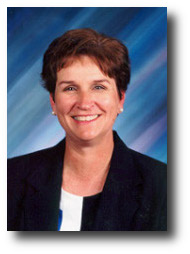
Ann DepperschmidtAt in-service gathering, diocesan Catholic school teachers examine

'What is Catholic identity?


Several years ago, Ann Depperschmidt, principal of Sacred Heart School in Ness City, was visited by then-Superintendent of Schools, Sister Rosemary Henrichs, who complimented her on the school’s strong Catholic identity.

Depperschmidt, who has served as Superintendent of Schools since Sister Rosemary resigned nearly eight years ago, admitted that, all those years ago, she really didn’t know to what Sister Rosemary was referring by "Catholic identity."

On Sept. 26, Depperschmidt hosted Catholic school teachers and principals from across the diocese at the annual in-service at the Cathedral of Our Lady of Guadalupe in Dodge City.

She told the teachers that she has since learned that Catholic identity comes less from the pictures of the saints on the walls than it does from the behavior of those within the school.

"Catholic identity has to do with how we treat each other – the students, visitors, parents, and staff. It’s how we interact with each other," Depperschmidt said.