Please adjust your volumn to a low setting before playing this video.

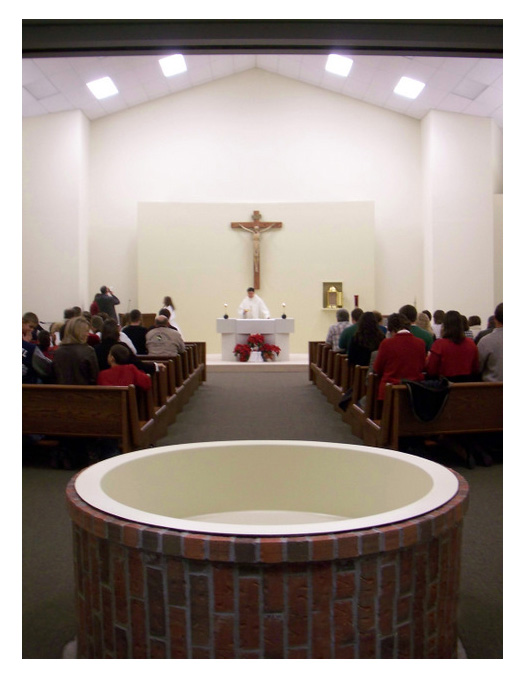
Do you celebrate the day of your baptism?

Pope Francis asks


Vatican City, Jan 10, 2016 / 05:35 am (CNA/EWTN News) - In his Sunday Angelus remarks Pope Francis stressed the importance of both knowing and celebrating the day of our baptism, since it is through the sacrament that we become children of God.

“I ask you a question: who among you remembers the day of their baptism?” the Pope asked during his Jan. 10 Angelus address, marking the feast of the Baptism of the Lord.

“Certainly, not everyone” knows the date, he noted, and urged those who don’t to go and look for it, if necessary asking parents, grandparents, godparents or even their parish for help.

Baptism is important to celebrate because “it's the date of our rebirth as children of God,” Francis said, and gave those present “the homework” of finding the date during the coming week.

Before praying the Angelus Pope Francis baptized 26 babies – 13 girls and 13 boys – in the Sistine Chapel. He asked pilgrims gathered in St. Peter’s Square to offer special prayers for the infants before turning to the day’s Scripture passages.

In his reflections, the Pope recalled how when Jesus was baptized in the day's Gospel, taken from Luke, the heavens opened and the Holy Spirit came in the form of a dove.

With the Father's words “This is my beloved son, with whom I am well pleased,” Jesus is consecrated and becomes the awaited Messiah, savior and liberator, he said.

He noted that in the event of Jesus' baptism, the transition is made from John's baptism with water, to the baptism of Jesus in “Spirit and fire.”

Francis said that the Holy Spirit is really the protagonist in the sacrament, since “he is the one who burns and destroys original sin, returning to baptism the beauty of divine grace.”

“It is he who liberates us from the dominion of darkness, which is sin, and brings us into the realm of light, which is love, truth and peace,” the Pope said, and encouraged attendees to think about special dignity they are elevated to in receiving baptism, namely, that of becoming children of God.

The “stupendous reality” of being children of God brings with it the responsibility to follow Jesus, who is an obedient servant, he said. It also reproduces within us the features of Jesus, primarily those of meekness, humility and tenderness.

Pope Francis noted that it “isn’t easy” to do this, “especially if, inside of ourselves, there is so much intolerance, arrogance and harshness.” However, with the strength that comes from the Holy Spirit, “it's possible!”

He explained that the Holy Spirit “opens our heart to the truth, to the entire truth,” and guides us down the difficult yet fulfilling path of charity and solidarity with those around us.

“The Spirit gives us the tenderness of divine forgiveness and pervades us with the invincible strength of the Father's mercy,” he said, adding that the Holy Spirit is both a living and life-giving presence for those who accept it.

Francis closed his address by praying that Mary, the “first disciple of her Son,” would intercede in helping all to live their baptism with “joy and fervor,” and to welcome every day the gift of the Holy Spirit, who makes us children of God.

After leading pilgrims in the traditional Marian prayer, the Pope offered a special blessing to all children who have recently been baptized.

He also gave a special blessing to youth and adults who have recently received the Sacraments of Initiation – Baptism, the Eucharist and Confirmation – or who are preparing to do so.

(Click here to go to the St. Nicholas Cantata podcast. Because it is 41 minutes long, the cantata podcast could take several minutes to download, depending on your computer speed.)

KINSLEY – Standing under an enormous Advent wreath adorned with purple ribbons, a choir of more than 40 children sang an Advent Cantata on Sunday afternoon, Dec. 7, at St. Nicholas Church in Kinsley.
Under the direction of Becky Burcher, former principal of St. Nicholas School, the youngsters performed eight songs that pertained to the theme “We Shall Prepare.”  
“The choir is composed of children from second grade to seventh grade,” said Father Marvin W. Reif, pastor of St. Nicholas.  “They have been practicing on Wednesday nights for several weeks.”
Cantors included Brittany Gleason, Kristen Brake, Sarah Hirsh, Brad Benish, Vincent Burcher, and Kayla Brake.  Readers were: Carly Schuette, Laurin Wagner, Connor Frame, Zachary Crockett, Bruce Davies, Cody Offerle, Scout Frame, Kate Gleason, and Austin Brake.
The Advent Cantata was by Mark Friedman and Janet Vogt.  The Daughters of Isabella hosted a reception for the students and audience members following the program.


Pope to diplomats: Migrants present challenges,

but don't forget their dignity

Vatican City, Jan 11, 2016 / 07:05 am (CNA/EWTN News) - On Monday Pope Francis gave his first major speech of the year to the diplomatic corps accredited to the Holy See, focusing on the hot-button topic of migration and the need to find dignified solutions to the problem.

While the increasing number of migrants certainly poses a challenge, Francis said that the basic human dignity of those seeking a better life shouldn’t be overshadowed by the problems that come with them.

“Over the past year Europe has witnessed a great wave of refugees – many of whom died in the attempt – a wave unprecedented in recent history, not even after the end of the Second World War,” the Pope told diplomats Jan. 11.

Migrants coming from Asia and Africa see Europe as “a beacon” for principles such as equality before the law as well as for values “inherent in human nature,” like the recognition dignity and equality of each person, respect for others regardless of origin or affiliation, freedom of conscience and solidarity, he said.

The Pope acknowledged that the massive number of arrivals on European shores “appear to be overburdening the system of reception painstakingly built on the ashes of the Second World War.”

“Given the immense influx and the inevitable problems it creates, a number of questions have be raised” about what is realistically possible in terms of accepting and accommodating so many people.

Along with these questions come concerns regarding changes in the cultural and social structures of the countries who receive migrants, as well as the reshaping “of certain regional geopolitical balances,” he said.

Fears about safety and security are “exacerbated” by the growing threat of terrorism, Francis observed, explaining that the wave of migration appears to be “undermining the foundations of that humanistic spirit which Europe has always loved and defended.”

However, in the midst of so many challenges and concerns, Pope Francis said that the basic principles of dignity and respect shouldn’t be forgotten.

“There should be no loss of the values and principles of humanity, respect for the dignity of every person, mutual subsidiarity and solidarity, however much they may prove, in some moments of history, a burden difficult to bear,” he said.

Francis then reaffirmed his conviction that Europe “has the means to defend the centrality of the human person and to find the right balance between its twofold moral responsibility to protect the rights of its citizens and to ensure assistance and acceptance to migrants.”

Pope Francis spoke to the Diplomatic Corps Accredited to the Holy See as part of his traditional exchange of New Year’s greetings with the diplomats. There are currently 180 ambassadors of other countries to the Holy See, 86 of whom reside in Rome.

An annual occurrence, the Pope’s speech to diplomats is one of the most important that he gives at the beginning of the year just begun, and sets the Holy See’s diplomatic tone for the rest of the year.

In his lengthy speech, Francis pointed to several important agreements of 2015, in particular to two fiscal agreements reached with Italy and the United States, as well as the Holy See’s agreement with the State of Palestine, which recently went into effect.

He then recapped his five apostolic voyages to Sri Lanka and the Philippines; Bosnia and Herzegovina; his tour of South America, which took him to Bolivia, Ecuador and Paraguay; Cuba and the United States, and his recent visit to Africa.

Family was also a major theme for 2015, he noted, adding that it is “the first and most important school of mercy, in which we learn to see God’s loving face and to mature and develop as human beings.”

However, he warned that the family is being “threatened by growing efforts on the part of some to redefine the very institution of marriage by relativism, by the culture of the ephemeral, by a lack of openness to life.”

Today there is “a widespread fear of the definitive commitment demanded by the family,” he said, explaining that and that those who pay the price “are the young, who are often vulnerable and uncertain, and the elderly, who end up being neglected and abandoned.”

Francis also cautioned the diplomats of developing an individualistic attitude, which he said “is fertile soil for the growth of that kind of indifference towards our neighbors which leads to viewing them in purely economic terms.”

The lack of concern for their humanity, he said, ultimately leads to feelings of “fear and cynicism,” and noted that this is the attitude frequently adopted toward society’s poor and marginalized populations.

A prime example of these persons are migrants, who “with their burden of hardship and suffering” daily search for a place to live in peace and dignity, “often in desperation,” he said.

Regarding the “grave crisis of migration” the world is currently facing, Francis noted that in 2015 it most heavily impacted Europe, as well as certain regions of Asia and North and Central America.

He turned to the Bible, explaining that the issue of migration is nothing new, but is in fact a key element throughout all of scripture. The Bible as a whole, he said, recounts the history “of a humanity on the move, for mobility is part of our human nature.”

“Human history is made up of countless migrations, sometimes out of an awareness of the right to choose freely, and often dictated by external circumstances,” he observed.

The Pope then decried “the arrogance of the powerful” who exploit the weak, forced to leave their homes, “reducing them to means for their own ends or for strategic and political schemes.”

“Where regular migration is impossible, migrants are often forced to turn to human traffickers or smugglers, even though they are aware that in the course of their journey they may well lose their possessions, their dignity and even their lives,” he lamented.

Francis again repeated his frequent appeal for an end to human trafficking, saying that “the image of all those children who died at sea, victims of human callousness and harsh weather, will remain forever imprinted on our minds and hearts.”

“Those who survive and reach a country which accepts them bear the deep and indelible scars of these experiences, in addition to those left by the atrocities which always accompany wars and violence.”

Among these people, he noted, are many Christians abandoned their homelands by the thousands over the past few years, despite the fact that they have been there since the earliest days of Christianity.

Many migrants would willingly stay in their homeland if they were able to find security and sustenance, he noted, and pointed specifically to Christians in the Middle East as examples.

Pope Francis lamented the fact that many of the root causes behind today’s migration crisis “could have been addressed some time ago,” and “so many disasters could have been prevented, or at least their harshest effects mitigated” had there been the will by those in power.

He encouraged the diplomats to make efforts in building peace, but said that doing so would mean “rethinking entrenched habits and practices,” beginning with the arms trade, financing and sustainable development policies, the provision of raw materials and energy, investment, as well as “the grave scourge of corruption.”

Both short-term and long-term planning is needed in order to find solutions, he observed, saying such plans shouldn’t be limited to just “emergency responses.”

Francis also pointed to the role of religious affiliation in the migration issue. Both extremism and fundamentalism, he said, “find fertile soil not only in the exploitation of religion for purposes of power but also in the vacuum of ideals and the loss of identity – including religious identity – which dramatically marks the so-called West.”

“This vacuum gives rise to the fear which leads to seeing the other as a threat and an enemy, to closed-mindedness and intransigence in defending preconceived notions,” he said.

The phenomenon of migration raises what the Pope called a “serious cultural issue” that demands a response.

Accepting migrants provides an opportunity to broaden the horizons of both the people who come, as well as the countries who receive them, he said.

Those who are accepted into a new society “have the responsibility to respect the values, traditions and laws of the community which takes them in,” while those who welcome them “are called to acknowledge the beneficial contribution which each immigrant can make to the whole community,” the Pope affirmed.

He then pointed to several “important international agreements” that took place in 2015, which he said “give solid hope for the future.”

Specifically, Francis mentioned the Iran nuclear deal, “which I hope will contribute to creating a climate of détente in the region,” and the climate agreement reached at the recent summit in Paris.

“It is now essential that those commitments prove more than simply a good intention, but rather a genuine duty incumbent on all states to do whatever is needed to safeguard our beloved earth for the sake of all mankind, especially generations yet to come,” he said.

Francis then stressed that the role of the international community is “of fundamental importance” in ending global conflicts, such as those in Burundi, the Democratic Repuclic of the Congo, South Sudan and Ukraine.

“The support which the international community, individual states and humanitarian organizations can offer the country from a number of standpoints, in order to surmount the present crisis,” is essential, he said.

Francis closed his speech by affirming that the Holy See will never cease to work for peace on a diplomatic level, and encouraged further cooperation.

He expressed his hope that the Jubilee of Mercy will be “a favorable occasion for the cold indifference of so many hearts to be won over by the warmth of mercy, that precious gift of God which turns fear into love and makes us artisans of peace.”


(Click here for a photo gallery of the events.)

The celebration of the Feast of Our Lady of Guadalupe and the story of the newborn Christ child inspired nights of celebration in the Catholic community of Liberal, which celebrated with traditional dance, as well as the posada, a reenactment of the search for lodging by Mary and Joseph.
St. Anthony, Liberal parishioners honored Our Lady of Guadalupe with dance and song. Her feast day was Dec. 12. Mass was celebrated Friday evening, with mañanitas (birthday celebration) on Sunday at 4:30 a.m. A procession began at noon with a Mass at 1 p.m., following which, performers in colorful native garb took part in danzas until 7 p.m.
Locals took part in a posada, which is a novena that starts nine days before Christmas and is held at different homes each night.  Several areas in Liberal celebrate the event. Often, participants will carry ceramic figurines of Mary and Joseph, but sometimes children will play the part.  When the outside group is invited in after they ask for lodging, there are songs that are sung, along with prayers.  Many will recite the rosary.   After the rosary there is usually refreshments or even a meal.  The following evening, another home with host Mary and Joseph, and the many pilgrims.

We're wounded – that’s why we need mercy, Pope Francis says

Vatican City, Jan 12, 2016 / 07:40 am (CNA/EWTN News) - In his new book on mercy Pope Francis offers extensive reflections on the topic that has shaped much of his pontificate, getting personal about his own experiences of mercy, what it means for him, and why humanity is in such desperate need of it.

“This is a time for mercy. The Church is showing her maternal side, her motherly face, to a humanity that is wounded,” the Pope said in his new book “The Name of God is Mercy,” released Jan. 12.

“She does not wait for the wounded to knock on her doors, she looks for them on the streets, she gathers them in, she embraces them, she takes care of them, she makes them feel loved…I am ever more convinced of it, this is a kairós, our era is a kairós of mercy, an opportune time.”

Francis’ comments are part of a book-length interview with Italian journalist Andrea Tornielli. The book is meant to “reveal the heart of Francis and his vision,” according to Tornielli's foreward. He had wanted to ask the Pope about mercy and forgiveness, “to analyze what those words mean to him, as a man and a priest.”

In the Pope’s own words, he says that the meaning of mercy for him goes to the etymological root of the word: “misericordis, which means opening one’s heart to wretchedness.”

“Mercy is the divine attitude which embraces, it is God’s giving himself to us, accepting us, and bowing to forgive,” he said. “Mercy is God’s identity card. God of Mercy, merciful God. For me, this really is the Lord’s identity.”

When asked by Tornielli why humanity is in such great need mercy, Francis simply answered: “Because humanity is wounded, deeply wounded.”

“Either it does not know how to cure its wounds or it believes that it’s not possible to cure them,” he said, explaining that it is not just a question of being wounded by social ills such as poverty or exclusion.

“Relativism wounds people too: all things seem equal, all things appear the same. Humanity needs mercy and compassion.”

Today, he said, we feel that “our illness, our sins, to be incurable, things that cannot be healed or forgiven. We lack the actual concrete experience of mercy.”

“We don’t believe that there is a chance for redemption; for a hand to raise you up; for an embrace to save you, forgive you, pick you up, flood you with infinite, patient, indulgent love; to put you back on your feet. We need mercy.”

He explained to Tornielli that the centrality of mercy in his life has “slowly evolved” over the years through his work as a priest, particularly in hearing confessions, as well as the many “positive and beautiful stories” he has seen.

Mercy is “Jesus’ most important message” Francis said, and, quoting retired pontiff Benedict XVI, added that “mercy is in reality the core of the Gospel message.”

“This love of mercy also illuminates the face of the Church...Everything that the Church says and does shows that God has mercy for man,” he observed.

Pope Francis recounted how the idea to have a Jubilee of Mercy came to him, explaining that the decision “came through prayer, through reflection on the teachings and declarations of the Popes who preceded me, and by thinking of the Church as a field hospital, where treatment is given above all to those who are most wounded.”

He said the first seeds were planted while he was still in Buenos Aires. At one point a roundtable discussion was held with theologians on what the pope at that time could do to bring people closer together.

One of the participants in the roundtable had suggested “a Holy Year of forgiveness,” Francis recalled, saying the idea “stayed with me.”

Reflecting on his own life, Pope Francis said that although he doesn’t remember having a first encounter with mercy as a child, one scripture passage he has always found syntony with is Ezekiel chapter 16.

In the passage, the Lord sees a newborn infant left to die and has compassion on her. He takes her in, anoints her and adorns her, only for her to later become a harlot enamored with her own beauty. In order to remind her of her origins, God placed her “above her sisters,” so that she would remember and be ashamed for what she had done.

God's mercy makes us feel shame for ourselves and our sin, the Pope said, explaining that “shame is a grace: when one feels the mercy of God, he feels a great shame for himself and for his sin.”

Shame is “a grace” that St. Ignatius also prayed for, Francis noted, and pointed to Fr. Gaston Fessard’s book “The Dialectic of the ‘Spiritual Exercises’ of St. Ignatius,” which he called “a beautiful essay by a great scholar of spirituality,” on the topic of shame.

He also pointed to a specific confession he had at the age of 17 on the Feast of St Matthew with a priest named Carlos Duarte Ibarra as being especially impactful.

Fr.  Duarte is one example that Pope Francis pointed to as a merciful priest, and said that others he has met include Fr. Enrico Pozzoli, the Salesian who baptized him and married his parents, as well as a young Capuchin priest he met in Buenos Aires.

(Click here for photos from the event.)


They came from far and wide, former and present parishioners of St. Joseph Church in Greensburg, all welcomed as family on Christmas Eve to the newly constructed church’s first Mass.
It was an appropriate occasion for the first Mass, considering it was a celebration of the birth of the baby Jesus and of a new chapter in the Catholic community of Greensburg.
“It was wonderful,” said Ellen Peters, parish life coordinator. “We had a full church and everybody was just very happy to be in that church. The ceremony was beautiful. Father Bob [Schremmer] gave a top-notch homily as he always does.”
The first St. Joseph Church, which was dedicated Jan. 11, 1953 by Bishop John B. Franz, was destroyed at approximately 9:45 p.m., May 4, 2007, during a tornado that took with it most the town. Winds were reported to have been 205 mph. The storm damaged several regions outside of Greensburg, cutting a swath 1.7 miles wide and 22 miles long.

CLICK here to see photos from Hattie Stein's trip. 

Editor’s Note: The following, which highlights Hattie Stein's trip to Russia, is the first in a two-part series. Part II, to be published in the Feb. 8 issue, will include Stein’s trip to Poland, where she visited the Auschwitz Nazi death camp.

 
Late in 2008, Wright resident Hattie Stein, an addictions counselor for Catholic Social Service’s Rural Family and Behavioral Services program, was one of 25 counselors from across the United States invited to tour treatment facilities in St. Petersburg, Russia.
Once in St. Petersburg (formerly, Leningrad) she found a nation of contradiction. Homes and offices painted all the colors of the rainbow stood in stark contrast to the cloudy, grey skies that blanketed the city more than 300 days per year. In a deep-rooted desire to appear self-sufficient, people dressed to the hilt, while many did not have enough food to feed their family. Professionals – physicians, teachers, business executives – would leave their day jobs only to drive a cab or tend bar at night, two or three jobs needed to supplement the average $250 per month pay.
“You will find two and three generations of family living in the same two-bedroom apartment,” Stein said, a result of significant growing pains which began when the country overthrew Communism in the late 1980s.

Look for the presence of God in your life,

Pope says on New Year's

Vatican City, Dec 31, 2015 / 06:12 pm (CNA/EWTN News) - As this year comes to an end, Pope Francis has encouraged faithful to look back at the events of 2015, telling them to be attentive to both the presence of God, and the signs he is giving.

“Retracing the days of the past year can be done either as a memory of facts and events which bring moments of joy and sorrow, or by trying to understand if we have perceived the presence of God, who makes all things new and sustains them with his help,” the Pope said on New Year’s Eve, Dec. 31.

He gave a brief homily during his celebration of Vespers on the eve of the Solemnity of Mary, the Mother of God, and the start of the new year.

We are challenged, he said, to see if the world’s events have been done according to God’s will, or “if we have primarily harkened to the projects of men, which are often characterized by private interests, of unquenchable thirst for power and of senseless violence.”

Francis also urged attendees to focus in a special way on the “the signs” that God has given us, saying they are a means of touching “with our own hands” the strength of his merciful love.

Many days of the past year, he noted, were marked by “violence, death, the unspeakable suffering of many innocent people, of refugees forced to leave their homeland (and) of men, women and children without a stable home, food or sustenance.”

However, the Pope also pointed to the many acts of love and solidarity that were shown and which filled each day, “even if they didn’t make the news!”

Such acts of love and goodness “cannot and must not be obscured by the arrogance of evil. Good always wins, even if in some moments it appears weak and hidden,” he said.

In addition to the praying of Vespers, the celebrations were also marked by the chanting of the Te Deum, an ancient prayer of praise which grants the one who recites it publicly on New Year’s Eve a plenary indulgence under the usual conditions. Francis also presided over exposition and benediction of the Blessed Sacrament.

In his reflections, Francis said that the Church often feels the joy and duty of praising God with the words of the hymn, which, through “the joy of thanksgiving,” allows one to recognize the loving presence of God throughout history.

He also stressed the importance of community, saying that this individual prayer of praise and thanksgiving must also be “reinforced” by the company of the entire people of God, “who in unison make their song of thanksgiving heard.”

Francis then pointed to the Jubilee of Mercy, which began Dec. 8, 2015, and closes Nov. 20, 2016.

The Holy Year, he said, provides the opportunity to overcome the difficulties of the present time, adding that the “companionship of mercy is a light to understand better how much we have lived, and is a hope that accompanies us at the beginning of the new year.”

He closed his homily by noting how Rome is not immune to the present challenges of the world, and encouraged the city’s inhabitants to go beyond the difficulties of the present moment and to recover the essential values of service, honesty and solidarity.

Following the celebration of Vespers and the benediction of the Eucharist, Pope Francis made a brief visit to the Nativity scene in St. Peter’s Square.

A bloody secret still haunts the diamond industry


Washington D.C., Jan 3, 2016 / 04:26 pm (CNA) - Imagine being woken up in the middle of the night by a dark figure in your room. He presses a gun to your head and demands that you get up. You and your family are dragged out of bed and led to a mining field, where you are forced to dig for hours on end.


They may be the proverbial “girl’s best friend,” but diamonds are far from friendly for many of those involved in the mining process.

With abuses ranging from forced labor to the funding of child soldiers, many diamonds still carry the shadow of blood and conflict, even decades after the first attempts to address some of the more troubling practices in getting the stones from their rocky deposits to a glittering setting.

What – if anything – can Catholics do to counter the immense human cost still attached to some of these gems?

Plenty, according to Max Torres, business professor and Director of the Management Department at The Catholic University of America.

“In this economy, the consumer is king,” he told CNA. “The day that consumers want to get worked up over diamonds, this will stop, whatever abuse it is we’re trying to eradicate, it will stop.”

While there are many steps in the process and levels of moral responsibility from consumers to the diamond exporters themselves, Torres maintained that ordinary people can still work to change large-scale moral problems in the industry.

“Do not underestimate the power of the consumer to move supply-chain decisions throughout the economy,” he stressed.

Clear stones; Blood-red controversies

Despite the 2006 hit film “Blood Diamond,” starring Leonardo DiCaprio, many consumers are still unaware of the controversy surrounding the diamond industry. Meanwhile, the need for accountability and higher ethical standards is still sorely felt by many working to mine the precious gems.

In recent decades, the conversation surrounding diamond mining has focused on the so-called “blood diamonds” – those mined in conflict areas whose profits are used to fund the bloody war efforts.  Also called “conflict diamonds,” these previous stones are most associated with the illicit industries backing of civil wars in Angola, Sierra Leone, the Ivory Coast, Democratic Republic of Congo, Republic of Congo, Central African Republic and Liberia.

These countries all now have, at least in theory, legitimate diamond mining industries subject to international standards.

The most well-known international standard, the Kimberley Process, was set up in 2003 following a United Nations resolution against the sale of blood diamonds, to ensure that any given shipment of diamonds does not finance rebel groups. Certified shipments of rough diamonds must be transported in tamper-resistant containers and must be accompanied by a government certificate verifying their compliance.

But many advocates say the process is inadequate at addressing the problems underlying the diamond industry. For starters, there is no guarantee beside the exporting government’s assurance that a given shipment of diamonds is, in fact, conflict-free. Issues of corruption and bribery surrounding some governments’ certification, and a lack of transparency has led some key groups to pull out of the process altogether.

The 2003 National Geographic special “Diamonds of War” found that despite the early efforts of the Kimberley Process to regulate the industry, illegal transactions at the time were still rampant in some areas. A Sierra Leone official said that some 60 percent of the diamonds exported from the country were smuggled rather than going through officially regulated channels. One expert in the documentary estimated that 20-40 percent of the global rough diamond trade at the time was done illicitly.

Another complaint about the Kimberley Process is that while it works to combat funding of conflicts, it does not deal with other issues in the diamond industry, including forced labor and violence against workerssubstandard and exploitative working conditions, the use of child labor and environmental concerns.

These problems show that the current definition of “conflict-free” is “far too limited in scope,” said Jaimie Herrmann, director of marketing for Brilliant Earth, a San Francisco-based jeweler that focuses specifically on providing ethically-sourced diamonds, gemstones and metals.

What the Kimberley Process “doesn’t include is human rights abuses, violence, sexual abuses, and severe environmental degradation, as well as corruption,” Herrmann continued.

“For that reason, we go above and beyond the Kimberley Process’s definition of conflict free,” she said. Brilliant Earth gets its diamonds from select sources in Canada, Namibia, Botswana, South Africa and Russia. “We feel like those diamonds really do go above and beyond that guarantee and they are untainted by human rights abuses.”

The chance to establish a legitimate and ethical source of diamonds has also been an economic opportunity for some countries. In Botsawna, the government and DeBeers diamond company each own half of the Debswana mining company, and the nation has seen a rapidly growing economy and increasing economic freedom thanks in part to its booming mining industry and trusted industry standards.

Canada too has invested heavily in its mining infrastructure and increased production, quickly becoming a key diamond-producing country since the discovery of large diamond deposits in the 1990s.

Synthetic diamonds too offer promise for more ethically-produced diamonds, though currently the lab-produced stones comprise only two percent of the diamond gemstone market, with the remainder of the synthetic stones used in industrial settings.

The Ethics of Luxury and Necessity

Dr. Christopher Brugger, professor of moral theology at St. John Vianney Theological Seminary in Denver, Colorado, told CNA that in the diamond industry, as in any other work, Catholic social teaching instructs employers that “people come before profit.”

For businesses, he said, this means “pay employees a fair wage; respect the integrity of the marriages and families of employees; respect the faith of employees; permit labor to organize in socially constructive ways; work for fair access for all to goods and services necessary to living a dignified life.”

“Do producers who use their profits to fund conflicts or who use forced labor fulfill those duties?” he asked. “Emphatically no.”

Sustained abuses ranging from the funding of bloody conflicts to mining practices that exploit and demean workers not only fail to fulfill the moral duties of employers, Brugger said. The unjust practices also affirm that the high profits coupled with neglect for moral obligations have been “attracting scoundrels” to the industry.

But business leaders are not the only people with moral stakes in the diamond industry, he continued.

“It seems to me that morally conscientious people have an increasing responsibility to ‘shop ethically,’ i.e., to keep in mind where things come from, the conditions of those who supply things, the processes by which they are supplied,” Brugger suggested.

While it may not be possible to know the sourcing behind every product in every store, he said, it could be easier to find information on larger suppliers and specific industries.

Furthermore, he elaborated, there is a “greater responsibility on a person who is buying luxury items not to cooperate in the immoral actions of suppliers than there is on persons who are purchasing products for basic subsistence.”

“Ordinarily I do not need diamonds or chocolate,” Brugger said. “If we are dealing with luxuries, I think our obligations are still pretty strong to avoid purchasing from sources that do really bad things.”

“As one becomes aware of the ethical conditions surrounding an industry, one's duty to factor that knowledge into one's moral decision making becomes greater,” he added, noting that not everyone has the same access to the facts on abuses in a given industry.

“As knowledge of the ethical deficiencies become more widely known and the knowledge becomes easily available, our responsibility to use that knowledge in our shopping becomes greater,” he said. Knowledgeable customers should “inquire into the origins of the diamond they purchase; if shopkeepers are coy and not forthcoming about their sources, consumers ordinarily should look elsewhere.”

A Good Place to Start

Lack of information is “a big part of the problem,” according to Herrmann. She recommended that jewelers seek to trace the origin of their diamonds to countries and mines known for more ethical practices.

“Most jewelers know that their diamond is certified as conflict-free by the Kimberley Process, but do not know any more information about where their diamond is coming from,” she said.

Stephen Hilbert, a foreign policy adviser specializing in Africa and Global Development for the U.S. Conference of Catholic Bishops, seconded the suggestion that people looking at diamonds ask where they come from. He added that customers should also ask electronics dealers to check for conflict minerals, which face many of the same concerns as the diamond mining industry.  

“Dealers may not be able to tell you whether their devices have been checked, but at least this raises the profile of the issue and this may trickle up,” he told CNA.

Consumer instance could be the force that leads to tighter standards and improved processes aimed at preventing abuse.

Still, Torres insisted, “no process is perfect.”

The Kimberley Process is a reputable starting point that could “be broadened and be brought more into line with human rights,” he said, and asking about the origin of diamonds “seems to be a rather painless method of at least garnering some amount of accountability.”

But in the end, the moral issues surrounding the industry are fundamentally a problem of human sin, which no process or regulations can erase.

“The only thing that can ensure moral behavior is the heart is human beings,” Torres said. Ultimately, “Jesus Christ is the answer.”