


Francis also told journalists that while he is willing to forgive clergy who have abused children and young people, he understands why there are some who find this difficult.
“We must forgive, because we were all forgiven,” the Pope said. However, “it is another thing to receive that forgiveness.”
Pope Francis told journalists on board the papal plane he is not judgmental of victims or the families of molested children who struggle to forgive the abuser.
He illustrated this point by recalling a meeting he once had with a victim of molestation, who told him that her mother had “lost her faith and died an atheist” on account of the abuse.
“I understand that woman,” the Pope said, “and God who is even better than me understands her.”
Pope Francis said he believes this mother “has been received by God,” taking into account that it was her own flesh and blood, her daughter, who was molested.
“I don’t judge someone who can’t forgive,” he said, but instead prays for them. “God is a champion in finding paths of solutions. I ask him to fix it.”
“What remains is to pray for the Lord to open that door. To forgive, you must be willing.”
Pope Francis also stressed that he forgives priests who have abused children, but they in turn must be open to receiving forgiveness.
A priest who has sexually abused a minor, and is not remorseful, “is closed to forgiveness,” the pontiff said. “He won’t receive it, because he locked the door from the inside.”
“If a person has done wrong, is conscious of what he has done, and does not say sorry, I ask God to take him into account.”
“I forgive him, but he does not receive that forgiveness. He is closed to forgiveness.” Not everyone is able or willing to receive forgiveness, he acknowledged.
“What I’m saying is hard. And that is how you explain how there is people who finish their life hardened, badly, without receiving the tenderness of God.”
Pope Francis made these remarks on the papal plane returning from his Sept. 19-28 visit to Cuba and the U.S. While in the United States, he spoke several times on the topic of sex abuse by clergy.
The apostolic journey concluded with his visit to Philadelphia, a city which was struck hard by the clerical sex abuse crisis. While there, the Pope met with five survivors who had been molested as children, either by clergy, family members or educators.
One journalist asked Pope Francis about his remarks to the U.S. bishops in Washington, D.C. about the clerical sex abuse crisis – specifically, his reasons for offering them comfort in the wake of the scandal.
“I felt the need to express compassion because something really terrible happened,” he said in reference to the Sept. 23 speech, explaining that many of the bishops who suffered “did not know of this.”
The Pope said he made reference to the book of Revelation when he told the bishops: “You are coming from a large tribulation. What happened was a great tribulation.”
Although sexual abuse of minors exists in many areas, Pope Francis said it is particularly serious when it occurs at the hands of a priest, whose vocation is to lead children toward God.
“We know the abuses are everywhere in families in the neighborhoods, in the schools, in the gyms,” he said.
“But, when a priest abuses it is very serious because the vocation of the priest is to make that boy, that girl grow toward the love of God, toward maturity and toward good,” he said.
The abuse of minors is “nearly a sacrilege,” he said, and by committing these acts the priest has “betrayed his vocation, the calling of the Lord.”
The Pope stressed that this is why the Church is adamant that these crimes of abuse must not be covered up.
During the sex abuse crisis in the U.S., it came to light that a number of US bishops sought to prevent these criminal acts by priests from being exposed.
“Those who covered this up are guilty,” the pontiff said, in reference to these bishops.
During his Sept. 22-28 visit to the U.S., Pope Francis also spoke with clergy and religious in New York on the country's sex abuse crisis, in which he acknowledged their suffering in the wake of the scandal.
In his homily at the Sept. 24 vespers in St. Patrick's Cathedral the Pope acknowledged they had come out of the period of “great tribulation,” and reminded them that their vocation is to be lived out with joy.
Bishop Gilmore blesses site of new 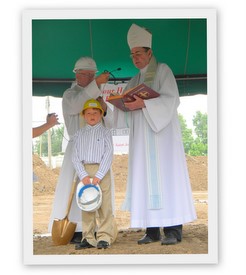
parish center in Hoisington
Catholics celebrate the history of the parish
through display of time capsule contents
HOISINGTON -- Moisture-filled clouds and a cool breeze welcomed the approximately 200 people gathered at a work site adjacent to St. John the Evangelist Church Sunday, June 7, as the land was blessed and the earth broken to give rise to a new parish center.
Children in yellow hard hats and holding shovels painted gold, stood off to the side of a small tented area, ready to deliver white hard hats and the shovels to the digging dignitaries.
'You are not alone' - Oregon bishops,
priests support a community in shock
Portland, Ore., Oct 2, 2015 / 04:34 pm (CNA/EWTN News) - In the wake of a mass shooting at a community college in Roseburg, Oregon, members of a local Catholic parish are reaching out to offer sympathy, comfort and hope.
“I think people are just in shock. In the small town of Roseburg…nothing like this has ever happened. We hear about it in the news throughout the United States but never hitting home, and now it has hit home,” said Fr. William Holtzinger.
After serving at the local Catholic parish, St. Joseph’s, from 2000-2002, Fr. Holtzinger now serves at a parish about an hour away from Rosenburg. As soon as heard about the shooting, he headed to Rosenburg to assist with Mass and to offer pastoral care to the grieving community.
As he offered care to the community, Fr. Holtzinger said he tried to remind people of the mercy and consolation God offers his people in times of tragedy.
“I’m sharing with people to be mindful if they are angry, to be aware of where that anger may come from, and be mindful that God is there to console us,” he told CNA.
He warned about the need for a proper response to the grief and anger that are natural consequences to a tragic situation.
“We need to be careful not to let anger become sin. It is just to be angry about an injustice, and an injustice has occurred, but also be mindful that we are all suffering from loss, and from loss can come lots of inappropriate anger.”
“As to why these things happen I don’t have a great answer, but we do know that God saves,” he said.
On October 1, a 26 year-old man left 10 dead and several others wounded after going on a shooting rampage at Umpqua Community College in Roseburg, Oregon, according to police.
After news broke of the tragedy, St. Joseph’s held a Mass to pray for the victims and their families. Portland Auxiliary Bishop Peter Smith presided over the Mass. At the end, he repeatedly told attendees, “You are not alone,” stressing that the bishops and entirety of the archdiocese were grieving with them and offering support.
Several reports from witnesses at the scene describe the shooting as religiously motivated.
Stacy Boylan, told CNN that his daughter, who survived the shooting, described to him how the gunman asked his victims to state their religion before shooting them.
“'Are you a Christian?' he would ask them, 'and if you are a Christian stand up,'” Boylan recalled, “because if you're a Christian you're going to see God in just about one second.”
Another survivor, Kortney Moore, gave a similar account to a local newspaper, The News-Review.
“Here are people who have professed their faith, and because of their profession, they were executed,” Fr. Holtzinger said.
“In my mind, those sound like martyrs to me.”
“And they may have been killed anyway, because (the shooter) then went on a rampage, but my question to myself is, what would I have done?” Fr. Holtzinger said.
“I hope I would have had the courage to stand up like these other individuals and to say, ‘Yes, I am a Christian.’”
Just before Mass, a family belonging to St. Joseph’s contacted the parish in a panic – their daughter attended Umpqua, and they still hadn’t heard from her. After Mass, Father Jose Manuel Campos Garcia, the pastor at St. Joseph’s, learned that his young parishioner was in fact among the dead, and left immediately to be with the family.
Fr. Holtzinger said he was also especially moved by how quickly Archbishop Alexander Sample and Auxiliary Bishop Peter Smith offered support to Fr. Jose and the Roseburg community. Bishop Smith was able to attend the Mass, while Archbishop Sample immediately sent condolences and prayers.
“These terrible shooting tragedies are becoming far too common an experience in our contemporary society. They are always shocking and sobering events, but they are even more so when they strike so close to home,” Archbishop Sample said in an initial statement he posted on social media. “My prayers are with the victims of the shooting and their families. I can only imagine the trauma they are experiencing.”
“My prayers are also with the community at UCC and the wider community of Roseburg. As the Catholic shepherd of western Oregon, I wish to express my closeness to the people at this sad and tragic time.”
Not long after, Archbishop Sample sent out a letter to all the priests to be distributed around the Archdiocese of Portland, saying that he was “saddened beyond words” by the shooting and that his heart was “very heavy with sorrow as I grieve with all of you.”
“We must unite our suffering and the suffering of all those most directly affected by this tragedy with the cross of Jesus. In Christ, sorrow, death and loss are transformed by the glory of the resurrection. Jesus has conquered sin and death and opened the way to eternal life,” he said.
“Let us prayerfully commend our deceased brothers and sisters to the mercy of our loving Father. Let us also pray for healing and strength for all those who grieve the loss of loved ones and who care for the wounded.”
Here's what it was like when
Pope Francis visited the homeless in DC
Washington D.C., Oct 6, 2015 / 12:16 am (CNA/EWTN News) - Pope Francis’ visit to homeless men and women in Washington, D.C., was “life-changing,” said the head of Catholic Charities in the nation’s capital.
He added that many of those who met the Pope described the event as validating their dignity and showing them the presence of God.
Along with every major speech to a political body during his U.S. visit, Pope Francis also paid a visit to the poor or vulnerable, noted Monsignor John Enzler, CEO of Catholic Charities of the Archdiocese of Washington, D.C., who hosted Pope Francis.
This was “a juxtaposition of, if you will, power and richness and big voice and money and prestige versus no voice, no money, no prestige, powerless,” he told CNA.
Yet the Pope treated both audiences “exactly the same,” and he even “seemed to be more engaged with those who did not have than with those who did.”
The homeless loved his personal outreach to them, Msgr. Enzler remarked. They said they could “feel the Spirit of God there,” he recalled, and one homeless person in attendance said, “I feel like I’m legitimate now,” and “I feel like I have dignity.”
During his visit to Washington, D.C. on Sept. 24, the Pope addressed the U.S. Congress inside the Capitol building, then traveled straight over to St. Patrick’s Catholic Church in downtown Washington, D.C. to meet with clients of Catholic Charities, including immigrants, the homeless, and persons with disabilities and mental illness.
Entering the church, the Holy Father slowly proceeded up the main aisle, greeting many of those in attendance before spending a few moments in prayer at a side altar of the Blessed Virgin Mary.
Pope Francis then talked to those in attendance about homelessness, noting, “The Son of God came into this world as a homeless person, and praising St. Joseph as “a support and an inspiration.”
“To me it was a huge reminder for our whole country and all of us that there’s a whole culture of people out there who are sometimes forgotten, and we dare not forget them as part of our mission,” Msgr. Enzler said.
The Pope then walked next door to Catholic Charities, blessed the chapel, and was presented with a 400-page book listing all the pledges made to “Walk With Francis.” This popular campaign was led by Catholic Charities and the Archdiocese of Washington, asking people to pledge an act of prayer, service, or advocacy in solidarity with the papal visit.
The initiative hit 100,000 pledges on Sept. 23, the first full day of Francis’ visit to the U.S. The pontiff viewed the pledges briefly with Cardinal Donald Wuerl of Washington, D.C., and reportedly wanted the book with him on the plane ride to New York City later that day to look through it further.
Pope Francis then walked out the front door to meet with homeless clients of Catholic Charities at their weekly lunch program. He offered no lengthy prayer but simply blessed the food and said “Buon appetito!”
The homeless people present received the Pope with such enthusiasm, it was like a “mosh pit,” Msgr. Enzler said, adding that the Secret Service couldn’t do a thing about it. “Well we just lost him,” one agent was overheard saying.
Pope Francis had desired to be closer to the crowds on his D.C. trip, but hadn’t gotten many opportunities to do so, the monsignor noted. However, he got that chance on the Catholic Charities visit.
“I probably heard from 50 people who shook his hand, whom he said to ‘please pray for me,’ whom he talked to briefly. He really did engage people,” Msgr. Enzler said.
I can forgive an abuser, but understand those who can't, Pope says
Vatican City, Sep 28, 2015 / 05:14 am (CNA/EWTN News) - In his wide-ranging press briefing en route from the United States to Rome, Pope Francis spoke on the difficult subject of forgiving priests who have molested minors, saying that the strength to forgive, and to be forgiven, can only come from God.
Larned community reacts with shock,
sadness to closing of hospital
Members of the Larned community reacted with shock and sadness to the June 10 announcement that St. Joseph Memorial Hospital and its long-term care unit would close its doors Sept. 30.
“I think people are kind of going through a grief process,” said Barbara Hammond, a member of the Larned City Council. “There’s a lot of sorrow. We’re just very stunned.”
Full transcript of Pope Francis' inflight
interview from Philadelphia to Rome
Vatican City, Sep 28, 2015 / 08:31 am (CNA/EWTN News) - In a 47 minute Q&A with journalists on his way back to Rome Pope Francis touched on sensitive topics such as forgiving abusers and conscientious objection, as well as the upcoming synod of bishops and women’s ordination.
The Pope answered 11 questions posed in English, Spanish and Italian Sept. 27 while on board his American Airlines overnight flight from Philadelphia to Rome.
Among the themes addressed were the new, streamlined annulment process, women’s ordination to the priesthood, the migrant crisis and whether or not government officials have a right to conscientious objection.
He reaffirmed the Catholic Church’s position on women’s ordination to the priesthood, saying that St. John Paul II led the lengthy reflections and discussion on the topic and it “cannot be done,” though it’s not because women “don’t have the capacity.”
Please read below for the full English transcription:
Vatican spokesman Fr Federico Lombardi S.J. greeted everyone onboard before going immediately into the questions and answers. He introduced each of the journalists before their questions.
Pope Francis: Good evening to all and thank you for the work because you went about from one place to the other and I was in a car but you…thank you very much.
Elizabeth Dias, Time Magazine: Thank you so much Holy Father, Elizabeth Diaz from TIME magazine. We are all so curious…this was your first visit to the U.S. What surprised you about the U.S. and what was different to what you might have expected?
Pope Francis: It was my first visit. I’d never been here before. What surprised me was the warmth, the warmth of the people, so lovable. It was a beautiful thing and also different: Washington the welcome was warm but more formal; New York was a bit exuberant. Philadelphia very expressive. Three different kinds of welcome. I was very struck by this kindness and welcome but also by the religious ceremonies and also by the piety, the religiosity of the people...you could see the people pray and this struck me a lot. Beautiful.
Elizabeth Diaz, Time Magazine: Was there challenge that the United States presented that you didn’t expect? (The translator added “some provocation?”)
Pope Francis: No thank God no…everything good. No challenge. No provocation. All polite. No insults and nothing bad.
Elizabeth Diaz, Time Magazine: And the challenge?
Pope Francis: We must continue to work with these faithful people like we have always done so until now. Accompanying the people in their growth through good times and also through their difficulties, accompanying people in their joy and in their bad moments, in their difficulties when there is no work, ill health and the challenge of the Church…now I understand...the Church’s challenge is staying close to the people, close to the people of the United States...not being a detached Church from the people but close to them, close, close, and this is something that the Church in the United States has understood and understood well.
David O’Reilly, Philadelphia Inquirer: Holy Father. Philadelphia as you know has had a very difficult time with sex abuse. It’s still an open wound in Philadelphia. So I know many people in Philadelphia were surprised that you offered bishops comfort and consolation and I think many in Philadelphia would ask you why did you feel the need to offer compassion to the bishops?
Pope Francis: In Washington I spoke to all the U.S. bishops …they were all there no? I felt the need to express compassion because something really terrible happened. And many of them suffered because they didn’t know about this. And when the thing was discovered, they suffered so much, men of the Church, of prayer…true pastors. I used word from the bible from the apocalypse. You are coming from a large tribulation. What happened was a great tribulation. But not only the actual suffering, but what I said today to the victims of abuse. I wouldn’t say it was an apostasy but almost a sacrilege. We know the abuses are everywhere; in families, in the neighborhoods, in the schools, in the gyms, but when a priest abuses it is very serious because the vocation of the priest is to make that boy, that girl grow toward the love of God, toward maturity and toward good, but instead of that they squashed them and this is nearly a sacrilege. He betrayed his vocation, the calling of the Lord. For this reason the church is strong on this and one must not cover these things up. There are also those who covered these things up, even some bishops who covered this up. It is a terrible thing and the words of comfort were not to say “No, no don’t worry it was nothing,” but “It’s a terrible thing I imagine that you cried a lot” That was the sense of what I meant and today I spoke strongly.
Maria Antonieta Collins, Univision: You have spoken a lot about forgiveness, that God forgives us and that we often ask for forgiveness. I would like to ask you, after you were at the seminary today. There are many priests that have committed sexual abuses to minors and have not asked for forgiveness for their victims. Do you forgive them? And on the other hand, do you understand the victims or their relatives who can’t or don’t want to forgive?
Pope Francis: If a person has done wrong, is conscious of what he has done and does not say sorry, I ask God to take him into account. I forgive him, but he does not receive that forgiveness, he is closed to forgiveness. We must forgive, because we were all forgiven. It is another thing to receive that forgiveness. If that priest is closed to forgiveness, he won’t receive it, because he locked the door from the inside. And what remains is to pray for the Lord to open that door. To forgive you must be willing. But not everyone can receive or know how to receive it, or are just not willing to receive it. What I’m saying is hard. And this is how you explain how there are people who finish their life hardened, badly, without receiving the tenderness of God.
Maria Antonieta Collins, Univision: On victims or relatives who don’t forgive – do you understand them?
Pope Francis: Yes, I do. I pray for them. And I don’t judge them. Once, in one of these meetings, I met several people and I met a woman told me “When my mother found out that I had been abused, she became blasphemous, she lost her faith and she died an atheist.” I understand that woman. I understand her, and God who is even better than me understands her. And I’m sure that that woman has been received by God. Because what was groped, destroyed, was her own flesh, the flesh of her daughter. I understand her. I don’t judge someone who can’t forgive. I pray and I ask God, because God is a champion in finding paths of solutions. I ask him to fix it.
Andres Beltramo, Notimex: Thanks, first of all for this moment. We’ve all heard you speak so much about the peace process in Colombia between the FARC and the government. Now, there’s a historic agreement. Do you feel involved in this agreement and you’ve said that you wished to go to Colombia when this agreement was made, right? Now there are a lot of Colombians awaiting you. And a little one, how do you feel when the trip is over and the airplane takes off?
Pope Francis: When I heard the news that in March the accord will be signed I said to the Lord, 'Lord, help us reach March.' The willingness is there on both sides. It is there, even in the small group, everyone is in agreement. We have to reach March, for the definitive accord, which is the point of international justice. I was very happy and I felt like I was a part of it because I’ve always wanted this. I spoke to president Santos twice about this problem and not only me but the Holy See. The Holy See was always willing to help and do what it could.
The other questions, this is a bit a personal but I have to be sincere. When the plane leaves after a visit, I see the faces of so many people. I get the urge to pray for them and say to the Lord, 'I came here to do something, to do good, perhaps I have done wrong, forgive me but protect all those people who saw me, who thought of what I said, who heard me, even those who have criticized me, all of them,' that is what I feel. Excuse me, it’s a bit personal…you can’t say that in the newspapers.
Thomas Jansen, CIC: Holy Father, I wanted to ask something about the migrant crisis in Europe. Many countries are building new barriers out of barbed wire. What do you think of this development?
Pope Francis: You used a word, crisis. It’s become a state of crisis after a long process. For years, this process has exploded because the wars which those people leave and flee are wars waged for years. Hunger. It’s hunger for years. When I think of Africa, this is a bit simplistic, but I saw it as an example. It comes to me to think about Africa, “the exploited continent.” They went to pick up the slaves there, then the great resources. It’s the exploited continent. And, now the wars, tribal or not. But they have economic interests behind them. And, I think that instead of exploiting a continent or a nation, make investments instead so these people might have work and this crisis would be avoided. It’s true, as I said at Congress, it’s a refugee crisis not seen since World War II. It’s the biggest. You asked me about barriers. You know what happens to all walls. All of them. All walls fall. Today, tomorrow or in 100 years, they will fall. It’s not a solution. The wall isn’t a solution. In this moment, Europe is in difficult, it’s true. We have to be intelligent, and whoever comes…that migrant flow. It’s not easy to find solutions, but with dialogue beween nations they should be found. Walls are never solutions. But bridges are, always, always. I don’t know. What I think is that walls can last for a long time or a little time. The problem remains but it also remains with more hate. That’s what I think.
Jean Marie Guenois, Le Figaro: Holy Father, you obviously cannot anticipate the debate of the synod fathers, we know that well but we want to know just before the synod, if your heart as a pastor, if you really want a solution of the divorced and remarried. We want to also know if your ‘motu proprio’ on the speeding of annulments has closed this debate. Finally, how do you respond to those who fear that with this reform, there is a de-facto creation of a so-called 'Catholic divorce?' Thank you.
Pope Francis: I’ll start with the last one. In the reform of the procedure and the method, I closed the door to the administrative path, which was the path through which divorce could have entered. You could say that those who think this is 'Catholic divorce' are wrong because this last document has closed the door to divorce by which it could have entered. It would have been easier with the administrative path. There will always be the judicial path. (Continuing with the third question) The document…I don’t remember the third but you correct me.
Jean Marie Guenois, Le Figaro: The question was on the notion of catholic divorce, if the motu proprio has closed the debate before the synod on this theme?
Pope Francis: This was called for by the majority of the synod fathers in the synod last year: streamline the process because there are cases that last 10-15 years, no? There’s one sentence, then another sentence, and after there's an appeal, there's the appeal then another appeal. It never ends. The double sentence, when it was valid that there was an appeal, was introduced by Pope Lambertini, Benedict XIV, because in central Europe, I won’t say which country, there were some abuses, and to stop it he introduced this but it's not something essential to the process. The procedure changes, jurisprudence changes, it gets better. At that time it was urgent to do this, then Pius X wanted to streamline and made some changes but he didn’t have time or the possibility to do it. The synod fathers asked for it, the speeding up of the annulment processes. And I stop there. This document, this ‘motu proprio’ facilitates the processes and the timing, but it is not divorce because marriage is indissoluble when it is a sacrament. And this the Church cannot change. It's doctrine. It’s an indissoluble sacrament. The legal trial is to prove that what seemed to be a sacrament wasn't a sacrament, for lack of freedom for example, or for lack of maturity, or for mental illness, or, there are so many reasons that bring about (an annulment), after a study, an investigation. That there was no sacrament. For example, that the person wasn't free. Another example: now it’s not so common but in some sectors of common society at least in Buenos Aires, there were weddings when the woman got pregnant: 'you have to get married.' In Buenos Aires, I counselled my priests, strongly, I almost prohibited them to celebrate weddings in these conditions. We called them “speedy weddings,” eh? (They were) to cover up appearances. And the babies are born, and some (marriages) work out, but there's no freedom and then things go wrong little by little and they separate (and say) 'I was forced to get married because we had to cover up this situation’ and this is a reason for nullity. So many of them.
Cases of nullity, you have, you can find (the reasons) on the Internet, there are many, eh? Then, the issue of the second weddings, the divorcees, who make a new union. You read what, you have the “instrumentum laboris.” What is put in discussion seems a bit simplistic to me to say that the synod, that the solution for these people is that they can receive communion. That's not the only solution (being asked). What the “Instrumentum laboris” proposes is a lot and also the problem of the new unions of divorcees isn't the only problem. In the instrumentum laboris, there are many (problems to be addressed). For example, young people don’t get married. They don’t want to get married. It's a pastoral problem for the Church. Another problem: the affective maturity for a marriage. Another problem: faith. 'Do I believe that this is for ever? Yes, yes, yes, I believe.' 'But do you believe it?' the preparation for a wedding: I think so often that to become a priest there's a preparation for eight years, and then, its not definite, the Church can take the clerical state away from you. But, for something lifelong, they do four courses! Four times…Something isn't right. It’s something the synod has to deal with: how to do preparation for marriage. It’s one of the most difficult things. There are many problems, they're all are listed in the “Instrumentum laboris.” But, I like that you asked the question about 'Catholic divorce.' That doesn't exist. Either it wasn't a marriage, and this is nullity – it didn't exist. And if it did, it's indissoluble. This is clear. Thank you.
Terry Moran, ABC News: Holy Father, thank you, thank you very much and thank you to the Vatican staff as well. Holy Father, you visited the Little Sisters of the Poor and we were told that you wanted to show your support for them and their case in the courts. And, Holy Father, do you also support those individuals, including government officials, who say they cannot in good conscience, their own personal conscience, abide by some laws or discharge their duties as government officials, for example in issuing marriage licenses to same sex couples? Do you support those kinds of claims of religious liberty?
Pope Francis: I can’t have in mind all cases that can exist about conscientious objection. But, yes, I can say conscientious objection is a right that is a part of every human right. It is a right. And if a person does not allow others to be a conscientious objector, he denies a right. Conscientious objection must enter into every juridical structure because it is a right, a human right. Otherwise we would end up in a situation where we select what is a right, saying 'this right that has merit, this one does not.' It (conscientious objection) is a human right. It always moved me when I read, and I read it many times, when I read the Chancon Roland, when the people were all in line and before them was the baptismal font – the baptismal font or the sword. And, they had to choose. They weren’t permitted conscientious objection. It is a right and if we want to make peace we have to respect all rights.
(Editor’s note: He’s referring to provencal poem: Song of Roland in which Crusaders forced Muslims to choose between being baptized or being killed by the sword. The Pope says they were not allowed to choose conscientious objection)
Terry Moran, ABC News: Would that include government officials as well?
Pope Francis: It is a human right and if a government official is a human person, he has that right. It is a human right.
Stefano Maria Paci, Sky News: Holiness, you used very strong words at the U.N. to denounce the world’s silence on the persecution of Christians, who are deprived of their homes, thrown out, deprived of their possessions, enslaved and brutally killed. Yesterday, President Hollande announced the beginning of a bombing campaign by France on ISIS bases in Syria. What do you think of this military action? Also, the mayor of Rome, city of the Jubilee, declared that he came to the World Meeting of Families because you invited him. Can you tell us how it went?
Pope Francis: I will start with your second question. I did not invite Mayor Marino. Is that clear? I didn’t do it and I asked the organizers and they didn’t invite him either. He came. He professes to be a Catholic and he came spontaneously. That’s the first thing. But it is clear, heh? And now about bombardments. Truly, I heard the news the day before yesterday, and I haven’t read about it. I don’t know much about the situation. I heard that Russia took one position and it wasn’t clear yet about the United States. I truly don’t know what to say because I haven’t fully understood the situation. But, when I hear the word bombing, death, blood…I repeat what I said in Congress and at the U.N., to avoid these things. But, I don’t know, I can’t judge the political situation because I don’t know enough about it.
Miriam Schmidt, German DPA Agency: Holy Father, I wanted to ask a question about the relationship of the Holy See with China and the situation in this country which is also quite difficult for the Catholic Church. What do you think about this?
Pope Francis: China is a great nation that offers the world a great culture, so many good things. I said once on the plane when were flying over China when we were coming back from Korea that I would very much like so much to go to China. I love the Chinese people and I hope there is the possibility of having good relations. We’re in contact, we talk, we are moving forward but for me, to have as a friend a great country like China, which has so much culture and has so much opportunity to do good, would be a joy.
Maria Sagrarios Ruiz de Apodaca, RNE: Thanks. Good evening, Holy Father. You have visited the U.S. for the first time, you had never been there before. You spoke to Congress, you spoke to the United Nations. You drew multitudes. Do you feel more powerful? And another question, we heard you draw attention to the role of religious women, of the women in the Church in the United States. Will we one day see women priests in the Catholic Church as some groups in the U.S. ask, and some other Christian churches have?
Pope Francis: He’s telling me not to answer in Spanish (referring to Fr. Federico Lombardi). The sisters in the United States have done marvels in the field of education, in the field of health. The people of the United States love the sisters. I don’t know how much they may love the priests, (laughs) but they love the sisters, they love them so much. They are great, they are great, great, great women. Then, one follows her congregation, their rules, there are differences. But are they great. And for that reason I felt the obligation to say thank you for what they have done. An important person of the government of the United States told me in the last few days: “The education I have, I owe above all to the sisters.” The sisters have schools in all neighborhoods, rich and poor. They work with the poor and in the hospitals. This was the first. The second? The first I remember, the second?
Maria Sagrarios Ruiz de Apodaca, RNE: If you feel powerful after having been in the United States with your schedule and having been successful?
Pope Francis: I don’t know if I had success or not. But I am afraid of myself. Why am I afraid of myself? I always feel – I don’t know – weak in the sense of not having power and also power is a fleeting thing, here today, gone tomorrow. It’s important if you can do good with power. And Jesus defined power, true power is to serve, to do service, to do the most humble services, and I must still make progress on this path of service because I feel that I don’t do everything I should do. That’s the sense I have of power.
Third, on women priests, that cannot be done. Pope St. John Paul II after long, long intense discussions, long reflection said so clearly. Not because women don’t have the capacity. Look, in the Church women are more important than men, because the Church is a woman. (Using masculine and feminine articles in Italian) It is “la” Church, not “il” Church. The Church is the bride of Jesus Christ. And the Madonna is more important than popes and bishops and priests. I must admit we are a bit late in an elaboration of the theology of women. We have to move ahead with that theology. Yes, that’s true.
Mathilde Imberty, Radio France: Holy Father, you have become a star in the United States. Is it good for the Church if the Pope is a star?
Pope Francis: The Pope must…Do you know what the title was of the Pope, which ought to be used? Servant of the servants of God. It’s a little different from the stars. Stars are beautiful to look at. I like to look at them in the summer when the sky is clear. But the Pope must be, must be the servant of the servants of God. Yes, in the media this is happening but there’s another truth. How many stars have we seen that go out and fall? It is a fleeting thing. On the other hand, being servant of the servants of God is something that doesn’t pass.
Fr Federico Lombardi thanks the Pope. Pope Francis thanks the journalists and it’s over. The Pope says, “I’ll pray for you, truly,” and heads back to his seat.
Benefit Bank: offering help and 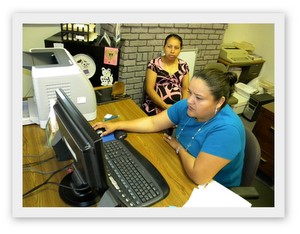
hope to those who need it most
Terry Leos knows the pain of seeing hunger in the eyes of her children, and the frustration of being able to do little or nothing about it. With her husband trapped in Mexico as he wades through the miles of bureaucratic red tape to obtain permission to come to the United States, she suddenly found herself unemployed.
The face of the immigrant has changed little in the last century; one can still see the hunger written in their eyes – hunger not only for food, but for a good job, a good life.
Full Text: Pope Francis' speech at the 9/11 Memorial and Museum
Washington D.C., Sep 25, 2015 / 09:19 am (CNA/EWTN News) - Pope Francis visited "Ground Zero" at the 9/11 Memorial and Museum in New York City on Sept. 25, 2015. He
Read the full text of the Holy Father's speech here:
Dear Friends,
I feel many different emotions standing here at Ground Zero, where thousands of lives were taken in a senseless act of destruction. Here grief is palpable. The water we see flowing towards that empty pit reminds us of all those lives which fell prey to those who think that destruction, tearing down, is the only way to settle conflicts. It is the silent cry of those who were victims of a mindset which knows only violence, hatred and revenge. A mindset which can only cause pain, suffering, destruction and tears.
The flowing water is also a symbol of our tears. Tears at so much devastation and ruin, past and present. This is a place where we shed tears, we weep out of a sense of helplessness in the face of injustice, murder, and the failure to settle conflicts through dialogue. Here we mourn the wrongful and senseless loss of innocent lives because of the inability to find solutions which respect the common good.
This flowing water reminds us of yesterday’s tears, but also of all the tears still being shed today.
A few moments ago I met some of the families of the fallen first responders. Meeting them made me see once again how acts of destruction are never impersonal, abstract or merely material. They always have a face, a concrete story, names. In those family members, we see the face of pain, a pain which still touches us and cries out to heaven.
At the same time, those family members showed me the other face of this attack, the other face of their grief: the power of love and remembrance. A remembrance that does not leave us empty and withdrawn. The name of so many loved ones are written around the towers’ footprints. We can see them, we can touch them, and we can never forget them.
Here, amid pain and grief, we also have a palpable sense of the heroic goodness which people are capable of, those hidden reserves of strength from which we can draw. In the depths of pain and suffering, you also witnessed the heights of generosity and service. Hands reached out, lives were given.
In a metropolis which might seem impersonal, faceless, lonely, you demonstrated the powerful solidarity born of mutual support, love and self-sacrifice. No one thought about race, nationality, neighborhoods, religion or politics. It was all about solidarity, meeting immediate needs, brotherhood. It was about being brothers and sisters. New York City firemen walked into the crumbling towers, with no concern for their own wellbeing. Many succumbed; their sacrifice enabled great numbers to be saved.
This place of death became a place of life too, a place of saved lives, a hymn to the triumph of life over the prophets of destruction and death, to goodness over evil, to reconciliation and unity over hatred and division.
It is a source of great hope that in this place of sorrow and remembrance I can join with leaders representing the many religious traditions which enrich the life of this great city. I trust that our presence together will be a powerful sign of our shared desire to be a force for reconciliation, peace and justice in this community and throughout the world. For all our differences and disagreements, we can live in a world of peace. In opposing every attempt to create a rigid uniformity, we can and must build unity on the basis of our diversity of languages, cultures and religions, and lift our voices against everything which would stand in the way of such unity. Together we are called to say “no” to every attempt to impose uniformity and “yes” to a diversity accepted and reconciled.
This can only happen if we uproot from our hearts all feelings of hatred, vengeance and resentment. We know that that is only possible as a gift from heaven. Here, in this place of remembrance, I would ask everyone together, each in his or her own way, to spend a moment in silence and prayer. Let us implore from on high the gift of commitment to the cause of peace. Peace in our homes, our families, our schools and our communities. Peace in all those places where war never seems to end. Peace for those faces which have known nothing but pain. Peace throughout this world which God has given us as the home of all and a home for all. Simply PEACE.
In this way, the lives of our dear ones will not be lives which will one day be forgotten. Instead, they will be present whenever we strive to be prophets not of tearing down but of building up, prophets of reconciliation, prophets of peace.
END
'My eyes filled with tears'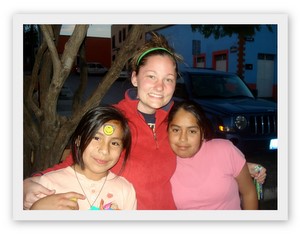
Larned youth describes
10-day mission to
Mexican orphanage
At the end of Emily Hutfles’ 10-day mission to Mexico, she and 29 other University of Kansas students and adults offered gifts to the children of an orphanage where they had spent much of their mission.
With little more than the clothes on their backs, the young residents of the orphanage began taking off jewelry and other items, offering them to the students as gifts in return.
Full Text: Pope Francis' address to the
United Nations General Assembly
Washington D.C., Sep 25, 2015 / 05:00 am (CNA/EWTN News) - Read the full text of Pope Francis' address to the United Nations General Assembly on Sept. 25, 2015, here:
Mr President,
Ladies and Gentlemen,
Thank you for your kind words.
Once again, following a tradition by which I feel honored, the Secretary General of the United Nations has invited the Pope to address this distinguished assembly of nations. In my own name, and that of the entire Catholic community, I wish to express to you, Mr Ban Ki-moon, my heartfelt gratitude. I greet the Heads of State and Heads of Government present, as well as the ambassadors, diplomats and political and technical officials accompanying them, the personnel of the United Nations engaged in this 70th Session of the General Assembly, the personnel of the various programs and agencies of the United Nations family, and all those who, in one way or another, take part in this meeting. Through you, I also greet the citizens of all the nations represented in this hall. I thank you, each and all, for your efforts in the service of mankind.
This is the fifth time that a Pope has visited the United Nations. I follow in the footsteps of my predecessors Paul VI, in1965, John Paul II, in 1979 and 1995, and my most recent predecessor, now Pope Emeritus Benedict XVI, in 2008. All of them expressed their great esteem for the Organization, which they considered the appropriate juridical and political response to this present moment of history, marked by our technical ability to overcome distances and frontiers and, apparently, to overcome all natural limits to the exercise of power. An essential response, inasmuch as technological power, in the hands of nationalistic or falsely universalist ideologies, is capable of perpetrating tremendous atrocities. I can only reiterate the appreciation expressed by my predecessors, in reaffirming the importance which the Catholic Church attaches to this Institution and the hope which she places in its activities.
The United Nations is presently celebrating its seventieth anniversary. The history of this organized community of states is one of important common achievements over a period of unusually fast-paced changes. Without claiming to be exhaustive, we can mention the codification and development of international law, the establishment of international norms regarding human rights, advances in humanitarian law, the resolution of numerous conflicts, operations of peace-keeping and reconciliation, and any number of other accomplishments in every area of international activity and endeavour. All these achievements are lights which help to dispel the darkness of the disorder caused by unrestrained ambitions and collective forms of selfishness. Certainly, many grave problems remain to be resolved, yet it is clear that, without all those interventions on the international level, mankind would not have been able to survive the unchecked use of its own possibilities. Every one of these political, juridical and technical advances is a path towards attaining the ideal of human fraternity and a means for its greater For this reason I pay homage to all those men and women whose loyalty and self-sacrifice have benefitted humanity as a whole in these past seventy years. In particular, I would recall today those who gave their lives for peace and reconciliation among peoples, from Dag Hammarskjöld to the many United Nations officials at every level who have been killed in the course of humanitarian missions, and missions of peace and reconciliation.
Beyond these achievements, the experience of the past seventy years has made it clear that reform nd adaptation to the times is always necessary in the pursuit of the ultimate goal of granting all countries, without exception, a share in, and a genuine and equitable influence on, decision-making processes. The need for greater equity is especially true in the case of those bodies with effective executive capability, such as the Security Council, the Financial Agencies and the groups or mechanisms specifically created to deal with economic crises. This will help limit every kind of abuse or usury, especially where developing countries are concerned. The International Financial Agencies are should care for the sustainable development of countries and should ensure that they are not subjected to oppressive lending systems which, far from promoting progress, subject people to mechanisms which generate greater poverty, exclusion and dependence.
The work of the United Nations, according to the principles set forth in the Preamble and the first Articles of its founding Charter, can be seen as the development and promotion of the rule of law, based on the realization that justice is an essential condition for achieving the ideal of universal fraternity. In this context, it is helpful to recall that the limitation of power is an idea implicit in the concept of law itself. To give to each his own, to cite the classic definition of justice, means that no human individual or group can consider itself absolute, permitted to bypass the dignity and the rights of other individuals or their social groupings. The effective distribution of power (political, economic, defense-related, technological, etc.) among a plurality of subjects, and the creation of a juridical system for regulating claims and interests, are one concrete way of limiting power. Yet today’s world presents us with many false rights and – at the same time – broad sectors which are vulnerable, victims of power badly exercised: for example, the natural environment and the vast ranks of the excluded. These sectors are closely interconnected and made increasingly fragile by dominant political and economic relationships.
That is why their rights must be forcefully affirmed, by working to protect the environment and by putting an end to exclusion.
First, it must be stated that a true “right of the environment” does exist, for two reasons. First, because we human beings are part of the environment. We live in communion with it, since the environment itself entails ethical limits which human activity must acknowledge and respect. Man, for all his remarkable gifts, which “are signs of a uniqueness which transcends the spheres of physics and biology” (Laudato Si’, 81), is at the same time a part of these spheres. He possesses a body shaped by physical, chemical and biological elements, and can only survive and develop if the ecological environment is favourable. Any harm done to the environment, therefore, is harm done to humanity.
Second, because every creature, particularly a living creature, has an intrinsic value, in its existence, its life, its beauty and its interdependence with other creatures. We Christians, together with the other monotheistic religions, believe that the universe is the fruit of a loving decision by the Creator, who permits man respectfully to use creation for the good of his fellow men and for the glory of the Creator; he is not authorized to abuse it, much less to destroy it. In all religions, the environment is a fundamental The misuse and destruction of the environment are also accompanied by a relentless process of exclusion. In effect, a selfish and boundless thirst for power and material prosperity leads both to the misuse of available natural resources and to the exclusion of the weak and disadvantaged, either because they are differently abled (handicapped), or because they lack adequate information and technical expertise, or are incapable of decisive political action. Economic and social exclusion is a complete denial of human fraternity and a grave offense against human rights and the environment. The poorest are those who suffer most from such offenses, for three serious reasons: they are cast off by society, forced to live off what is discarded and suffer unjustly from the abuse of the environment. They are part of today’s widespread and quietly growing “culture of waste”.
The dramatic reality this whole situation of exclusion and inequality, with its evident effects, has led me, in union with the entire Christian people and many others, to take stock of my grave responsibility in this regard and to speak out, together with all those who are seeking urgently-needed and effective solutions. The adoption of the 2030 Agenda for Sustainable Development at the World Summit, which opens today, is an important sign of hope. I am similarly confident that the Paris Conference on Climatic Change will secure fundamental and effective agreements.
Solemn commitments, however, are not enough, even though they are a necessary step toward solutions. The classic definition of justice which I mentioned earlier contains as one of its essential elements a constant and perpetual will: Iustitia est constans et perpetua voluntas ius sum cuique tribuendi. Our world demands of all government leaders a will which is effective, practical and constant, concrete steps and immediate measures for preserving and improving the natural environment and thus putting an end as quickly as possible to the phenomenon of social and economic exclusion, with its baneful consequences: human trafficking, the marketing of human organs and tissues, the sexual exploitation of boys and girls, slave labour, including prostitution, the drug and weapons trade, terrorism and international organized crime. Such is the magnitude of these situations and their toll in innocent lives, that we must avoid every temptation to fall into a declarationist nominalism which would assuage our consciences. We need to ensure that our institutions are truly effective in the struggle against all these The number and complexity of the problems require that we possess technical instruments of verification. But this involves two risks. We can rest content with the bureaucratic exercise of drawing up long lists of good proposals – goals, objectives and statistical indicators – or we can think that a single theoretical and aprioristic solution will provide an answer to all the challenges. It must never be forgotten that political and economic activity is only effective when it is understood as a prudential activity, guided by a perennial concept of justice and constantly conscious of the fact that, above and beyond our plans and programmes, we are dealing with real men and women who live, struggle and suffer, and are often forced to live in great poverty, deprived of all rights.
To enable these real men and women to escape from extreme poverty, we must allow them to be dignified agents of their own destiny. Integral human development and the full exercise of human dignity cannot be imposed. They must be built up and allowed to unfold for each individual, for every family, in communion with others, and in a right relationship with all those areas in which human social life develops – friends, communities, towns and cities, schools, businesses and unions, provinces, nations, etc.
This presupposes and requires the right to education – also for girls (excluded in certain places) – which is ensured first and foremost by respecting and reinforcing the primary right of the family to educate its children, as well as the right of churches and social groups to support and assist families in the education of their children. Education conceived in this way is the basis for the implementation of the 2030 Agenda and for reclaiming the environment.
At the same time, government leaders must do everything possible to ensure that all can have the minimum spiritual and material means needed to live in dignity and to create and support a family, which is the primary cell of any social development. In practical terms, this absolute minimum has three names: lodging, labour, and land; and one spiritual name: spiritual freedom, which includes religious freedom, the right to education and other civil rights.
For all this, the simplest and best measure and indicator of the implementation of the new Agenda for development will be effective, practical and immediate access, on the part of all, to essential material and spiritual goods: housing, dignified and properly remunerated employment, adequate food and drinking water; religious freedom and, more generally, spiritual freedom and education. These pillars of integral human development have a common foundation, which is the right to life and, more generally, what we could call the right to existence of human nature itself.
The ecological crisis, and the large-scale destruction of biodiversity, can threaten the very existence of the human species. The baneful consequences of an irresponsible mismanagement of the global economy, guided only by ambition for wealth and power, must serve as a summons to a forthright reflection on man: “man is not only a freedom which he creates for himself. Man does not create himself.
He is spirit and will, but also nature” (BENEDICT XVI, Address to the Bundestag, 22 September 2011, cited in Laudato Si’, 6). Creation is compromised “where we ourselves have the final word... The misuse of creation begins when we no longer recognize any instance above ourselves, when we see nothing else but ourselves” (ID. Address to the Clergy of the Diocese of Bolzano-Bressanone, 6 August 2008, cited ibid.). Consequently, the defence of the environment and the fight against exclusion demand that we recognize a moral law written into human nature itself, one which includes the natural difference between man and woman (cf. Laudato Si’, 155), and absolute respect for life in all its stages and dimensions (cf.
Without the recognition of certain incontestable natural ethical limits and without the immediate implementation of those pillars of integral human development, the ideal of “saving succeeding generations from the scourge of war” (Charter of the United Nations, Preamble), and “promoting social progress and better standards of life in larger freedom” (ibid.), risks becoming an unattainable illusion, or, even worse, idle chatter which serves as a cover for all kinds of abuse and corruption, or for carrying out an ideological colonization by the imposition of anomalous models and lifestyles which are alien to people’s identity and, in the end, irresponsible.
War is the negation of all rights and a dramatic assault on the environment. If we want true integral human development for all, we must work tirelessly to avoid war between nations and between To this end, there is a need to ensure the uncontested rule of law and tireless recourse to negotiation, mediation and arbitration, as proposed by the Charter of the United Nations, which constitutes truly a fundamental juridical norm. The experience of these seventy years since the founding of the United Nations in general, and in particular the experience of these first fifteen years of the third millennium, reveal both the effectiveness of the full application of international norms and the ineffectiveness of their lack of enforcement. When the Charter of the United Nations is respected and applied with transparency and sincerity, and without ulterior motives, as an obligatory reference point of justice and not as a means of masking spurious intentions, peaceful results will be obtained. When, on the other hand, the norm is considered simply as an instrument to be used whenever it proves favourable, and to be avoided when it is not, a true Pandora’s box is opened, releasing uncontrollable forces which gravely harm defenseless populations, the cultural milieu and even the biological environment.
The Preamble and the first Article of the Charter of the United Nations set forth the foundations of the international juridical framework: peace, the pacific solution of disputes and the development of friendly relations between the nations. Strongly opposed to such statements, and in practice denying them, is the constant tendency to the proliferation of arms, especially weapons of mass distraction, such as nuclear weapons. An ethics and a law based on the threat of mutual destruction – and possibly the destruction of all mankind – are self-contradictory and an affront to the entire framework of the United Nations, which would end up as “nations united by fear and distrust”. There is urgent need to work for a world free of nuclear weapons, in full application of the non-proliferation Treaty, in letter and spirit, with the goal of a complete prohibition of these weapons.
The recent agreement reached on the nuclear question in a sensitive region of Asia and the Middle East is proof of the potential of political good will and of law, exercised with sincerity, patience and constancy. I express my hope that this agreement will be lasting and efficacious, and bring forth the desired fruits with the cooperation of all the parties involved.
In this sense, hard evidence is not lacking of the negative effects of military and political interventions which are not coordinated between members of the international community. For this reason, while regretting to have to do so, I must renew my repeated appeals regarding to the painful situation of the entire Middle East, North Africa and other African countries, where Christians, together with other cultural or ethnic groups, and even members of the majority religion who have no desire to be caught up in hatred and folly, have been forced to witness the destruction of their places of worship, their cultural and religious heritage, their houses and property, and have faced the alternative either of fleeing or of paying for their adhesion to good and to peace by their own lives, or by enslavement.
These realities should serve as a grave summons to an examination of conscience on the part of those charged with the conduct of international affairs. Not only in cases of religious or cultural persecution, but in every situation of conflict, as in Ukraine, Syria, Iraq, Libya, South Sudan and the Great Lakes region, real human beings take precedence over partisan interests, however legitimate the latter may be. In wars and conflicts there are individual persons, our brothers and sisters, men and women, young and old, boys and girls who weep, suffer and die. Human beings who are easily discarded when our only response is to draw up lists of problems, strategies and disagreements.
As I wrote in my letter to the Secretary-General of the United Nations on 9 August 2014, “the most basic understanding of human dignity compels the international community, particularly through the norms and mechanisms of international law, to do all that it can to stop and to prevent further systematic violence against ethnic and religious minorities” and to protect innocent peoples.
Along the same lines I would mention another kind of conflict which is not always so open, yet is silently killing millions of people. Another kind of war experienced by many of our societies as a result of the narcotics trade. A war which is taken for granted and poorly fought. Drug trafficking is by its very nature accompanied by trafficking in persons, money laundering, the arms trade, child exploitation and other forms of corruption. A corruption which has penetrated to different levels of social, political, military, artistic and religious life, and, in many cases, has given rise to a parallel structure which threatens the credibility of our institutions.
I began this speech recalling the visits of my predecessors. I would hope that my words will be taken above all as a continuation of the final words of the address of Pope Paul VI; although spoken almost exactly fifty years ago, they remain ever timely. “The hour has come when a pause, a moment of recollection, reflection, even of prayer, is absolutely needed so that we may think back over our common origin, our history, our common destiny. The appeal to the moral conscience of man has never been as necessary as it is today... For the danger comes neither from progress nor from science; if these are used well, they can help to solve a great number of the serious problems besetting mankind (Address to the United Nations Organization, 4 October 1965). Among other things, human genius, well applied, will surely help to meet the grave challenges of ecological deterioration and of exclusion. As Paul VI said: “The real danger comes from man, who has at his disposal ever more powerful instruments that are as well fitted to bring about ruin as they are to achieve lofty conquests” (ibid.).
The common home of all men and women must continue to rise on the foundations of a right understanding of universal fraternity and respect for the sacredness of every human life, of every man and every woman, the poor, the elderly, children, the infirm, the unborn, the unemployed, the abandoned, those considered disposable because they are only considered as part of a statistic. This common home of all men and women must also be built on the understanding of a certain sacredness of created nature.
Such understanding and respect call for a higher degree of wisdom, one which accepts transcendence, rejects the creation of an all-powerful élite, and recognizes that the full meaning of individual and collective life is found in selfless service to others and in the sage and respectful use of creation for the common good. To repeat the words of Paul VI, “the edifice of modern civilization has to be built on spiritual principles, for they are the only ones capable not only of supporting it, but of shedding light on it” (ibid.).
El Gaucho Martín Fierro, a classic of literature in my native land, says: “Brothers should stand by each other, because this is the first law; keep a true bond between you always, at every time – because if you fight among yourselves, you’ll be devoured by those outside”.
The contemporary world, so apparently connected, is experiencing a growing and steady social fragmentation, which places at risk “the foundations of social life” and consequently leads to “battles over conflicting interests” (Laudato Si’, 229).
The present time invites us to give priority to actions which generate new processes in society, so as to bear fruit in significant and positive historical events (cf. Evangelii Gaudium, 223). We cannot permit ourselves to postpone “certain agendas” for the future. The future demands of us critical and global decisions in the face of world-wide conflicts which increase the number of the excluded and those The praiseworthy international juridical framework of the United Nations Organization and of all its activities, like any other human endeavour, can be improved, yet it remains necessary; at the same time it can be the pledge of a secure and happy future for future generations. And so it will, if the representatives of the States can set aside partisan and ideological interests, and sincerely strive to serve the common good. I pray to Almighty God that this will be the case, and I assure you of my support and my prayers, and the support and prayers of all the faithful of the Catholic Church, that this Institution, all its member States, and each of its officials, will always render an effective service to mankind, a service respectful of diversity and capable of bringing out, for sake of the common good, the best in each people and in every individual.
Upon all of you, and the peoples you represent, I invoke the blessing of the Most High, and all peace and prosperity. Thank you.