

“It has been a very politicized topic,” Bishop Oscar Cantú of Las Cruces admitted to CNA Sept. 23 about the issues of environmental stewardship and climate change in the U.S.
Bishop Cantu chairs the U.S. Bishops’ Committee on International Justice and Peace.
“I hope that Americans, by listening to the Holy Father, will realize that it’s not simply a political topic, it’s a moral one and a deeply moral one. This is creation that God has given to us to keep and to till,” he continued.
Bishop Cantú spoke with CNA shortly before Pope Francis celebrated Midday Prayer with the U.S. bishops at St. Matthew’s Cathedral in Washington, D.C. on Wednesday. Over 300 bishops, along with priests, seminarians, and other guests, prayed with Pope Francis and received an address from the Roman Pontiff encouraging them in their defense of human life and exhorting them to continue welcoming immigrants.
Earlier in the morning, Pope Francis had met with President Obama at the White House and the two addressed an estimated crowd of 20,000 gathered on the South Lawn. Pope Francis reminded Americans of the urgency to care for the environment.
“Accepting the urgency, it seems clear to me also that climate change is a problem which can no longer be left to a future generation,” the Pope said, citing his ecology encyclical Laudato Si’ published earlier this summer.
He also quoted Martin Luther King, Jr., saying about care for the environment, “we have defaulted on a promissory note and now is the time to honor it.”
Bishop Cantú acknowledged that some Americans might be reticent to talk about climate change, instead considering it a political issue. However, he insisted that the problem is a moral one and needs addressing right away.
“This is the only creation, the only planet that we have to hand on to our children and grandchildren, to future generations. And so what do we leave to them? That is deeply a moral question.”
“So if we can make the turn from a political to a moral issue, then we’ve done quite a bit.”
Earlier this week, the bishop joined Archbishop Thomas Wenski of Miami in welcoming a resolution introduced by 11 Republican congressmen calling for greater environmental stewardship.
The resolution came ahead of Pope Francis’ address to a joint meeting of the U.S. Congress on Thursday where the Pope is expected to mention, among other issues, the environment.
In the resolution, the representatives declared a duty to conserve the environment and warned of “a marked increase in extreme weather events” due to the changing climate.
This, combined with adverse effects of pollution upon local ecologies, such as asthma, mercury in fish, and “rising sea levels,” means action must be taken to study these changes and explore options that can be taken to mitigate their effect, the resolution added.
Bishop Cantú called it “a positive example for government leaders, heeding Pope Francis’ call in his encyclical Laudato Si’ to engage in positive dialogue to address what Pope Francis has called ‘one of the principal challenges facing humanity in our day,’ climate change.”
“It is our hope that this modest first step opens the door to joining Democrat members of Congress who have been active in seeking conversation and solutions for the country and the world,” he added.
Summer Camp 2009:
'True Life --
I’m Catholic’
Youth in grades 5-8 spent five days taking part in two separate camps -- one for grades 5-6, and one for grades 7-8 -- in June at Camp Lakeside in Scott City.
The theme for the camp was “True Life -- I’m Catholic.”
“The concept centered around the thought that, to many young people, the society we live in depicts what they think is real life, but that what is reality is the Catholic faith we profess, and it is this faith that brings to us a true life,” explained Steven Polley, director of youth ministry.
Pope Francis made surprise stop at
Little Sisters of the Poor to show support
Washington D.C., Sep 23, 2015 / 08:39 pm (CNA/EWTN News) - Pope Francis paid a short visit to the Little Sisters of the Poor community in Washington, D.C. on Wednesday to support them in their court case over the contraception mandate, the Vatican's spokesman revealed.
It was a “short visit that was not in the program,” Father Federico Lombardi, director of the Holy See Press Office, said at an evening press conference during the papal visit to the nation's capital.
“This is a sign, obviously, of support for them” in their court case, he affirmed.
The sisters had filed a lawsuit against the Obama administration for its 2012 mandate that employers provide insurance coverage for birth control, sterilizations, and drugs that can cause abortions employee health plans. The sisters have maintained that to provide this coverage would violate their religious beliefs.
Even after the Obama administration modified the rules as an “accommodation” for objecting organizations, the sisters held that even under the revised rules they would have to violate their consciences.
The majority of a three-judge panel for the Tenth Circuit Court of Appeals ruled in July that the Little Sisters of the Poor did not establish that the mandate was a “substantial burden” on their free exercise of religion, and thus ruled they still had to abide by the mandate.
The papal visit was not on the official schedule for Pope Francis’ Washington, D.C. visit, which included Wednesday visits to the White House, a midday prayer service with the U.S. bishops at St. Matthew’s Cathedral, and the canonization mass for St. Junipero Serra at the Basilica of the National Shrine of the Immaculate Conception.
It was a “little addition to the program, but I think it has an important meaning,” Fr. Lombardi said.
He added that the visit “is connected” to “the words that the Pope has said in support of the position of the bishops of the United States in the speech to President Obama and also in the speech to the bishops.”
Pope Francis, with President Obama at the White House, called religious freedom “one of America’s most precious possessions” and had hearkened to the U.S. bishops’ defense of religious freedom. “All are called to be vigilant, precisely as good citizens, to preserve and defend that freedom from everything that would threaten or compromise it,” he had said.
In response to the news of the visit with the sisters, Archbishop Joseph Kurtz of Louisville, president of the U.S. Bishops Conference, said that he was “so pleased” to hear of the visit.
“As you know the last thing the Little Sisters of the Poor want to do is sue somebody. They don’t want to sue in court,” he insisted. “They simply want to serve people who are poor and elderly, and they want to do it in a way that doesn’t conflict with their beliefs.”
The archbishop had previously warned against a “interpreting freedom of religion in a very narrow way” in the press conference, and emphasized that religion is not something practiced just for an hour on Sunday but something lived out. To prove his point, he used the Little Sisters as an example.
“We need to make room within our nation for people who have deeply held religious beliefs not to be forced to do that,” he added.
Pope Francis' impromptu visit to the Little Sisters of the Poor in Washington DC :) Photos courtesy of the Little Sisters of the Poor
Posted by Catholic News Agency on Wednesday, September 23, 2015
Care for environment is a moral duty,
not a political football, bishop tells Americans
Washington D.C., Sep 23, 2015 / 06:02 pm (CNA/EWTN News) - After Pope Francis insisted at the White House that the present moment is “critical” for addressing the threat of climate change, one bishop implored Americans to recognize environmental stewardship as a moral imperative.
to continue emergency
services in temporary
buildings
Editor's Note: Please see the update, contained in Bishop Gilmore's letter, by clicking here.
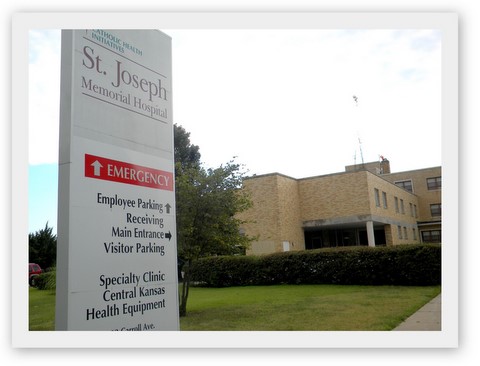
Catholic Health Initiatives has offered to hand over to the City of Larned the St. Joseph Memorial Hospital building and some of its contents, including all the land it occupies, when it closes Sept. 30.
Pope Francis to Obama: Religious freedom is beyond price
Washington D.C., Sep 23, 2015 / 08:04 am (CNA/EWTN News) - Pope Francis Wednesday reminded U.S. president Barack Obama that religious freedom is one of America's most “precious possessions,” while lauding the nation's Catholics their work toward a society marked by tolerance and inclusivity.
“With countless other people of good will, (American Catholics) are likewise concerned that efforts to build a just and wisely ordered society respect their deepest concerns and their right to religious liberty,” the Pope said Wednesday, addressing the U.S. commander-in-chief at the White House in Washington, D.C.
“That freedom remains one of America's most precious possessions.”
Echoing the appeals by the U.S. bishops on the issue of religious freedom, the pontiff told President Obama: “All are called to be vigilant, precisely as good citizens, to preserve and defend that freedom from everything that would threaten or compromise it.”
Pope Francis also stressed the role American Catholics have played in building a tolerant and inclusive society in the nation, one which safeguards of individuals and communities, while “rejecting every form of unjust discrimination.”
In his remarks prior to the pontiff's, President Obama noted how the 20,000 people gathered on the White House lawn served as only a small reflection of the “deep devotion of some 70 million American Catholics.”
The Pope's meeting at the White House, marking the first major event of his visit to the U.S. Capital, comes at a time of uncertainty with regard to religious of freedom in the country.
Affecting many Catholic as well as other religious institutions, the Obama administration's 2012 HHS mandate requires institutions to provide contraceptive services, often failing to offer exemptions to those who oppose the bill on religious grounds.
There are also concerns regarding the religious rights of those who oppose same-sex marriage after the U.S. Supreme Court ruled earlier this year to legalize marriage between gay couples across all fifty States.
Pope Francis' Sept. 23 speech to President Obama also addressed the issue of climate change, and acknowledged US's commitment to seeking solutions to air pollution.
“Accepting the urgency, it seems clear to me also that climate change is a problem which can no longer be left to a future generation,” the Pope said.
He said this is a “critical moment in history” with regard to caring for our “common home.”
Citing his encyclical on the environment, Laudato Si, Pope Francis stressed the need for continued changes in the areas of “sustainable and integral development.”
“Such change demands on our part a serious and responsible recognition not only of the kind of world we may be leaving to our children, but also to the millions of people living under a system which has overlooked them.”
“Our common home has been part of this group of the excluded which cries out to heaven and which today powerfully strikes our homes, our cities and our societies.”
The Pope cited Martin Luther King, saying “we have defaulted on a promissory note and now is the time to honor it.”
Inspired by the certainty that the Creator does not abandon his creatures, the Pope said, we as Christians “wish to commit ourselves to the conscious and responsible care of our common home.”
“The efforts which were recently made to mend broken relationships and to open new doors to cooperation within our human family represent positive steps along the path of reconciliation, justice and freedom,” the Pope said.
“I would like all men and women of good will in this great nation to support the efforts of the international community to protect the vulnerable in our world and to stimulate integral and inclusive models of development, so that our brothers and sisters everywhere may know the blessings of peace and prosperity which God wills for all his children.”
Pope Francis also expressed his appreciation to Obama for the welcome he had received in the U.S., while lightly alluding to the question of immigration. He recalled that America is a country largely built on immigrant families, like his own Italian family who settled in Argentina.
Concluding his White House address, the Pope said: “Mr. President, once again I thank you for your welcome, and I look forward to these days in your country. God bless America!”
The Sept. 22-28 apostolic journey to the U.S. marks Pope Francis' first on America soil.
In addition to the meeting with President Obama at the White House, the agenda for the Pope's visit to the U.S. capital includes the canonization of Blessed Junipero Serra at the National Shrine of the Immaculate Conception, and a visit to the US Congress.
The Pope's visit will also include an address at the United Nations Headquarters in New York City, and will culminate with his presence in Philadelphia for the World Meeting of Families.
‘The only way to survive is to escape’
Youth finds hope in SW Kansas after
escaping enslavement in Burma
In the United States, 16 is the age at which most youth are enjoying newfound freedom at the driver’s wheel; the responsibilities of adulthood are still a lifetime away, a world of experiences yet to be celebrated.
But for Del, now 22 and living in southwest Kansas, 16 was the age at which he escaped from slavery.
Tony Melendez rocks God’s house with inspiration, hope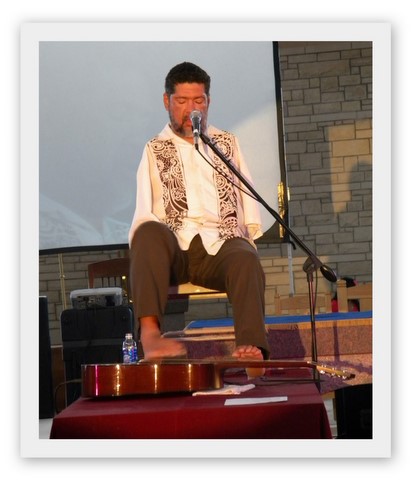
Special to the Register
He was born in Nicaragua without arms after his mother was prescribed the dangerous drug thalidomide for morning sickness during her pregnancy. When he was a child, the family moved to the United States, where he was the butt of taunting and jokes. But he refused to be daunted or discouraged.
The founder of Tony Melendez Ministries, which is especially dedicated to youth, Tony spoke and sang to a packed Cathedral of Our Lady of Guadalupe Sunday afternoon, Aug. 9. Several rows of extra chairs had to be placed at the front and rear of the church to accommodate the crowd – and the front seats were reserved for “los jovenes,” the youth.
His older brother, Jose, Tony’s tour manager, also was on hand, and talked about Tony’s courageous spirit even as a child.
“It was the stares, the commentary, how many times people would make fun of the little boy without arms,” Joe recalled. “My brother said to me one day, ‘They are just words – and I don’t hear them.’
Immigrants enrich America and the Church, Pope affirms
Washington D.C., Sep 23, 2015 / 11:27 am (CNA/EWTN News) - In the longest speech of his trip so far, Pope Francis on Wednesday praised U.S. bishops for their commitment to defending life, their handling of the clerical abuse crisis, and their welcome of immigrants, while urging them not to be afraid to do more.
In his Sept. 23 address to the bishops of the United States, Pope Francis asked to be excused “if in some way I am pleading my own case,” and brought up immigration as a key challenge of current times.
Right now the United States is “facing this stream of Latin immigration which affects many of your dioceses,” he said, and thanking the bishops for what they have already done to welcome migrants “who continue to look to America, like so many others before them, in the hope of enjoying its blessings of freedom and prosperity.”
“The Church in the United States knows like few others the hopes present in the hearts of these 'pilgrims'.”
“From the beginning you have learned their languages, promoted their cause, made their contributions your own, defended their rights, helped them to prosper, and kept alive the flame of their faith,” he said.
However, he also noted the challenges presented by such a large influx of diverse peoples, and recognized that it’s not always easy to look beyond differences into the soul of the person.
“But know that they also possess resources meant to be shared. So do not be afraid to welcome them. Offer them the warmth of the love of Christ and you will unlock the mystery of their heart. I am certain that, as so often in the past, these people will enrich America and its Church.”
Pope Francis made his comments to the more than 400 U.S. bishops gathered in St. Matthew's Cathedral in Washington, D.C. on his first full day in the United States, following the celebration of Daytime Prayer.
Following the liturgical celebration he was greeted by Cardinal Donald Wuerl of Washington and by Archbishop Joseph Kurtz of Louisville, who said that “as a nation founded by immigrants seeking religious freedom and economic opportunity, we have a special responsibility to ensure the promise of one nation, under God, with liberty and justice for all remains an American dream accessible to everyone.”
Archbishop Kurtz, who is also president of the US bishops' conference, added that “true to to our heritage, we seek to spread the Good News so that each human life is cherished and given an opportunity to flourish.”
The Pope delivered his speech in Italian, and began it by greeting the Jewish community in the United States, noting that today marks the observance of Yom Kippur, the Day of a Atonement and the holiest day in the Jewish calendar.
In his speech the Pope stressed his closeness to the pastors of the United States, and praised “the unfailing commitment of the Church in America to the cause of life and that of the family, which is the primary reason for my present visit.”
He also gave a shout-out to the Church in the United States for her commitment to integrating immigrants into American society, as well as her emphasis on education and charity.
Francis also acknowledged the courage with which the Church in the U.S. has faced the difficulties arising from the clerical sex abuse crisis “without fear of self-criticism and at the cost of mortification and great sacrifice.”
“Nor have you been afraid to divest whatever is unessential in order to regain the authority and trust which is demanded of ministers of Christ and rightly expected by the faithful.”
With the pain and heaviness of the crisis in mind, the Pope offered his support for the Church’s “generous commitment to bring healing to victims – in the knowledge that in healing we too are healed – and to work to ensure that such crimes will never be repeated.”
Pope Francis offered the bishops his own reflections on being a pastor, saying, “I speak to you as the Bishop of Rome, called by God in old age, and from a land which is also American, to watch over the unity of the universal Church and to encourage in charity the journey of all the particular Churches toward ever greater knowledge, faith and love of Christ.”
He said his intention is not to offer a specific strategy, or to judge or to lecture, but to speak to them “as a brother among brothers.” He added, “would turn once again to the demanding task – ancient yet never new – of seeking out the paths we need to take and the spirit with which we need to work. Without claiming to be exhaustive, I would share with you some reflections which I consider helpful for our mission.”
He emphasized the need to remember the joy of being shepherds, as well as that of a personal encounter with Christ in prayer.
“It is not about preaching complicated doctrines, but joyfully proclaiming Christ who died and rose for our sake,” he said, explaining that the style of one’s preaching should always reach listeners on a personal level.
Francis urged the bishops to remember to be “shepherds who do not lower our gaze, concerned only with our concerns, but raise it constantly toward the horizons which God opens before us and which surpass all that we ourselves can foresee or plan.”
While affirming that “it is helpful for a bishop to have the farsightedness of a leader and the shrewdness of an administrator,” he added that “we fall into hopeless decline whenever we confuse the power of strength with the strength of that powerlessness with which God has redeemed us. Bishops need to be lucidly aware of the battle between light and darkness being fought in this world. Woe to us, however, if we make of the cross a banner of worldly struggles and fail to realize that the price of lasting victory is allowing ourselves to be wounded and consumed.”
Pope Francis also pointed to the importance of dialogue, saying it needs to happen at all levels, including among themselves, and with their priests, and with lay persons, families, and society.
“I know … that there is always the temptation to give in to fear, to lick one’s wounds, to think back on bygone times and to devise harsh responses to fierce opposition. And yet we are promoters of the culture of encounter. We are living sacraments of the embrace between God’s riches and our poverty. We are witnesses of the abasement and the condescension of God who anticipates in love our every response. Dialogue is our method, not as a shrewd strategy but out of fidelity to the One who never wearies of visiting the marketplace, even at the eleventh hour, to propose his offer of love.”
The Pope said, “I cannot ever tire of encouraging you to dialogue fearlessly. The richer the heritage which you are called to share with parrhesia, the more eloquent should be the humility with which you should offer it. Do not be afraid to set out on that exodus which is necessary for all authentic dialogue.”
“Otherwise, we fail to understand the thinking of others or to realize deep down that the brother or sister we wish to reach and redeem … counts more than their positions.”
Language was also touched on by the Pope, who stressed that “harsh and divisive” words don’t befit a true pastor, and have “no place in his heart; although it may momentarily seem to win the day, only the enduring allure of goodness and love remains truly convincing.”
He also spoke on the importance of being humble and of fostering collegiality among themselves. In a divided and broken world, the Church can’t allow herself to be “to be rent, broken or fought over.”
“Our mission as bishops is first and foremost to solidify unity, a unity whose content is defined by the Word of God and the one Bread of Heaven,” he reminded them. “With these two realities each of the Churches entrusted to us remains Catholic, because open to, and in communion with, all the particular Churches and with the Church of Rome which 'presides in charity'.”
He added that it is therefore imperative “to watch over that unity, to safeguard it, to promote it and to bear witness to it as a sign and instrument which, beyond every barrier, unites nations, races, classes and generations.”
Their service to unity is particularly important for the United States, he said, because its “vast material and spiritual, cultural and political, historical and human, scientific and technological resources impose significant moral responsibilities in a world which is seeking, confusedly and laboriously, new balances of peace, prosperity and integration.”
Pope Francis then encouraged the bishops to face the current challenges of our time with courage.
“The innocent victim of abortion, children who die of hunger or from bombings, immigrants who
drown in the search for a better tomorrow, the elderly or the sick who are considered a burden, the victims of terrorism, wars, violence and drug trafficking, the environment devastated by man’s predatory relationship with nature – at stake in all of this is the gift of God, of which we are noble stewards,” he said.
“It is wrong, then, to look the other way or to remain silent. No less important is the Gospel of the Family, which in the World Meeting of Families in Philadelphia I will emphatically proclaim together with you and the entire Church.”
He reminded the bishops that “these essential aspects of the Church’s mission belong to the core of what we have received from the Lord. It is our duty to preserve and communicate them, even when the tenor of the times becomes resistant and even hostile to that message. I urge you to offer this witness, with the means and creativity born of love, and with the humility of truth. It needs to be preached and proclaimed to those without, but also to find room in people’s hearts and in the conscience of society.”
In light of the loneliness, neglect, fear and despair which are manifested in various methods of escapism, even amid material wealth, “only a Church which can gather around the family fire remains able to attract others,” Francis observed.
Pope Francis concluded by giving two final recommendations to the bishops: to welcome immigrants and to always be pastors who are close to their people, especially to their priests.
Support them, but do not let them “be content with half-measures … Find ways to encourage their spiritual growth, lest they yield to the temptation to become notaries and bureaucrats” instead of reflecting the motherhood of the Church.
“May God bless you and Our Lady watch over you!”
Full transcript of Pope's in-flight interview from Cuba to US
Aboard the papal plane, Sep 22, 2015 / 02:52 pm (CNA/EWTN News) - Speaking to journalists aboard Tuesday's flight from Cuba to Joint Base Andrews, outside Washington, D.C., Pope Francis discussed his time in Cuba; the Church's social teaching, and personal freedoms in Cuba, as well as Cuba-United States relations.
Below is a full transcript of the discussion between Pope Francis and journalists during the Sept. 22 flight:
Rosa Miriam: Your Holiness, it’s been a true honor and pleasure to accompany you on this trip. (What are) your thoughts on the U.S. embargo of Cuba, and are you going to speak about it before the U.S. Congress?
Pope Francis: The question of the embargo is part of the negotiations. This is public, right? Both presidents have referred to that. So it’s a public thing that is on the path, on the path of good relations, for which they are searching, no? And my wish is that we reach a good conclusion in this, that there might be an agreement that satisfies both sides. An agreement, yes? With respect to the position of the Holy See regarding embargoes: previous Popes have spoken about this. Not just this one. There are other cases of embargoes. There is the social doctrine of the Church on embargoes. I’m speaking about that. It’s very precise, very just. And, about the Congress of the United States, the speech is finished so I can’t say; or better put, I’m thinking well about what I might say about it. Specifically on that theme, the theme of bilateral or multi-national agreements as signs of progress in co-existence. That’s the sense. But that issue concretely… I’m remembering … because I don’t want to say something wrong. But this theme concretely isn’t mentioned. I’m sure it’s not. Ok?
Rosa Flores, CNN: Good afternoon, Holy Father. I am Rosa Flores of CNN. We understand that more than 50 dissidents were arrested outside the nunciature [in Cuba] as they were trying to have a meeting with you. First, would you like to have a meeting with the dissidents, and if you had that meeting, what would you say?
Pope Francis: Look, I don’t have any news that that has happened. I don’t have any news. Some yes, yes, no, I don’t know. I don’t know, directly. The two questions are about reading the future. Would I like this to happen? … I like to meet with all people. I consider that all people are children of God and the law. And secondly, a relationship with another person always enriches. Even though it was soothsaying, that’s my reply. I would like to meet with everyone. If you want me to speak more about the dissidents, you can ask me something more concrete. For the nunciature, first, it was very clear that I was not going to give audiences because not only the dissidents asked for audiences, but also audiences (were requested) from other sectors, including from the chief of state. And, no, I am on a visit to a nation, and just that. I know that I hadn’t planned any audience with the dissidents or the others. And secondly from the nunciature, some people made some calls to some people who are in these groups of dissidents, where the responsibility was given to the nuncio to call them and tell them that I would greet them with pleasure outside the catedral for the meeting with the consecrated (religious). I would greet them when I was there, no? That did exist. Now, as no one identified themselves in their greetings, I don’t know if they were there. I said hello to the sick who were in wheelchairs. … Oops, I’m speaking Spanish. I greeted those who were in wheelchairs, but no one identified themselves as dissidents; but from the nunciature calls were made by some for a quick greeting.
(Follow up from Flores on what he would tell them if he met with them.)
Pope Francis: Oh, my daughter, I don’t know what I would say. (laughs) I would wish everyone well, but what one says comes in that moment and … You’ve got the Nobel Prize for being a reader of the future, eh? (laughs)
Silvia Poggioli, NPR: I would like to ask you, in the decades of the power of the state of Fidel Castro, the Church in Cuba has suffered much. In your meeting with Fidel, did you get the impression that [he] may be a bit regretful?
Pope Francis: Regret is a very intimate thing, and it’s a thing of conscience. I, in the meeting with Fidel, I spoke of the stories of known Jesuits, because in the meeting I brought a gift of a book, from Fr. Llorente, also a good friend of his, who is also a Jesuit. And also a CD with the conferences of Fr. Llorente and I also gave him two books from Fr. Pronzato [sic] which I’m sure he’ll also appreciate. And we talked about these things. We spoke a lot about the encyclical, Laudato si'. He’s very interested in the issue of ecology. It was a not-so-formal, rather spontaneous meeting. Also his family was present there. Also those who accompanied me, my driver, were present there. But, we were a bit separated from his wife. They couldn’t hear, but they were in the same place. But we spoke a lot on the encyclical because he is very concerned about this. About the past, we didn’t speak.
(inaudible question from Poggioli)
Pope Francis: Yes! About the past, the Jesuit college. And how the Jesuits were and how they made him work. All of that, yes.
Gian Guido Vecchi, Corriere della Sera: Holiness, your reflections, also your denouncements of the inequity of the world economic system, the risk of self-destruction of the planet are also very uncomfortable, in the sense that they touch the powerful interests of arms trafficking, etc. Before this trip, there were some bizarre manifestations that came out. Also, very important world media picked them up and and sectors of North American society were even asking themselves if the Pope was Catholic. There have already been discussions about a communist Pope, now there are event those who speak of a Pope who isn’t Catholic. In the face of these considerations, what do you think?
Pope Francis: A cardinal friend of mine told me that a very concerned woman, very Catholic, went to him. A bit rigid, but Catholic. And she asked him if it was true that in the Bible, they spoke of an antichrist, and she explained it to him. And also in the Apocalypse, no? And, then, if it was true that an anti-pope, who is the antichrist, the anti-Pope. But why is she asking me this question, this cardinal asked me? “Because I’m sure that Pope Francis is the anti-pope,” she said. And why does she ask this, why does she have this idea? “It’s because he doesn’t wear red shoes.” The reason for thinking if one is communist or isn’t communist. I’m sure that I haven't said anything more than what’s written in the social doctrine of the Church. On another flight, a colleague asked me if I had reached out a hand to the popular movements and asked me, “But is the Church going to follow you?” I told him, “I’m the one following the Church.” And in this it seems that I’m not wrong. I believe that I never said a thing that wasn’t the social doctrine of the Church. Things can be explained, possibly an explanation gave an impression of being a little “to the left”, but it would be an error of explanation. No, my doctrine on this, in Laudato si', on economic imperialism, all of this, is the social doctrine of the Church. And it if necessary, I’ll recite the creed. I am available to do that, eh.
Jean Louis de la Vaissiere, AFP: In the last trip to Latin America, you harshly criticized the capitalist liberal system. In Cuba, it appears that your critiques of the communist system weren’t very strong, but “soft.” Why these differences?
Pope Francis: In the speeches that I made in Cuba, I always put the accent on the social doctrine of the Church. But the things that must be corrected I said clearly, not “perfumed,” or soft. But, also the first part of your question, more than what I have written – and harshly – in the encyclical, also in Evangelii gaudium, about wild, liberal capitalism – I didn’t say it. All that is written there. I don’t remember having said anything more than that. If you remember, let me know. I’ve said what I’ve written, which is enough, enough.
Nelson Castro, Radio Continental: The question has to do with the dissidents, in two aspects. Why did you decide not to receive them? After having a prisoner come up to you, who was arrested. The question is, is there going to be a place for the Catholic Church in search an opening for political liberties, seeing the role that it played in the re-establishment of relations between Cuba and the United States? This theme of liberties is a problem for those who think differently in Cuba. Will this be a role that the Holy See is thinking of for the Catholic Church in Cuba?
Pope Francis: First the “them.” Not receiving “them.” No, I didn’t receive any private audience. That is for everyone, and there was a head of state; I told them “no.” And that I didn’t have anything to do with the dissidents. The contact with the dissidents was what I explained. The Church here, the Church in Cuba, made a list of (prisoners) for the pardon; more than three thousand were given the pardon, the president of the bishops' conference told me.
Fr. Federico Lombardi: There were more than 3,000...
Pope Francis: There were more than 3,000 and other cases are being studied. The Church here in Cuba is commited to this work of the pardons. And, for example, someone said to me, “It would be really good if there could be an end to life imprisonment. Speaking clearly, life imprisonment is a hidden death penalty, it is like being there dying every day, without the hope of liberation. But that is just one hypothesis: another hypothesis that they grant a general pardon of one or two years, but the Church is working, and has worked. I do not say that all those 3,000 who were released were taken from the lists of the Church. No. The Church made lists, I don't know how many, and it continues to do so.
Rogelio Mora-Tagle, Telemundo: [Explains that Popes have visited Cuba often in a short period of time.] Is Cuba suffering from something, Holy Father? Is it sick?
Pope Francis: No, no. First, John Paul II went on his historic visit, which was normal. He visited so many countries, including nations that were aggressive against the Church, but that wouldn’t be it. The second was that of Pope Benedict, as well. That would be within the norm. And mine was a bit by chance, because I thought of going to the US by way of Mexico in the beginning – that was the first idea. Ciudad Juarez, the border, no? But going through Mexico without going to Our Lady of Guadalupe would have been a slap (in the face). But this happened, it’s something that happened. So, it went ahead and this is what came out. And last December 17, it was announced that everything was more or less organized, a process of almost a year, and then I said, 'No, I’m going to the United States by way of Cuba'. And, I chose it for this reason; not because it has a particular sickness that other nations don’t have. I wouldn’t interpret the three visits, more so if there are some countries which the previous Popes have visited, including myself. Brazil, for example, and others have been visited more. John Paul II visited Brazil three or four times: it wasn’t particularly sick. I am happy for having met the Cuban people, the Cuban Christian communities. Today, the meeting with families was very nice, very beautiful. I am sorry if it came to me in Spanish. I hope that you have understood. Thank you very much.
Pope blesses unborn children around the world
while meeting with Cuban families
Santiago de Cuba, Sep 22, 2015 / 09:15 am (CNA/EWTN News) - Pope Francis met with families on Tuesday at Our Lady of the Assumption Cathedral in Santiago de Cuba, thanking those gathered for their warm witness and inclusive nature, reflecting that it is at home, in the family, that Christ shows the love of God.
Going off script from his prepared remarks Sept. 22, the Pope recalled that at the General Audiences held each Wednesday in St. Peter's Square, “I pass by so many people, so many women, who show me they're pregnant, and they ask my blessing.”
“I will propose something to you, to those women who are 'pregnant with hope', because a child is hope, a source of hope: at this moment, touch your womb. Not just those here, (but) those listening on television or radio – to each one, each of these children, boys or girls in the womb, I bless them! I bless the children in the womb, in the name of Father, and the Son, and the Holy Spirit.”
“I hope they may be holy, they may grow. Be tender to the child whom you are expecting.”
In his prepared remarks, Pope Francis said, “I remember in my former diocese, how many families told me that almost the only time they came together was at dinner, in the evening after work, when the children had finished their homework,” adding that these times around the table are “special times in the life of the family.”
“These were also times when someone might come home tired, or when arguments or bickering might break out,” the Holy Father continued, saying, “Jesus chooses all those times to show us the love of God.”
At home, Pope Francis noted that children and families learn how to receive, to appreciate the blessings of life, and to learn interdependence.
“That is why the Christian community calls families ‘domestic churches.’ It is the warmth of the home that faith fills every corner, lights up every space, builds community,” the Holy Father noted.
“It is at home that we experience forgiveness, that we are continually asked to forgive and grow,” he continued, saying that in family life, everyone is called to do their best for the other, to grow in solidarity and fraternity.
Pope Francis also noted that Christ himself made many of his own appearances of public life at meals and dinners, eating with different people and showing up in various homes.
“He chose a specific moment of family life as the ‘place’ of his presence among us. A moment which we have all experienced, a moment which we all understand: a meal,” Pope Francis stated, noting the importance of the Eucharist as the “Bread of Life for our families.”
In addition to meals, Christ made appearances at weddings and in people’s homes, adding a special meaning to those ordinary, daily moments in people’s lives because Christ chose to be part of them, the Pope said.
Christ began his public ministry at a wedding – at a family party – where “he enters into that history of sowing and reaping, of dreams and quests, of efforts and commitments.”
Weddings are important occasions in family life, the Pope continued, saying they are times when grandparents and parents can “reap the fruits of what they have sown.”
“Our hearts rejoice when we see children grow up and make a home of their own. For a moment, we see that everything we worked for was worth the effort,” Pope Francis said.
However, the Holy Father warned against those cultures in which the space for the family is shrinking – where families are disappearing and home life is becoming more and more separated.
“Without a family, without the warmth of home, life grows empty, there is a weakening of the networks which sustain us in adversity, nurture us in daily living, and motivate us to build a better future,” Pope Francis noted.
“When we do not live a family life … when one forgets how to say mother, father, son, daughter, grandmother, grandfather – they are the foundation of our name, of who we are. We need to live as a family – (though) selfishness always exists. Those personalities, 'I, me, myself', they are totally centered on themselves, they do not know solidarity, or fraternity, working together, or love … even arguments among brothers, they don't know about that.”
Families, he stressed, “are a blessing. When you begin to see the family as a problem, you are paralyzed; you don't walk, because you are centered on yourself.”
The Pope continued, saying families are the antidote to two modern-day problems: fragmentation and uniformity. Only families, he stated, can break the bonds of isolation and division that is too often found in society.
Reminding those gathered that families are a “school of humanity,” he asked them to never forget that “families are not a problem, they are first and foremost an opportunity.”
Looking ahead toward the future, Pope Francis spoke about the kind of world parents and families should leave behind for future generations.
“I believe that one possible answer lies in looking at yourselves: let us leave behind a world of families,” he urged, saying that now is the time to care for the family, the true center of freedom and humanity.
The Pope’s comments on the family come on the final day of his apostolic journey to Cuba, whence he will make his way to the United States for the World Meeting of Families, visiting Washington D.C., New York City, and Philadelphia.
Pope Francis also noted his gratitude to Archbishop Dionisio García lbáñez of Santiago de Cuba for his warm welcome, and thanked the married couples who shared their dreams and struggles along their journey of making their homes a domestic church.
“In a few days I will join families from across the globe in the World Meeting of Families and, in less than a month, in the Synod of Bishops devoted to the family,” Pope Francis stated, asking the Cuban families to pray for these events so that the Church may find ways to build and nourish the family.
“To conclude my visit with this family gathering is a reason to thank God for the ‘warmth’ spread by people who know how to welcome and accept someone, to make him feel at home. Thank you!” the Pope stated, saying this meeting with Cuban families was the “cherry on the cake.”
“I rely on your prayers. Thank you very much.”