Full text of Pope Francis' prepared remarks at the Festival of Families

Philadelphia, Pa., Sep 26, 2015 / 04:30 pm (CNA) - Pope Francis put aside his prepared remarks for the World Meeting of Families' "Festival of Families" Sept. 26, at the Benjamin Franklin Parkway in Philadelphia.

Here is the full text of the prepared remarks he did not give:

Dear Brothers and Sisters,
Dear Families,


First of all, I want to thank the families who were willing to share their life stories with us. Thank you for your witness! It is always a gift to listen to families share their life experiences; it touches our hearts. We feel that they speak to us about things that are very personal and unique, which in some way involve all of us. In listening to their experiences, we can feel ourselves drawn in, challenged as married couples and parents, as children, brothers and sisters, and grandparents.

As I was listening, I was thinking how important it is for us to share our home life and to help one another in this marvelous and challenging task of “being a family”.

Being with you makes me think of one of the most beautiful mysteries of our Christian faith. God did not want to come into the world other than through a family. God did not want to draw near to humanity other than through a home. God did not want any other name for himself than Emmanuel (cf. Mt 1:23). He is “God with us”. This was his desire from the beginning, his purpose, his constant effort: to say to us: “I am God with you, I am God for you”. He is the God who from the very beginning of creation said: “It is not good for man to be alone” (Gen 2:18). We can add: it is not good for woman to be alone, it is not good for children, the elderly or the young to be alone. It is not good. That is why a man leaves his father and mother, and clings to his wife, and the two of them become one flesh (cf. Gen 2:24). The two are meant to be a home, a family.

From time immemorial, in the depths of our heart, we have heard those powerful words: it is not good for you to be alone. The family is the great blessing, the great gift of this “God with us”, who did not want to abandon us to the solitude of a life without others, without challenges, without a home.

God does not dream by himself, he tries to do everything “with us”. His dream constantly comes true in the dreams of many couples who work to make their life that of a family.

That is why the family is the living symbol of the loving plan of which the Father once dreamed. To want to form a family is to resolve to be a part of God’s dream, to choose to dream with him, to want to build with him, to join him in this saga of building a world where no one will feel alone, unwanted or homeless.

As Christians, we appreciate the beauty of the family and of family life as the place where we come to learn the meaning and value of human relationships. We learn that “to love someone is not just a strong feeling – it is a decision, it is a judgment, it is a promise” (Erich Fromm, The Art of Loving). We learn to stake everything on another person, and we learn that it is worth it.

Jesus was not a confirmed bachelor, far from it! He took the Church as his bride, and made her a people of his own. He laid down his life for those he loved, so that his bride, the Church, could always know that he is God with us, his people, his family. We cannot understand Christ without his Church, just as we cannot understand the Church without her spouse, Christ Jesus, who gave his life out of love, and who makes us see that it is worth the price.

Laying down one’s life out of love is not easy. As with the Master, “staking everything” can sometimes involve the cross. Times when everything seems uphill. I think of all those parents, all those families who lack employment or workers’ rights, and how this is a true cross. How many sacrifices they make to earn their daily bread! It is understandable that, when these parents return home, they are so
weary that they cannot give their best to their children.

I think of all those families which lack housing or live in overcrowded conditions. Families which lack the basics to be able to build bonds of closeness, security and protection from troubles of any kind.

I think of all those families which lack access to basic health services. Families which, when faced with medical problems, especially those of their younger or older members, are dependent on a system which fails to meet their needs, is insensitive to their pain, and forces them to make great sacrifices to receive adequate treatment.

We cannot call any society healthy when it does not leave real room for family life. We cannot think that a society has a future when it fails to pass laws capable of protecting families and ensuring their basic needs, especially those of families just starting out. How many problems would be solved if our societies protected families and provided households, especially those of recently married couples, with the possibility of dignified work, housing and healthcare services to accompany them throughout life.

God’s dream does not change; it remains intact and it invites us to work for a society which supports families. A society where bread, “fruit of the earth and the work of human hands” continues to be put on the table of every home, to nourish the hope of its children.

Let us help one another to make it possible to “stake everything on love”. Let us help one another at times of difficulty and lighten each other’s burdens. Let us support one another. Let us be families which are a support for other families.

Perfect families do not exist. This must not discourage us. Quite the opposite. Love is something we learn; love is something we live; love grows as it is “forged” by the concrete situations which each particular family experiences. Love is born and constantly develops amid lights and shadows. Love can flourish in men and women who try not to make conflict the last word, but rather a new opportunity. An opportunity to seek help, an opportunity to question how we need to improve, an opportunity to discover the God who is with us and never abandons us. This is a great legacy that we can give to our children, a very good lesson: we make mistakes, yes; we have problems, yes. But we know that that is not really what counts. We know that mistakes, problems and conflicts are an opportunity to draw closer to others, to draw closer to God.

This evening we have come together to pray, to pray as a family, to make our homes the joyful face of the Church. To meet that God who did not want to come into our world in any other way than through a family. To meet “God with us”, the God who is always in our midst.

Ellinwood native celebrates milestone on road to priesthood

John Rickert ordained a transitional deacon

Although he first heard the calling as a child attending St. Joseph School, the road to the priesthood for the Ellinwood native was anything but etched in stone.  
John Rickert said he first became interested in the priesthood “probably in grade school, mainly due to the excellent example sent by the earliest priest I remember, Father James Kelly. I thought about becoming a priest off and on ever since childhood, but then college, and then grad school, caused me to procrastinate.”Rickart, who was ordained a transitional deacon in March after five years at Our Lady of Guadalupe Seminary in Denton, Neb., previously earned a PhD in mathematics, first serving as a college professor, and later as a computer programmer with a multinational consulting firm.    
“I taught at the college level for a couple of years after I finished my degree,” he said. “I then got a job in an office -- a cubical farm sort-of job in downtown Dallas.  That was a really good job, and I’m grateful for the experience.  To this day I have great friends who still work there.  But I did realize my life was getting into a rut, and looking in the long term, I could see I was not going in the direction God really wanted me to go.”

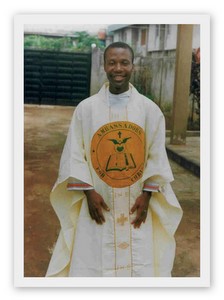
Diocese welcomes Father Efiri Matthias Selemobri

to St. Mary Parish

On July 1, the Diocese of Dodge City welcomed a second priest from the Missionary Society of St. Paul (MSP) to southwest Kansas.
    Father Efiri Matthias Selemobri, known as “Father Matthias,” told the Register June 23 that he was looking forward to serving in the Diocese of Dodge City where he will be able to put his Spanish language studies to work.
Father Matthias, recently Development Director for the society in Houston, began a one-year assignment as parochial vicar at St. Mary, Garden City, on July 1. Father Cosmas Nwosuh, MSP, served at the Garden City parish for the last year, and is now serving in Medicine Lodge, Sharon and Kiowa.
When told of the heat wave in Kansas, Father Matthias reminded the Register that he had spent the last several years in Houston. He laughed and said he was praying for the grace of God to deal with the cooler weather in Kansas.

'God cries' for victims of abuse,

Pope says after meeting survivors

Philadelphia, Pa., Sep 27, 2015 / 07:53 am (CNA/EWTN News) - Pope Francis this morning met with 5 survivors of sexual abuse during his visit to Philadelphia, telling bishops afterward that the evil acts can no longer remain in silence, and promised his personal vigilance in protecting minors.

“The stories of suffering and pain of minors who were sexually abused by priests have aggravated my heart,” Pope Francis told bishops participating in the World Meeting of Families Sept. 27.

He said he is continuously overwhelmed by the shame of “people who were responsible for the tender care of these little ones and violated them.”

In the face of such heinous acts, “God cries,” he said, adding that “the criminal sins of the abuse of minors can't be kept in silence any longer.”

“I promise, with the vigilance of the Church, to protect minors and I promise (that) all of those responsible will be held accountable.”

Survivors of abuse, he said, have become “true heralds of hope and ministers of mercy.” He said we must be grateful for each one of them and their families for “their immense value in shining the light of Christ over the evil of the abuse of minors.”

“I say this now because I have just met with a group of people abused as children, who are helped and accompanied here in Philadelphia, with the special affection of Archbishop Chaput. I thought it was the right thing to do, to tell you all where I was this morning.”

Pope Francis met with the abuse survivors for close to a half-hour between 8-9a.m. before meeting with bishops gathered in Philadelphia for the World Meeting of Families.

According to a Sept. 27 communique from the Vatican, among the 5 survivors who participated were three women and two men, all of whom had been abused in childhood either by members of the clergy, family members or educators.

Each of the survivors were accompanied either by a family member or person of support.

Also present in the meeting were Cardinal Sean Patrick O'Malley, archbishop of Boston and president of the Pontifical Commission for the Protection of Minors, Archbishop Charles Chaput of Philadelphia, and Bishop Michael Fitzgerald, who is in charge of the Philadelphia diocese's Office for the Protection of Minors.

During the encounter Pope Francis listened to the testimonies of the survivors and spoke a few words to them all together before greeting each one individually.

He prayed with them and expressed his participation in their suffering, as well as his pain and shame, particularly in the cases where the injury was caused by members of the clergy or Church employees.

The Pope then renewed his commitment and that of the Church to ensuring that all victims are heard and treated with justice, the guilty are punished, and that the crimes of abuse are combated with an effective prevention in the Church and in society.

Francis thanked the victims for their essential role in restoring the truth and in beginning the journey of healing. The meeting closed with Pope Francis giving his blessing.

Feast of Corpus Christi brought to streets of Liberal

See the musical slide show of the event by clicking here. Click on the photo at right to see the photos alone (includes extra photos). 

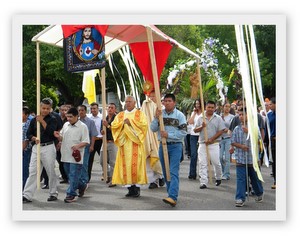
The streets of Liberal came alive June 14 with the rat-a-tat of a drum and the soft lilt of the flute as several dancers in masks and large, bright orange manes trailed a Corpus Christi procession led by Father Jim Dieker and Deacon Ruben Sigala.
Amid the sounds of drumming was the chanting of the Rosary, a prayerful invitation of sorts to the many onlookers who peered out their doors at the colorful procession.

Remembering Uncle ‘Father Al’

Editor’s Note: The following is from Bishop John Brungardt’s homily at the funeral of his uncle, Rev. Aloysius Balthaser Brungardt, Sept. 25, 2015 at St. Fidelis Basilica, Victoria, Kansas. See Father Brungardt’s obituary on Page 2.

“Let the children come to me” (Mark 10:14).


Father Al died on Sunday, Sept. 20.  The Gospel of Mark for that day spoke of being a servant, of welcoming children in Jesus’ name:  “Then he sat down, called the Twelve, and said to them, ‘If anyone wishes to be first, he shall be the last of all and the servant of all.’  Taking a child he placed it in their midst, and putting his arms around it he said to them, ‘Whoever receives one child such as this in my name, receives me; and whoever receives me, receives not me but the One who sent me,’” (Mark 9:35-37).

Father Al welcomed many children in his lifetime as a priest, serving in many Catholic schools, religious education classes and youth groups.  He also has many nephews and nieces, grand and great-grand as well!  Who would like to help me with my homily?  Any children who called Father Al: “Uncle Father Al” as well?  Come on up.

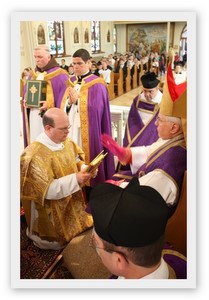
(Bishop Brungardt shows the photo above to the children. It was taken on June 12, 1971 at St. Fidelis Basilica in Victoria.) Pictured are: Father Al as a very young priest; Bishop Cyril J. Vogel, seventh bishop of Salina; and me, Bishop John Balthasar Brungardt, Father Al’s nephew, serving as a 12-year-old boy. (This was Father Al’s ordination Holy Mass, when he was) ordained to the priesthood of Jesus Christ and His Church 44 years ago!

Boys, maybe Jesus is calling some of you to be a priest like Father Al.  Possibly a Capuchin priest; they have served this parish and diocese for many years.  Possibly a diocesan priest, like for the Catholic Diocese of Dodge City ... oh, alright: Salina, or other dioceses!  Talk to your cousins Michael or Paul about the seminary.  Talk to these priests/brothers at lunch – they will tell you all about it.  Maybe Jesus wants you to be a husband and dad, as a man marries a woman in love and fertility until death do they part.  Wouldn’t that be great!

Girls, maybe Jesus is calling you to serve Him your whole life as a Religious Sister, like many Sisters here, like your aunt/cousin Sister Mary Elizabeth, C.P., or Sister Lucy Fidelis, O.P.  Ask these Sisters at lunch about their life serving Jesus – they will tell you all about it.  Maybe Jesus wants you to be a wife and mom, as a woman marries a man in love and fertility until death do they part, and raise a family.  Wouldn’t that be special!

Children, gather around the casket:  You may touch it if you want; you don’t have to.  Father Al’s body has worn out.  His soul has gone to the Lord.  We pray that Jesus may take his soul to heaven soon.  We pray that our sadness may be comforted.  Let us pray:  Jesus, you love Father Al so much.  We love Father Al and miss him.  Bring his soul to heaven to be with you.  Ease our sadness in this time of loss.  Amen.

Road to Emmaus (Luke 24:13-35)

Father Al was the priest at my dad’s funeral in 1996 here as St. Fidelis (Francis “Dutch” Balthaser Brungardt).  Father Al suggested that the Gospel be “The Road to Emmaus,” he explained: “since your dad loved the Eucharist.”  We chose this Gospel for today’s Funeral Mass.

--“Were not our hearts burning [within us] while he spoke to us on the way and opened the scriptures to us?(Luke 24:32). Our hearts burning within us.  What makes your heart burn within you?:

  • a football championship?
  • a music performance?
  • a big sale or profit?

OR

  • holding your newborn child for the first time?
  • visiting a sick relative or friend?
  • providing a meal or shelter to someone in need?

OR (priests)

  • absolving sins
  • anointing a dying person
  • elevating the Sacred Host during Holy Mass?

The two disciples found their hearts burning inside them when Jesus explained the Holy Scriptures to them.  The Bible: the books which contain the truth of God’s revelation, God’s saving truth.  Where is the Bible in our lives?

“...He was made known to them in the breaking of the bread (Luke 24:35).

At first, the two disciples did not recognize Jesus.  But at the breaking of the bread, the Eucharist, the disciples’ eyes were opened to the reality of Jesus present among them.  In a few minutes, Jesus will be present among us again at this Sacred altar.  Will we recognize Him?

Spiritual Re-awakening

A time of death is challenging.  The death of a loved one is especially difficult.  We even use different language to soften the sting of death:  he passed, he went to be with his Lord, etc.

At times, a death can be a time of a spiritual re-awakening, as we open our hearts to the grace of God.  We trust in Jesus to heal our hurts, to help us make sense in a time that may not make sense.

This re-awakening for me took place after my mom’s death, Virginia Ruth (Burton) Brungardt, in 1990, the funeral Mass was also here in St. Fidelis.  In searching for meaning in her death at only 59 years old, I turned to the Lord in prayer, in the Scripture, in the Eucharist: at Holy Mass and at adoration.  This search for Jesus our Savior led me to the seminary, the priesthood, the episcopacy.  The Lord works powerfully in our lives when we open up to His grace.

Father Al assisted many of us with this spiritual growth, as he loved us, each one.  Remember his homilies, as he “embraced” the ambo, as his central theme was the love of God for each of us (we never can hear that enough!).   Remember the many times he stood at the altar saying “This is my Body … this is my Blood(Mark 14:22-24).  I remember how his eyes lit up, how his “heart was burning inside” him when he spoke of his ministry of listening/caring with the soldiers of Fort Riley while at St. Xavier.  What a blessing to have Father Al these 72 years as family member and friend, 44 years as priest!  The Lord has blessed him, the Lord has blessed us.

As we continue the celebration of Holy Mass, let us renew in the Lord.  Let us often read and pray with the Holy Scripture, with our hearts burning inside us, and be changed for the better, as we grow in holiness.  Let us celebrate the Eucharist each Sunday and Holy Day, or even more often, to recognize Jesus, to be nourished by Jesus’ Body and Blood, Soul and Divinity, the Bread of Life, in Holy Communion.  Let us love everyone unconditionally, as Father Al did.  Jesus loves Father Al, and all of us, more than we can ask or imagine!


Recordando Al tío ‘Padre Al’


Nota del Editor: El texto siguiente es de la homilía de Mons. John Brungardt en el funeral de su tío, el Padre Aloysius Balthaser Brungardt, pronunciada el 25 de septiembre de 2015 en la Basílica St. Fidelis, en Victoria, Kansas. Ver el obituario de Padre Brungardt en la página 2.

“Dejad que los niños vengan a mí” (Marcos 10,14).


El Padre Al falleció el domingo 20 de septiembre.  El Evangelio de Marcos para ese día hablaba de ser siervos, de acoger a los niños en nombre de Jesús: “Se sentó, llamó a los Doce, y les dijo: El que quiera ser el primero, que se haga el último y el servidor de todos.  Después llamó a un niño, lo colocó en medio de ellos, lo acarició y les dijo: Quien reciba a uno de estos niños en mi nombre, a mí me recibe” (Marcos 9,35-37).

El Padre Al acogió a muchos niños en su vida como sacerdote, sirviendo en muchas escuelas católicas, en clases de educación religiosa y en grupos de jóvenes.  También tiene muchos sobrinos y sobrinas, ¡sobrinos nietos y sobrinos bisnietos también!  ¿Quién quiere ayudarme con mi homilía?  ¿Todos los niños que llamaban al Padre Al: “tío Padre Al” también?  Vengan y suban aquí.

(Mons. Brungardt muestra la foto de arriba a los niños. Fue tomada el 12 de junio de 1971 en la Basílica de San Fidelis en Victoria. En la foto están) El Padre Al, sacerdote muy joven; Mons. Cyril J. Vogel, séptimo obispo de Salina; y yo, Mons. John Balthasar Brungardt, sobrino del Padre Al, sirviendo como un niño de 12 años. (Esta fue la misa de ordenación del Padre Al, cuando fue) ordenado sacerdote de Jesucristo y de su Iglesia ¡hace 44 años!

Muchachos, quizá Jesús está llamando a algunos de ustedes para ser sacerdotes como el Padre Al.  Posiblemente un sacerdote capuchino; ellos han servido a esta parroquia y diócesis durante muchos años.  Posiblemente un sacerdote diocesano, como para la Diócesis de Dodge City... oh, está bien: Salina, ¡u otras diócesis!  Hablen con sus primos Miguel o Pablo acerca del seminario.  Hablen con estos sacerdotes / hermanos durante el almuerzo: ellos les contarán todo.  Tal vez Jesús quiere que tú seas esposo y padre, como un hombre que se casa con una mujer en el amor y la fertilidad hasta que la muerte los separe.  ¿Acaso no sería genial?

Niñas, tal vez Jesús las llama a servirlo toda su vida como religiosa, al igual que muchas hermanas aquí, como su tía / prima la Hna. Mary Elizabeth, CP, o la Hermana Lucy Fidelis, O.P.  Pregúntenles a estas Hermanas durante el almuerzo sobre su vida al servicio de Jesús: ellas les contarán todo.  Tal vez Jesús quiere que tú seas una esposa y madre, como una mujer que se casa con un hombre en el amor y la fertilidad hasta que la muerte los separe, y formar una familia.  ¿Acaso no sería algo especial?

Niños, júntense alrededor del ataúd:  Ustedes pueden tocarlo si quieren; no están obligados a hacerlo.  El cuerpo del Padre Al se ha desgastado.  Su alma se ha ido con el Señor.  Oramos para que Jesús pueda llevar su alma al cielo pronto.  Oramos para que nuestra tristeza puede ser consolada.  Oremos: Jesús, amas tanto al Padre Al.  Nosotros amamos al Padre Al y lo extrañamos.  Lleva su alma al cielo para estar contigo.  Consuela nuestra tristeza en este momento de pérdida.  Amén.

Camino a Emaús (Lucas 24,13-35).

El Padre Al fue el sacerdote en el funeral de mi padre en 1996 aquí en St. Fidelis (Francis Balthaser Brungardt “el holandés”).  El Padre Al insinuó que el Evangelio era “El Camino a Emaús”; él explicó: “Ya que tu padre amaba la Eucaristía”.  Elegimos este Evangelio para la misa de funeral de hoy.

- “¿No sentíamos arder nuestro corazón mientras nos hablaba por el camino y nos explicaba la Escritura?” (Lucas 24,32). Nuestros corazones ardían dentro de nosotros.  ¿Qué hace que tu corazón arda dentro de ti?:

  • ¿un campeonato de fútbol?
  • · ¿un concierto de música?
  • · ¿una gran venta o beneficio?

O

  • · ¿tener en tus brazos a tu hijo recién nacido por primera vez?
  • · ¿visitar a un pariente o amigo enfermo?
  • · ¿dar una comida o refugio a alguien en necesidad?

O (sacerdotes)

  • · ¿absolver los pecados?lving sins
  • · ¿dar la unción a un moribundo?
  • · ¿elevar la Sagrada Hostia durante la Santa Misa??

Los dos discípulos encontraron sus corazones ardiendo dentro de ellos cuando Jesús les explicó las Sagradas Escrituras.  La Biblia: los libros que contienen la verdad de la revelación de Dios, la verdad salvadora de Dios.  ¿Dónde está la Biblia en nuestras vidas?

“lo habían reconocido al partir el pan” (Lucas 24:35).

Al principio, los dos discípulos no reconocieron a Jesús.  Pero en la fracción del pan, la Eucaristía, los ojos de los discípulos se abrieron a la realidad de Jesús presente en medio de ellos.  En pocos minutos, Jesús estará presente entre nosotros de nuevo en este sagrado altar.  ¿Vamos a reconocerlo?

Un nuevo despertar espiritual

El momento de la muerte es un reto.  La muerte de un ser querido es especialmente difícil.  Incluso utilizamos un lenguaje diferente para suavizar el aguijón de la muerte:  falleció, se fue para estar con su Señor, etc.

A veces, una muerte puede ser un momento de un nuevo despertar espiritual, ya que abrimos nuestros corazones a la gracia de Dios.  Confiamos en que Jesús sanará nuestras heridas, para aydarnos a encontrar un sentido en un momento que puede no tener sentido.

Este nuevo despertar para mí tuvo lugar después de la muerte de mi madre, Virginia Ruth (Burton) Brungardt, en 1990.  En la búsqueda de un sentido a su muerte a sólo 59 años, me volví al Señor en la oración, en la Escritura, en la Eucaristía: en la Santa Misa y en la adoración.  Esta búsqueda de Jesús, nuestro Salvador, me llevó al seminario, al sacerdocio, al episcopado.  El Señor obra poderosamente en nuestras vidas cuando nos abrimos a su gracia.

El Padre Al nos ayudó a muchos de nosotros en este crecimiento espiritual, ya que nos amaba, a cada uno.  Recuerden sus homilías, como él “abrazaba” el ambón, ya que su tema central era el amor de Dios por cada uno de nosotros (¡nunca lo escucharemos bastante!).   Recuerden las muchas veces que se puso de pie, detrás del altar, diciendo “Esto es mi cuerpo... esta es mi sangre” (Marcos 14,22-24). Recuerdo cómo sus ojos se iluminaron, como su “corazón ardía dentro” de él cuando hablaba de su ministerio de la escucha / atención con los soldados de Fort Riley cuando estaba en San Javier.  ¡Qué bendición tener al Padre Al estos 72 años como miembro de su familia y amigo, y 44 ​​años como sacerdote!  El Señor lo ha bendecido, el Señor nos ha bendecido.

Al continuar la celebración de la Santa Misa, renovémonos en el Señor.  Leamos y oremos a menudo con la Sagrada Escritura, con nuestros corazones ardiendo dentro de nosotros, y seamos transformados para mejor, a medida que crecemos en la santidad.  Celebremos la Eucaristía cada domingo y fiesta de guardar, o incluso más a menudo, para reconocer a Jesús, para ser alimentados por el Cuerpo y la Sangre, el Alma y la Divinidad de Jesús, el Pan de Vida, en la Sagrada Comunión.  Amemos a todos incondicionalmente, como lo hizo el Padre Al.  ¡Jesús ama al Padre Al, y a todos nosotros, más de lo que podemos pedir o imaginar!

Read the full text of Pope Francis' address to US Congress

Washington D.C., Sep 24, 2015 / 05:00 am (CNA/EWTN News) - Please find below the full text of Pope Francis' Sept. 24 address to members of the United States Congress:


Mr. Vice-President, Mr. Speaker, Honorable Members of Congress, Dear Friends,

I am most grateful for your invitation to address this Joint Session of Congress in “the land of the free and the home of the brave”. I would like to think that the reason for this is that I too am a son of this great continent, from which we have all received so much and toward which we share a common responsibility.

Each son or daughter of a given country has a mission, a personal and social responsibility. Your own responsibility as members of Congress is to enable this country, by your legislative activity, to grow as a nation. You are the face of its people, their representatives. You are called to defend and preserve the dignity of your fellow citizens in the tireless and demanding pursuit of the common good, for this is the chief aim of all politics. A political society endures when it seeks, as a vocation, to satisfy common needs by stimulating the growth of all its members, especially those in situations of greater vulnerability or risk. Legislative activity is always based on care for the people. To this you have been invited, called and convened by those who elected you.

Yours is a work which makes me reflect in two ways on the figure of Moses. On the one hand, the patriarch and lawgiver of the people of Israel symbolizes the need of peoples to keep alive their sense of unity by means of just legislation. On the other, the figure of Moses leads us directly to God and thus to the transcendent dignity of the human being. Moses provides us with a good synthesis of your work: you are asked to protect, by means of the law, the image and likeness fashioned by God on every human face.

Today I would like not only to address you, but through you the entire people of the United States. Here, together with their representatives, I would like to take this opportunity to dialogue with the many thousands of men and women who strive each day to do an honest day’s work, to bring home their daily bread, to save money and –one step at a time – to build a better life for their families. These are men and women who are not concerned simply with paying their taxes, but in their own quiet way sustain the life of society. They generate solidarity by their actions, and they create organizations which offer a helping hand to those most in need.

I would also like to enter into dialogue with the many elderly persons who are a storehouse of wisdom forged by experience, and who seek in many ways, especially through volunteer work, to share their stories and their insights. I know that many of them are retired, but still active; they keep working to build up this land. I also want to dialogue with all those young people who are working to realize their great and noble aspirations, who are not led astray by facile proposals, and who face difficult situations, often as a result of immaturity on the part of many adults. I wish to dialogue with all of you, and I would like to do so through the historical memory of your people.

My visit takes place at a time when men and women of good will are marking the anniversaries of several great Americans. The complexities of history and the reality of human weakness notwithstanding, these men and women, for all their many differences and limitations, were able by hard work and self- sacrifice – some at the cost of their lives – to build a better future. They shaped fundamental values which will endure forever in the spirit of the American people. A people with this spirit can live through many crises, tensions and conflicts, while always finding the resources to move forward, and to do so with dignity. These men and women offer us a way of seeing and interpreting reality. In honoring their memory, we are inspired, even amid conflicts, and in the here and now of each day, to draw upon our deepest cultural reserves.

I would like to mention four of these Americans: Abraham Lincoln, Martin Luther King, Dorothy Day and Thomas Merton.

This year marks the one hundred and fiftieth anniversary of the assassination of President Abraham Lincoln, the guardian of liberty, who labored tirelessly that “this nation, under God, [might] have a new birth of freedom”. Building a future of freedom requires love of the common good and cooperation in a spirit of subsidiarity and solidarity.

All of us are quite aware of, and deeply worried by, the disturbing social and political situation of the world today. Our world is increasingly a place of violent conflict, hatred and brutal atrocities, committed even in the name of God and of religion. We know that no religion is immune from forms of individual delusion or ideological extremism. This means that we must be especially attentive to every type of fundamentalism, whether religious or of any other kind. A delicate balance is required to combat violence perpetrated in the name of a religion, an ideology or an economic system, while also safeguarding religious freedom, intellectual freedom and individual freedoms. But there is another temptation which we must especially guard against: the simplistic reductionism which sees only good or evil; or, if you will, the righteous and sinners. The contemporary world, with its open wounds which affect so many of our brothers and sisters, demands that we confront every form of polarization which would divide it into these two camps. We know that in the attempt to be freed of the enemy without, we can be tempted to feed the enemy within. To imitate the hatred and violence of tyrants and murderers is the best way to take their place. That is something which you, as a people, reject.

Our response must instead be one of hope and healing, of peace and justice. We are asked to summon the courage and the intelligence to resolve today’s many geopolitical and economic crises. Even in the developed world, the effects of unjust structures and actions are all too apparent. Our efforts must aim at restoring hope, righting wrongs, maintaining commitments, and thus promoting the well-being of individuals and of peoples. We must move forward together, as one, in a renewed spirit of fraternity and solidarity, cooperating generously for the common good.

The challenges facing us today call for a renewal of that spirit of cooperation, which has accomplished so much good throughout the history of the United States. The complexity, the gravity and the urgency of these challenges demand that we pool our resources and talents, and resolve to support one another, with respect for our differences and our convictions of conscience.

In this land, the various religious denominations have greatly contributed to building and strengthening society. It is important that today, as in the past, the voice of faith continue to be heard, for it is a voice of fraternity and love, which tries to bring out the best in each person and in each society. Such cooperation is a powerful resource in the battle to eliminate new global forms of slavery, born of grave injustices which can be overcome only through new policies and new forms of social consensus.

Here I think of the political history of the United States, where democracy is deeply rooted in the mind of the American people. All political activity must serve and promote the good of the human person and be based on respect for his or her dignity. “We hold these truths to be self-evident, that all men are created equal, that they are endowed by their Creator with certain unalienable rights, that among these are life, liberty and the pursuit of happiness” (Declaration of Independence, 4 July 1776). If politics must truly be at the service of the human person, it follows that it cannot be a slave to the economy and finance. Politics is, instead, an expression of our compelling need to live as one, in order to build as one the greatest common good: that of a community which sacrifices particular interests in order to share, in justice and peace, its goods, its interests, its social life. I do not underestimate the difficulty that this involves, but I encourage you in this effort.

Here too I think of the march which Martin Luther King led from Selma to Montgomery fifty years ago as part of the campaign to fulfill his “dream” of full civil and political rights for African Americans. That dream continues to inspire us all. I am happy that America continues to be, for many, a land of “dreams”. Dreams which lead to action, to participation, to commitment. Dreams which awaken what is deepest and truest in the life of a people.

In recent centuries, millions of people came to this land to pursue their dream of building a future in freedom. We, the people of this continent, are not fearful of foreigners, because most of us were once foreigners. I say this to you as the son of immigrants, knowing that so many of you are also descended from immigrants. Tragically, the rights of those who were here long before us were not always respected. For those peoples and their nations, from the heart of American democracy, I wish to reaffirm my highest esteem and appreciation. Those first contacts were often turbulent and violent, but it is difficult to judge the past by the criteria of the present. Nonetheless, when the stranger in our midst appeals to us, we must not repeat the sins and the errors of the past. We must resolve now to live as nobly and as justly as possible, as we educate new generations not to turn their back on our “neighbors” and everything around us. Building a nation calls us to recognize that we must constantly relate to others, rejecting a mindset of hostility in order to adopt one of reciprocal subsidiarity, in a constant effort to do our best. I am confident that we can do this.

Our world is facing a refugee crisis of a magnitude not seen since the Second World War. This presents us with great challenges and many hard decisions. On this continent, too, thousands of persons are led to travel north in search of a better life for themselves and for their loved ones, in search of greater opportunities. Is this not what we want for our own children? We must not be taken aback by their numbers, but rather view them as persons, seeing their faces and listening to their stories, trying to respond as best we can to their situation. To respond in a way which is always humane, just and fraternal. We need to avoid a common temptation nowadays: to discard whatever proves troublesome. Let us remember the Golden Rule: “Do unto others as you would have them do unto you” (Mt 7:12).

This Rule points us in a clear direction. Let us treat others with the same passion and compassion with which we want to be treated. Let us seek for others the same possibilities which we seek for ourselves. Let us help others to grow, as we would like to be helped ourselves. In a word, if we want security, let us give security; if we want life, let us give life; if we want opportunities, let us provide opportunities. The yardstick we use for others will be the yardstick which time will use for us. The Golden Rule also reminds us of our responsibility to protect and defend human life at every stage of its development.

This conviction has led me, from the beginning of my ministry, to advocate at different levels for the global abolition of the death penalty. I am convinced that this way is the best, since every life is sacred, every human person is endowed with an inalienable dignity, and society can only benefit from the rehabilitation of those convicted of crimes. Recently my brother bishops here in the United States renewed their call for the abolition of the death penalty. Not only do I support them, but I also offer encouragement to all those who are convinced that a just and necessary punishment must never exclude the dimension of hope and the goal of rehabilitation.

In these times when social concerns are so important, I cannot fail to mention the Servant of God Dorothy Day, who founded the Catholic Worker Movement. Her social activism, her passion for justice and for the cause of the oppressed, were inspired by the Gospel, her faith, and the example of the saints.

How much progress has been made in this area in so many parts of the world! How much has been done in these first years of the third millennium to raise people out of extreme poverty! I know that you share my conviction that much more still needs to be done, and that in times of crisis and economic hardship a spirit of global solidarity must not be lost. At the same time I would encourage you to keep in mind all those people around us who are trapped in a cycle of poverty. They too need to be given hope. The fight against poverty and hunger must be fought constantly and on many fronts, especially in its causes. I know that many Americans today, as in the past, are working to deal with this problem.

It goes without saying that part of this great effort is the creation and distribution of wealth. The right use of natural resources, the proper application of technology and the harnessing of the spirit of enterprise are essential elements of an economy which seeks to be modern, inclusive and sustainable. “Business is a noble vocation, directed to producing wealth and improving the world. It can be a fruitful source of prosperity for the area in which it operates, especially if it sees the creation of jobs as an essential part of its service to the common good” (Laudato Si’, 129). This common good also includes the earth, a central theme of the encyclical which I recently wrote in order to “enter into dialogue with all people about our common home” (ibid., 3). “We need a conversation which includes everyone, since the environmental challenge we are undergoing, and its human roots, concern and affect us all” (ibid., 14).

In Laudato Si’, I call for a courageous and responsible effort to “redirect our steps” (ibid., 61), and to avert the most serious effects of the environmental deterioration caused by human activity. I am convinced that we can make a difference and I have no doubt that the United States – and this Congress – have an important role to play. Now is the time for courageous actions and strategies, aimed at implementing a “culture of care” (ibid., 231) and “an integrated approach to combating poverty, restoring dignity to the excluded, and at the same time protecting nature” (ibid., 139). “We have the freedom needed to limit and direct technology” (ibid., 112); “to devise intelligent ways of... developing and limiting our power” (ibid., 78); and to put technology “at the service of another type of progress, one which is healthier, more human, more social, more integral” (ibid., 112). In this regard, I am confident that America’s outstanding academic and research institutions can make a vital contribution in the years ahead.

A century ago, at the beginning of the Great War, which Pope Benedict XV termed a “pointless slaughter”, another notable American was born: the Cistercian monk Thomas Merton. He remains a source of spiritual inspiration and a guide for many people. In his autobiography he wrote: “I came into the world. Free by nature, in the image of God, I was nevertheless the prisoner of my own violence and my own selfishness, in the image of the world into which I was born. That world was the picture of Hell, full of men like myself, loving God, and yet hating him; born to love him, living instead in fear of hopeless self-contradictory hungers”. Merton was above all a man of prayer, a thinker who challenged the certitudes of his time and opened new horizons for souls and for the Church. He was also a man of dialogue, a promoter of peace between peoples and religions.

From this perspective of dialogue, I would like to recognize the efforts made in recent months to help overcome historic differences linked to painful episodes of the past. It is my duty to build bridges and to help all men and women, in any way possible, to do the same. When countries which have been at odds resume the path of dialogue – a dialogue which may have been interrupted for the most legitimate of reasons – new opportunities open up for all. This has required, and requires, courage and daring, which is not the same as irresponsibility. A good political leader is one who, with the interests of all in mind, seizes the moment in a spirit of openness and pragmatism. A good political leader always opts to initiate processes rather than possessing spaces (cf. Evangelii Gaudium, 222-223).

Being at the service of dialogue and peace also means being truly determined to minimize and, in the long term, to end the many armed conflicts throughout our world. Here we have to ask ourselves: Why are deadly weapons being sold to those who plan to inflict untold suffering on individuals and society? Sadly, the answer, as we all know, is simply for money: money that is drenched in blood, often innocent blood. In the face of this shameful and culpable silence, it is our duty to confront the problem and to stop the arms trade.

Three sons and a daughter of this land, four individuals and four dreams: Lincoln, liberty; Martin Luther King, liberty in plurality and non-exclusion; Dorothy Day, social justice and the rights of persons; and Thomas Merton, the capacity for dialogue and openness to God.

Four representatives of the American people.

I will end my visit to your country in Philadelphia, where I will take part in the World Meeting of Families. It is my wish that throughout my visit the family should be a recurrent theme. How essential the family has been to the building of this country! And how worthy it remains of our support and encouragement! Yet I cannot hide my concern for the family, which is threatened, perhaps as never before, from within and without. Fundamental relationships are being called into question, as is the very basis of marriage and the family. I can only reiterate the importance and, above all, the richness and the beauty of family life.

In particular, I would like to call attention to those family members who are the most vulnerable, the young. For many of them, a future filled with countless possibilities beckons, yet so many others seem disoriented and aimless, trapped in a hopeless maze of violence, abuse and despair. Their problems are our problems. We cannot avoid them. We need to face them together, to talk about them and to seek effective solutions rather than getting bogged down in discussions. At the risk of oversimplifying, we might say that we live in a culture which pressures young people not to start a family, because they lack possibilities for the future. Yet this same culture presents others with so many options that they too are dissuaded from starting a family.

A nation can be considered great when it defends liberty as Lincoln did, when it fosters a culture which enables people to “dream” of full rights for all their brothers and sisters, as Martin Luther King sought to do; when it strives for justice and the cause of the oppressed, as Dorothy Day did by her tireless work, the fruit of a faith which becomes dialogue and sows peace in the contemplative style of Thomas Merton.

In these remarks I have sought to present some of the richness of your cultural heritage, of the spirit of the American people. It is my desire that this spirit continue to develop and grow, so that as many young people as possible can inherit and dwell in a land which has inspired so many people to dream.

God bless America!

 'St. Paul would be proud of faith-filled Malta'

 Editor’s Note: While working for the Denver Catholic Register, I was able to visit the island of Malta for the Feast of St. Paul’s Shipwreck. In honor of the closing of the Year of St. Paul, the article is reprinted here, with permission. -- David Myers

The narrow street in Valetta, the capital city of Malta, was alive with band music and fireworks as hundred of faithful waited under a sea of confetti for the highlight of the annual five-day Feast of the Shipwreck of St. Paul. 
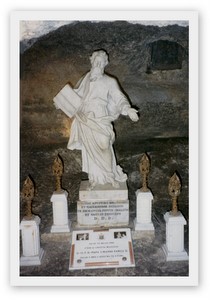
In 60 A.D., while on his way to Rome to stand trial for heresy, St. Paul, along with St. Luke, was shipwrecked off the coast of Malta and made a brief visit to the Mediterranean island, setting a course of Catholic identity that has flourished over the centuries.
    During his three-month stay on Malta, 60 miles south of Sicily, St. Paul converted the Roman governor, Publius, after healing his sick father. Publius would become the first bishop of Malta, which led to the conversion of nearly the entire populace.
    Almost 2,000 years later, the country, with a population a little larger than Wichita’s, has 365 churches and an 85 percent practicing Catholic population. The faith of the Maltese, all of whom learn English as a first language, can be seen in the large number of festas, one of which is celebrated nearly every weekend to honor a town’s or village’s patron saint.

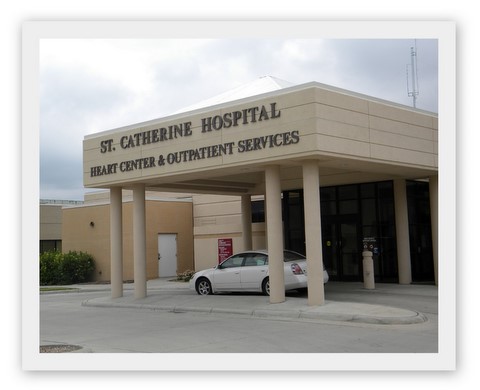
New Heart Center at St. Catherine’s

opens its doors   

Having the ability to perform the procedure in-house saves patients from having to travel to the Kansas Heart Hospital in Wichita -- which partners with the new Heart Center at St. Catherine’s -- for the procedure.
    More importantly, the procedure can stabilize a patient who requires airlift to Wichita for emergency surgery.
    Vines said that the process has taken some of the stress out of one of the most traumatic events one can experience.
    “Our process before the center opened, was that you came in the emergency room at 2 or 3 a.m. with signs and symptoms of a heart attack, and we’d have to air-lift you to Wichita,” explained Vines. “You’re having a family member at 2 or 3 a.m. driving to Wichita. The last thing they’re thinking about is driving. They’re thinking, My husband, wife, father or mother is being flown to Wichita. Will they be alive when I get there? You’re not in the state of mind to make that drive.

Iraqi Christians who fled Islamic State share their story

Denver, Colo., Sep 23, 2015 / 03:59 pm (CNA/EWTN News) - The plight of Christians in the Middle East was the focus of an educational and fundraising event in Denver on Friday, in which two Christian refugees from a city near Mosul told of their escape from Islamic State militants.


The Sept. 18 Assembly of Hope and Mercy was hosted by Regis University.

A young Iraqi woman recounted her Aug. 14, 2014 escape from Bakhdida, 20 miles southeast of Mosul, when Kurdish troops defending the town from Islamic State attack abruptly withdrew.

Fearing a massacre, the Christians fled on foot; many, like her father, without money or identification. As they walked all the next day to Erbil in Iraqi Kurdistan, more than 40 miles away, the temperature hit 115 degrees.

“It was the road of death, face to face with death,” she said. An ambulance approached those in flight, a welcomed sight, but it contained Islamic State militants who opened fire.

When the refugees did arrive in Erbil they had to sleep out in the open, on streets and in public places.

The young woman pleaded “You, the people of freedom, save my friends, especially the little girls and those who are sex slaves” to the Islamic State.

She said girls used to dream of getting an education.  

“Now, they dream of any man who will present himself for marriage and has a passport, so they can get out … and make it to the land of safety … I ask you, save us.”

Another Iraqi refugee from Bakhdida, a married woman with children, said, “Here in America, I’m in a country that can save me; it’s a secure country that can protect me and protect my children … in Iraq there’s no more place (for Christians), we can’t survive, we can’t live. My wish and my only request that I can bring my husband and two children who are in the camp in Beirut … because I hope my daughter (who wears leg braces) can receive treatment in the United States.”

According to the refugee, when the Islamic State overtook Bakhdida, the forces were not only foreigners, but included Sunni inhabitants of the city. She maintained that this imperils the future of Christianity in Iraq.

The educational event was sponsored by Save Christians in the Middle East, a group of religious, business, and community partners whose goal is to provide immediate support to these endangered Christians.