This Catholic nun is competing on

Food Network's reality cooking show


Chicago, Ill., Nov 9, 2015 / 02:25 pm (CNA) - Fans of the Food Network’s competitive cooking show “Chopped” can look forward to a special appearance on Monday night’s episode – Sister Alicia Torres, a Catholic religious sister from the Franciscans of the Eucharist of Chicago.

Along with three other chefs, Sr. Torres will have to get through the appetizer round – by creating a confection from Thanksgiving leftovers – as well as the entrée and dessert rounds in order to be crowed the “Chopped” champion. The winner takes home $10,000 to give to the charity of their choice.

Should Sister survive all three rounds without being “chopped,” her proceeds will go to Our Lady of the Angels Mission in Chicago, the soup kitchen at which the Franciscan sisters serve. 

It is through working in the soup kitchen that Sr. Torres has been able to hone her creative cooking skills, she told CNA, since everything is run on donations.

“We don't always know exactly what food is going to come in, so the ability to be flexible and creative has really stretched me to expand my cooking horizons and think outside the box when it comes to preparing delicious, healthy meals,” she said.

“Not only is it an opportunity to be artistic, but even more importantly, to show our deep gratitude to God and our benefactors for their generosity that sustains our life and our work.”

Sr. Torres applied to be on “Chopped” after she heard that they had put out a call for religious sisters. She went through the interview process just like any other potential chef, and was eventually chosen to compete on the Thanksgiving episode with three other chefs who all serve the underprivileged in some way.

While she isn’t able to say much about the episode, she told CNA that she loves making Mexican food, finding frugal ways to make fancier dishes, and experimenting with flavors.

“I recently made fish tacos with sweet potatoes! Sometimes when I'm cooking, those in the kitchen are a little dubious about the flavor combinations I put together...but nine times out of ten, we have culinary success!” she said.

“I've been told my outside the box pesto (moving beyond the boundaries of pine-nuts to other, more economical nuts) and my Picadillo (a Spanish beef dish) are well done.”

She also loves to bake strawberry rhubarb pie – a favorite of the late Cardinal Francis George.

Even more so than a chance to showcase her cooking skills and earn money for the mission, she said she saw the show as a chance to be a witness.

“I wanted to do it for Jesus: to be a witness to how fulfilling a life surrendered to God can be. I also wanted to represent the least among us, the very poor, who are so dear to Jesus,” she said.

Sr. Torres is one of the founders of her order, which has a special devotion to the Blessed Sacrament and apostolates involving evangelization and service to the poor.

“Our vocation as religious is to live a life of prayer, witness and service – being on Chopped certainly gives a great opportunity to share that message with the world.”

Even before her life as a sister and soup kitchen chef, Sr. Torres was baking breads and cakes in her kitchen by the time she was a teenager, and her parents always emphasized the importance of family meals together.  

About two years ago, the sisters and volunteers at Our Lady of Angels realized that they needed to emphasize the community aspect of their soup kitchen just as much as the physical needs of the hungry.

“We have an emphasis on satisfying not only physical hunger, but also spiritual hunger. We begin any meal with a prayer service with a Liturgy of the Word format, as most of our neighbors are not Catholic, but Baptist,” she said. “Keeping God's Word at the center helps us to stay united.”

After prayer, the sisters and volunteers share a meal with their guests “around tables which we set with table cloths and real dishes.”

Before they began intentionally focusing on community, guests would come and go within about 45 minutes, Sr. Torres said.

“(N)ow they stay for at least one-and-a-half hours, sometimes two! It is amazing to see how the Lord draws us together as brothers and sisters in Christ to share food, faith and fun!”

Sister’s stint on the reality cooking show is part of a recent uptick in appearances of religious sisters on T.V. Last year, Lifetime T.V. followed five young women discerning vocations as religious sisters, and Sr. Cristina Scuccia recently won the Italian version of “The Voice.”

When asked why people find sisters so fascinating, Sr. Torres said they’re usually attracted to the joy that so many sisters find in their relationship with Christ.  

“In our lives, we strive to share the love and the joy found in this relationship with all we meet. I think many people are attracted by the joy that sisters have and it makes them wonder if that joy is possible for them too,” she said.

“I hope that by our witness we can help all men and women discover that being a disciple of Jesus Christ is the most fulfilling way to live life.”

The “Thanksgiving Soup-er Stars” episode of “Chopped” with Sr. Torres is set to air Monday, November 9 at 8 p.m. Eastern time.

'Be the hug of Christ'

White Mass in DC encourages those with disabilities

Washington D.C., Nov 10, 2015 / 03:25 am (CNA/EWTN News) - Honoring individuals with disabilities and mental health challenges, Cardinal Donald Wuerl of Washington, D.C., celebrated the archdiocese's annual White Mass on Sunday and encouraged the faithful to embrace, serve and welcome the diversity of the Church.

The White Mass, hosted by the Archdiocese of Washington's Department of Special Needs Ministries, drew various caregivers and individuals with disabilities. It was celebrated at the Cathedral of St. Matthew on Nov. 8 and the homily was delivered by Father William Byrne, pastor of Our Lady of Mercy in Potomac.

“Last week, I just met a wonderful man named Jason,” Fr. Byrne said in his homily, explaining that he encountered the man at the Tricia Sullivan Respite Care Program run by the Potomac Community Resources.

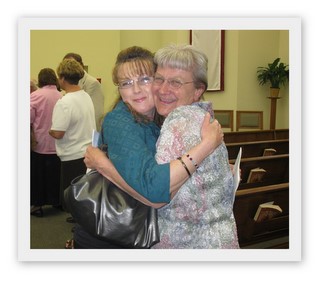
“During the Rhythmic Music Program, Jason reached over and grabbed me around the neck, pulled our heads together and gave me a long hug,” he continued.

For Fr. Byrne, this hug symbolized something more than just an embrace. It was a gesture that all Christians should imitate – one of welcoming strangers into the Church and embracing them as Christ would embrace the world.

“We are the universal Church, whose job it is to welcome, embrace and accompany everyone in his and her encounter with Jesus,” Fr. Byrne stated, saying “we are called to be the hug of Christ to the world.”

“The hugs of Jason and me, the embrace of the apostles, the warm squeeze of the cousins Elizabeth and Mary while John leaps for joy in his mother's womb – these hugs are a great image for what we are called to be as a Church.”

For the past six years, the White Mass in the Archdiocese of Washington has been held to honor caregivers and individuals with special needs. Those in attendance at the White Mass wore white to symbolize their baptismal vows and life within the Church.   

“The White Mass boldly proclaims that all are needed at the altar of God and commends and commissions us to be the agents of that message,” Fr. Byrne said.

The White Mass celebrates the familial bond of the Body of Christ within the Church, he explained. If one member is missing, then the whole body is incomplete. This includes the members of the Church who are disabled or mentally challenged, as well as their caregivers.

“The White Mass celebrates not just all are welcome to the altar, but most important, all are needed at the altar of God!” the priest stressed.

Respite care is not a luxury, he reminded the faithful, but rather a necessity for the effective care of the Church. He also noted that caregivers need help and support from the community to fulfill their mission of serving the disabled or mentally challenged.

Fr. Byrne went on to highlight Sunday's Gospel, Mark 12:38-44, pointing to the poor widow and her sense of trust and generosity. Her witness of giving everything she had, he stated, should be every Christian's aspiration.

“The lady is not just giving up her second latte and dropping the change in the basket. She is literally hungry, hungry to serve God. She is hungry to help others.”

Fr. Byrne also noted that the caregivers who are involved in special ministry with the disabled or mentally challenged emulate the “modern day vision of this Gospel,” because they sacrifice but they also receive – just like the poor widow in the Gospel.

“Remember that in the end, what the woman in the Gospel was given was truly more than she herself gave. But, her giving also hurt,” he said, emphasizing that true love is sacrificial.

“Real love mandates always doing the right thing, even if it is the hard thing. Real love is extraordinary. Real love means going out of our way, digging in a bit deeper and finding Jesus not in my excess, but where I need Him most.”

The priest concluded his homily by challenging the faithful gathered to embrace one another and pray for the Body of Christ.

“First, don't be afraid to give someone a big ol' hug,” he said.

“Second, pray to understand that in order to be holy, we have to be whole. With all our differences, the huggers and the hugged, we are one Body, the Body of Christ.”

Diocese mourns, celebrates life of

Msgr. Patrick J. Leahy


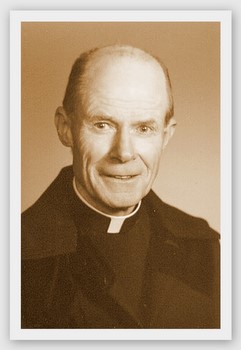
Msgr. Patrick Joseph “Pat” Leahy, 94, a retired priest of the Diocese of Dodge City, died April 30, 2009, at the Catholic Care Center in Wichita. Bishop Ronald M. Gilmore presided at the funeral Mass celebrated May 5 at St. Elizabeth Chapel, Catholic Care Center, Wichita. Burial was in Ascension Cemetery, Wichita. Msgr. Leahy was born in Abbeyfeale, Ireland, Oct. 6, 1914, the son of Patrick and Johanna (Ward) Leahy. He was ordained June 19, 1938, by the Most Reverend Thomas Keough at All Hallows College, Dublin. He was elevated to the rank of monsignor on October 14, 1965.

Teen Moms, CSS, offer heartfelt

‘thank you’ to volunteers


Leticia Flores was 17 years old, new to Dodge City, and had a one-year-old daughter when she found friends and support through the Teen Moms program of Catholic Social Service – the only program of its kind in Kansas.
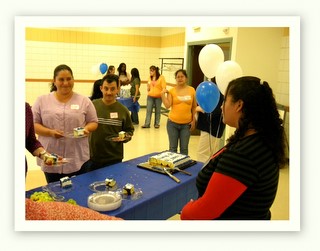
    On May 1, Flores, other young moms in the program, and CSS staff, joined at the cathedral to honor the many volunteers who have supported the girls and the program since it began six years ago.
    Flores, like the other young moms in the program, wore a big smile as the volunteers filtered into the gathering, where they enjoyed fruit, cake and tea before a brief presentation.

All Saint’s Day includes every man and woman of goodwill

By Msgr. M. Francis Mannion / Viewpoint

The month of November opens with the celebration of one of the richest feasts of the liturgical year, the Solemnity of All Saints.  On this day, the Church celebrates the festival of God’s holy city and the redeemed citizenry of heaven.

The feast of All Saints celebrates all those who lived in the model of Christ and inspired their fellow men and women in a remarkable way.  The saints made a great difference in the world, and even now they continue to inspire us to do great things.

The saints are not simply nice decorations in the world of Christian spirituality.  A struggling humanity needs their example and inspiration desperately.

Gerald Vann, a 20th century English spiritual writer, puts this well when he writes: “For the church is, and has always been, a net that has caught all sorts of fish.  She is, and has always been, a strange combination of the drab and the magnificent, the squalid and the heroic, the shabby and the beautiful.  Her garden has produced both weeds and flowers.  The saints are the flowers, and we must admit that without them the sanctity of the Church would not be very much in evidence. It is through them that Christ’s light shines to the nations, and it is in them that Christians see what holiness really means. It is no wonder then that the Church takes pride in those noble examples of Christian living, and boldly proclaims their greatness to the world.”

The saintly men and women do not exist in a world beyond or disconnected from ours, but are part of the very fabric of our existence. The modern person likes to think that he or she is self-made.   But the fact is, we are what we are because of those who have gone before us.  We are brought to birth by others.  We are formed by the spiritual inheritance of other generations.  We live our lives happily only in community and our lives are profitable only when directed to the up—building of the human community.  We are saved and brought to final fulfillment not by anything we ourselves are able to do—but by the God of mercy and redemption, and through the assistance of countless others in the spiritual community of God’s people.

The saints exist for us and with us.  We venerate them not as distant historical figures but as brothers and sisters with whom we are joined in a living communion.

The great French writer Paul Claudel pointed out that the treasures of all the saints are at our disposal. “All the saints and the angels belong to us.  We can use the intelligence of St. Thomas, the right arm of St. Michael, the hearts of Joan of Arc and Catherine of Siena, and all the hidden resources which have only to be touched to be set in action. . . The heroism of the missionary, the inspiration of the Doctors of the Church, the generosity of the martyrs, the genius of the artists, the burning prayer of the Poor Clares and Carmelites—it is as if all that were ourselves; it is ourselves.”

Like all great feasts of the liturgical year, the Solemnity of All Saints is a celebration of the Church living in history now.  The stories of the saints are our stories, and our own little stories are ennobled and exalted by becoming part of the great Christian story.  In this truth we should find great hope and encouragement.

'Angels and Demons' is harmless

entertainment, Vatican newspaper says

By Sarah Delaney
Catholic News Service

ROME (CNS) -- The newly premiered movie "Angels and Demons" is little more than "harmless entertainment," with many factual errors and little cultural value, according to the Vatican newspaper.

Two dispassionate articles in L'Osservatore Romano May 7 may disappoint the film's promoters, who had sought a conflict with the Vatican of the type that surrounded "The Da Vinci Code" in 2006. Both films are based on books by author Dan Brown.

Chinese activist deplores Tiananmen Square cover up

Princeton, N.J., Jun 4, 2014 / 05:19 pm (CNA) - Marking the 25th anniversary of the massacre of protestors at Beijing's Tiananmen Square, the human rights advocate Chen Guangcheng is lamenting the lack of change in the People's Republic of China.

“Twenty-five years later, instead of admitting its evils and facing history, the Communist Party of China continues to cover it all up, and continues its one-party dictatorship,” Chen wrote in a column published June 4 at The Witherspoon Institute.

“Calls for justice have still not been answered. The criminals who ordered the crackdown have still not been held accountable. This is a deep grief for the Chinese people. This is a grief for the whole world.”

Chen became a human rights lawyer in mainland China and was imprisoned for four years, and then placed under house arrest for two years. Escaping his house arrest in 2012, he took refuge at the U.S. embassy in Beijing, and now resides in the U.S.

He marked the pro-democracy protests  in China which were quashed in 1989 after 50 days when hundreds were killed June 3-4.

Chen commented that the “heroes who stood in front of the tanks in Tiananmen Square” that year are among the many who have paid the consequence of death opposing the Chinese government.

“The patriotic movement of 1989 was carried out by students and ordinary citizens. They wanted democracy and freedom. They opposed government corruption … many young people died. Many fled the country.”

Chen noted that while China has seen “great economic progress” there “has been very little political reform,” with government officials living as “outlaws,” censoring media and filtering the internet, spending nearly $12 billion annually “not on looking after (China's) people, but in suppressing them.”

The Chinese government prohibits public references to the massacre, utilizing heavy security and online censorship. Only in in the semi-autonomous region of Hong Kong were remembrances permitted; tens of thousands gathered there to attend a candlelight vigil in memory of the protests.

“A government that cannot face its own history is a government without a future,” commented Chen. “Will a government that cannot treat its people with kindness treat other countries any better? I think not.”

He lauded the recent opening of the June Fourth Memorial Museum in Hong Kong, saying it “reveals the truth of what happened, truth that people in mainland China are not allowed to hear.”

“Everything that makes us remember June Fourth, 1989 has its effect,” he said. “Every speech, every story on the radio or TV, every candlelight vigil makes the perpetrators shudder in fear.”

“It gives people courage to think and speak aloud again … today, many Chinese people are beginning to awake. They are overcoming their fear and working for democracy. China will change. But we must stop the Communist Party from brutalizing and suppressing the Chinese people during this inevitable change.”

Chen addressed the U.S. people and government, and “all freedom-loving countries,” encouraging them to “look beyond China's economic success.”

“I urge you to support the ordinary Chinese. Help them end Internet censorship. Help them break down the Great Firewall of China.”

Corrupt regimes, he said, are “a threat to us all … to our very human culture, our human civilization, and our universal human values.”

“To give future generations a free world, we must act now. Work with the human rights lawyers in China. Help the internet activists. Partner with all statesmen who support democracy and freedom.”

Chen concluded, saying, “at the rebirth of democracy in China, the whole world must stand firm.”

“If we speak loudly and clearly, a free China, a democratic China, a China with a constitutional government will come to pass. It must.”

Great Bend First Communion sheds

light on celiac disease

By David Myers
Southwest Kansas Register

Editor’s Note: While most sufferers of celiac disease can ingest the .01 percent of gluten in the low-gluten hosts described below, some sufferers of the disease have sensitivity such that it precludes them from even this amount. Individuals should consult their physician before receiving the low-gluten bread.
In April, three children preparing for their First Communion at Prince of Peace Parish in Great Bend were noted to have gluten intolerance, or celiac disease, which prohibits them from being able to ingest altar bread.

Amid calls for reform, a look at stats –

and stories – from the US prison system

Washington D.C., Oct 25, 2015 / 04:12 pm (CNA/EWTN News) - Saul Green wanted to turn his life around.

Green was caught stealing out of a subway station vending machine and charged with larceny 24 years ago. After the judge tossed out the case, he was later sentenced to prison on a crack cocaine conviction.

Following his year in prison, he found employment as a concierge for three months in Washington, D.C. But when his employer wanted to move him to a security guard position, they found out about his prison term and then parted ways with him.

“Ever since that time, it’s been hard,” he told CNA in an interview. He lost his apartment and had to take everything he owned to the streets. Green currently lives in a men’s shelter in Washington, D.C. and is still waiting for calls back from employers after more than 125 interviews for potential jobs.

Green's story is one example of the struggles ex-prisoners face when they look for a job. For years, Catholic leaders have been calling for criminal justice reform to help avoid similar situations, which can result in homelessness, drug abuse, gang activity, or a return to crime.  

Now, the U.S. bishops believe that a new Senate bill is a good first step to achieving reform.

“Our Catholic tradition supports the community's right to establish and enforce laws that protect people and advance the common good,” stated a recent letter from Archbishop Thomas Wenski of Miami and Sister Donna Markham, OP.

“But our faith also teaches us that both victims and offenders have a God-given dignity that calls for justice and restoration, not vengeance,” they continued.

Archbishop Wenski chairs the U.S. bishops’ committee on Domestic Justice and Human Development. Sister Donna Markham is the president and CEO of Catholic Charities, USA.

Their letter, sent to Sen. Chuck Grassley (R-Iowa), who chairs the Senate Judiciary Committee, and Sen. Patrick Leahy (D-Vt.), ranking member of the committee, applauds the Senate’s Sentencing Reform and Corrections Act.

It hails the bill as a “modest bipartisan first step” in criminal justice reform, praising it overall while finding the addition of some new mandatory minimum sentences “problematic.”

The bill is “comprehensive,” according to Anthony Granado, a policy advisor to the U.S. Bishops Conference on issues involving civil rights and the death penalty.

“We need to move away from this mentality of punishment for its own sake and look at smarter sentencing, smarter ways of doing incarceration that in the end, not only protect society, but also lift up human life and dignity,” he told CNA.

Reform of the criminal justice system has now become a thoroughly bipartisan initiative. Presidential candidates from both parties have talked about the issue. The new Senate bill enjoys three co-sponsors from each party.

Some reform advocates believe that a push for tougher stances on crime in the 1980s and ‘90s culminated with a legal system that houses too many prisoners for too long a time and at unnecessary expense to society.

The U.S. has 5 percent of the world’s overall population but 25 percent of the prison population. The federal prison population has seen a 790 percent increase since 1980, according to the Congressional Research Service.

And minorities are more likely to be behind bars, another reason why advocates insist upon reform of the justice system. One in nine black children has a father in prison, according to 2009 statistics from The Pew Charitable Trusts. Over a third of young black males without high school diplomas are in jail. One in three black males born now will at some point serve time in jail.

“Really, I think, what the bishops have been saying for quite a while now is it’s a long-overdue conversation in our country about how to fix our broken criminal justice system,” Granado said, “one that promotes mass incarceration, particularly for poor individuals, minorities.”

“This (bill) is a step in the right direction,” he added.

As a first step in a reform initiative, the Senate bill addresses sentencing reform but also anti-recidivism programs and solitary confinement reform.

The bill cuts some mandatory minimum sentences for many non-violent and low-level drug offenders, while at the same time adding other mandatory minimums. Some of the mandated sentences stretch to 15 or even 25 years.

Debi Campbell, a Virginia resident who testified before the Senate Judiciary Committee about the bill on Monday, argued that she deserved jail time for using and selling methamphetamine with her husband in the 1990s – but not almost 20 years, which was her sentence.

One of her clients had gone to the police, and Campbell was charged with conspiracy to sell 10 kilos of meth. “I never even saw that much drugs, much less sold it,” she said in her written testimony, but she was being charged for both her own crimes and those of her clients, plus for their allegations made against her.

Campbell pled guilty in 1994 and received a 10-year mandatory minimum sentence, plus an extra sentence of almost 10 additional years. Her client received probation in return for being an informant.

“I needed to go to prison because I desperately needed a wake-up call,” she said in her testimony. “But I did not need nearly 20 years in prison to learn my lesson.”

“The worst part was not being able to be with my four daughters,” she said. “I had already failed them once, and now they were growing up in the foster care system.”

Mandatory minimums “don’t really take into account” the particular circumstances of a person’s case, Granado said. “They’ve been applied so disproportionately, particularly for non-violent offenses.”

The bishops oppose “one size fits all” laws like that because they don’t deal with the “subsidiarity” of taking each human case as it comes, he added.

The proposed bill also expands “safety valves” to give judges more flexibility in determining whether a defendant merits less than the mandatory minimum sentence. Those with a serious drug offense or a violent offense would not be eligible.

In addition, the bill reduces the penalty in the federal three-strike law from life imprisonment to 25 years for drug offenders. The three-strike law applies when a person is convicted of a “serious violent felony” and has been previously convicted twice in federal or state court of a “serious violent felony” and another offense, which can be a “serious drug offense.”

The legislation also encourages prisoners to participate in “anti-recidivism programs” which can reduce their sentences. These programs would include job-training, mental health counseling, and drug treatment, which Granado argues helps get to the root of the problem of why they’re in prison.

Preventing recidivism – a return to prison for someone who has been released – is critical, Granado insisted. However, it is “very difficult for these persons to find jobs,” he said.

Unemployment is the biggest cause of recidivism, maintains Judith Conti of the National Employment Law Project. She advocates for persons who cannot get a job because of their previous criminal record. The best-case scenario for a former inmate who is unemployed, she says, is that he receives public benefits.

The worst-case scenario – and all too common – is that he reverts back to crime.

“They’ve paid their debt to society,” Granado said. “It makes no sense to return a person to the community with no assistance, just so they can go back and commit crime.”

Yet despite support from churches, friends, and organizations, such assistance may not be enough for an ex-inmate to land a job, as exemplified by the story of Saul Green. Reform advocates say serious efforts are needed to turn things around.

On another note, the proposed Senate bill contains “strong regulations and restrictions” on solitary confinement for juveniles, Granado said.

Bernard Kerik, former police commissioner for New York City who pled guilty to tax evasion and fraudulent statements in 2009 and served three years in prison, spent 60 days in solitary confinement.

“That 60 days, to me, was like 10 years,” he described it in a speech at the Heritage Foundation in May. Kerik said that during his time in solitary, he started hallucinating and talking to himself. To pass the time he would count everything – “the number of bedsprings, steps, cracks in the walls, lines and mudsplats on the windows.”

He said that after spending time in solitary, someone will “admit to anything…to get out of that cell.”

The proposed Senate bill enacts “modest” reform, and Granado says that this should be rooted in the “Golden Rule” of the Gospel of St. Matthew, which Pope Francis referenced before Congress: “Do to others whatever you would have them do to you. (Mt. 7:12).”

When so many are tempted to say of prisoners “lock them up and throw away the key,” we must treat them as we would want to be treated, he insisted. The teaching “goes back to the classical Greek thought of Aristotle, it’s been a part of the Church’s social teaching going back to day one.”

Pope Francis “reminds us that we’re all capable of committing grave sin and evil, but at the end, we’re redeemed by Christ’s love,” Granado added, “through the Cross and the Resurrection.”


An historic day for Greensburg Catholics

Bishop Gilmore dedicates new church nearly

two years to the day of 2007 tornado

 Click on the photo at right for more pictures by Luetta Haynes and Arlene Oberle. The SKR is working to remove the black and white specks that appear on the photos in the upload process. They are not on the original photos.

By David Myers
Southwest Kansas Register

As if in recognition of Greensburg’s steady rebirth after the devastating tornado of 2007, the completed St. Joseph Church was dedicated May 3 – one day short of the two-year anniversary of the deadly storm -- by Bishop Ronald M. Gilmore.
Concelebrating the dedication Mass were Father Robert Schremmer, parish sacramental minister, Fathers Tony Suellentrop, John Strasser, Gregory LaBlanc, and Ted Stoecklein.
“I couldn’t have been more pleased with the way that the celebration happened,” said Ellen Peters, Parish Life Coordinator. “You would think we do it very week!”