


Half of church fires in the last
20 years were set on purpose
Washington D.C., Aug 3, 2015 / 10:57 am (CNA) - Fifty-one percent of the reported fire incidents at U.S. houses of worship between 1996 and 2015 were determined to be caused by arson, according to a recent analysis by the Pew Research Center.
Church fires are investigated and classified by the Bureau of Alcohol, Tobacco, Firearms and Explosives as accidental, bombing, arson, threat or undetermined.
Statistics show that just over half of the approximately 4,700 fires reported at houses of worship between 1996 and 2015 were ruled intentional.
There has been little change in the percentage of church fires caused by arson over the years, Pew says. However, there have been decreases in overall numbers of church fires, as well as numbers of intentional church fires.
“Between 1996 and 2000, an average of 191 intentional fires were reported each year, accounting for 52 percent of all church fires,” the Pew analysis reads. “That average dropped to 74 intentional fires per year between 2010 and 2014, or 48 percent of all church fires.”
In the first half of this year, 29 out of 79 reported fires at houses of worship have been ruled acts of arson. On August 2, there were two reports of bomb explosions at churches in Las Cruces, N.M.
In 1996, a congressional report found that black churches in the South were disproportionately targeted for church arson. That same year, President Bill Clinton signed the Church Arson Prevention Act and established the National Church Arson Task Force to fight these incidents.
Pratt resident earning Masters 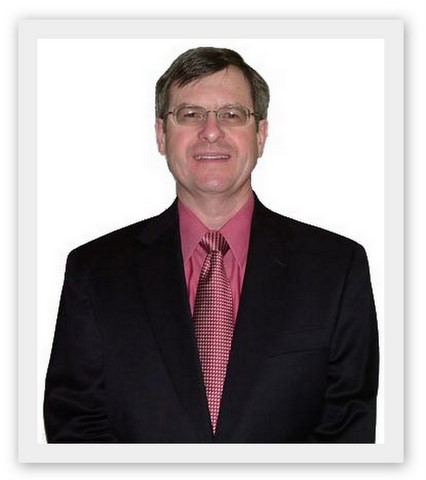
of Theological Studies degree
through new Internet-based
program
For Pratt resident David Borho, delving into his first lesson that will eventually lead to a Master’s of Theological Studies (MTS) degree was as simple as turning on his home computer.
Then the real work began.
Wichita-based Newman University has teamed with the Diocese of Dodge City to present the MTS degree curriculum through a new, Internet-based program, allowing students to take classes from the comfort of their home. (This is different than the Interactive Television Network, also used in partnership with Newman, which requires students to take classes from one of 10 sites throughout the diocese.)
According to Borho, who is one of two southwest Kansas residents who enrolled in the program, the classes are “very intense and very stimulating.”
'Immigrant bashing’ is nothing new
to America, Bishop Farrell laments
Dallas, Texas, Aug 5, 2015 / 12:04 am (CNA/EWTN News) - The recent wave of anti-immigrant sentiment from public figures is nothing new to American history, Bishop Kevin Farrell of Dallas said in his column on Friday.
“The ghost of Nativism again prowls our land. The vilifiers and the vilified are different, but the script is the same,” he said in his July 31 column.
Catholics in particular should remember that “we ‘were once aliens residing in the land’ — not of Egypt but of America,” he said referring to the way Catholic belief was portrayed as subversive to American democracy.
Barred from holding public office and practicing the faith openly, Catholics were treated as second-class citizens who did not deserve the full rights of American citizenship.
However, it wasn’t only religion that raised the suspicion of nativist groups such as the Know Nothings and the Ku Klux Klan, he said; racial minorities such as the Chinese, Eastern Europeans, Italians, and Irish were also regarded as a threat to America.
Rather than being treated as equals in America, these religious and racial minorities “were vilified as sub-human, ne’er-do-wells and drunkards incapable of productive citizenship.”
Today this same “fear and suspicion” of “the others” is behind what the bishop calls the recent trend of “immigrant bashing.”
Bishop Farrell said Catholics in particular should remember the passage from Exodus in which the Israelites are told, “You shall not oppress or afflict a resident alien, for you were once aliens residing in the land of Egypt.”
Last week Cardinal Timothy Dolan of New York challenged GOP presidential candidate Donald Trump over his remarks about immigration, in which he said, “the U.S. has become a dumping ground for everybody else's problems. And these aren't the best and the finest.”
Cardinal Dolan blasted Trump for his comments, saying that this rhetoric is proof that the bigotry of nativism is alive and well in America.
“I take seriously the Bible’s teaching that we are to welcome the stranger, one of the most frequently mentioned moral imperatives in both the Old and New Testament,” Cardinal Dolan said.
The cardinal then pointed to two attitudes toward immigrants described by various American historians, the first being the nativists.
These people “sadly… (view) the unwashed, ignorant, bothersome brood as criminals and misfits who threaten ‘pure America,’ and are toxic to everything decent in the United States.”
However, the second, “more enlightened and patriotic” approach sees the immigrant as a gift to the nation, realizing that Native Americans are the only citizens whose ancestors were not immigrants.
The second group still recognizes the need for border control, fair regulation and prudent policies, but “we are wise to consider the immigrant as good for our beloved nation,” the cardinal said.
Priests continue two-year ‘journey’
to become better leaders, shepherds
Several priests from the Diocese of Dodge City joined with priests from the Diocese of Salina for the most recent “Good Leaders Good Shepherds” sessions, held in Great Bend Oct. 20-22.
The two-year program began on March 24. Through a series of classes occurring almost monthly through October 2010 -- some one-day, others requiring overnight stays in Hays or Great Bend – participants are taught how to be a better priests, better shepherds to their flock, and better leaders to their people.
Mothers lash back at forced vaccines,
'inhumane' conditions in detention centers
By Matt Hadro
Washington D.C., Aug 4, 2015 / 03:57 pm (CNA/EWTN News) - Ten migrant mothers have filed a complaint with the Department of Homeland Security over what they describe as serious neglect and poor treatment at family detention centers.
“The overarching issue here is that you have traumatized women and children, and that detention I think is increasing the trauma and the negative physical and mental health effects that come with that, coupled with a health service that is not capable of providing for the needs of these women,” said Jeanne Atkinson, executive director of the Catholic Legal Immigration Network (CLINIC).
CLINIC was one of six organizations that filed the complaint on the mothers’ behalf.
The complaint alleges that migrant mothers received substandard care while at three family detention centers, two of them in Texas and one in Pennsylvania. They complained of “inadequate access to and quality of care, a lack of opportunity for informed consent, inadequate oversight and accountability, and questionable medical ethics.”
Several complaints said that mothers were told by attendants to just “drink more water” to treat ailments such as broken bones, vomiting after surgery, and fainting spells. They reported waits as long as 14 hours at a time to receive medical care.
Children were allegedly vaccinated in the middle of the night with the mothers unaware of what the vaccine was. If their child had already received that vaccine and they tried to stop the caregivers, they were ignored, the complaint said.
In one case, 250 migrant children reportedly received an adult dose of the Hepatitis-A vaccine.
“Further, the manner in which these vaccines were administered during the night without advance notice or informed consent by the mothers raises serious ethical issues,” the letter stated.
In another case that Atkinson mentioned, a psychologist ordered a mother, who was suicidal, to keep her child in the room during a session even though the mother wanted privacy. The order made it clear that it was “not meaningful treatment” being offered, Atkinson said.
The “rampant issues of substandard care” are just more evidence of the “inhumanity” of the detention centers for migrants, she continued.
“There is no humane way to imprison families,” Atkinson told CNA. “The Church is very strong in talking about how we treat newcomers, how we treat imprisoned people.”
The federal detention centers opened in 2014 to deal with the influx of around 60,000 migrant families from Central America in the summer and fall months.
Many of the migrants were women and children, fleeing violence, death threats, gang recruitment, or rape back home in countries with some of the worst murder rates in the world – Honduras, Guatemala, and El Salvador. Many of the children reported being trafficked by smugglers and sexually abused on their journey to the U.S.
The detention centers originally had capacity in the hundreds but quickly expanded into the thousands. Atkinson said the total number of detainees is “really fluid” but was at 1,700 at the last estimate, held in three facilities in Berks, Pennsylvania; Dilley, Texas; and Karnes, Texas.
U.S. Bishops have spoken out against the detention centers. The chair of the bishops’ Committee on Migration, Auxiliary Bishop Eusebio Elizondo of Seattle, said the policy is “unnecessary, inhumane, and unworthy of our nation” in a July 27 statement.
“There are ways to create a humane system and also ensure that immigrants are complying with the law,” Bishop Nicholas DiMarzio of Brooklyn, New York, said in May. “But we have created a detention industry in this country which preys upon the vulnerability of our fellow human beings, the vast majority of whom are not criminals.”
On July 24, a federal district court in California had ordered the Obama administration to release detained children in accord with the Flores v. Reno settlement. The children should be released or at least held in the “least restrictive setting,” and their parents should be released from detention with them to prevent the separation of families, the court ruled.
“There are humane alternatives to detention which would ensure that families avail themselves of the court process but also are able to access legal and social service assistance,” Bishop Elizondo responded to the decision.
What would alternatives to detention centers look like? First, the administration could “just release” migrant mothers and children to families and friends in the U.S., Atkinson said.
The migrants could also receive legal help, she added, “so that they understand their rights, they understand their obligations, and they can make a claim for the relief to which we think many are entitled.”
As a secondary and “limited” measure, the migrants could be sent to “community-based” centers where they might receive education, legal counsel, therapy, and assistance settling in the community. The U.S. Bishops’ Conference has begun a “community-based” alternative, along with Lutheran churches, she said.
Knights of Columbus unveil new campaign
to aid Middle East Christians
New Haven, Conn., Jul 27, 2015 / 08:04 pm (CNA) - As Christians continue to face unprecedented persecution – especially in the Middle East – the Knights of Columbus have announced a new campaign to send humanitarian aid and raise awareness about their plight.
“Pope Francis has urged the international community to take action to help Christians in the Middle East, and as an organization that has long supported victims of religious persecution, the Knights of Columbus is responding by asking our own members, and the public at large, to help us save the lives of people who are being persecuted simply because of their Christian faith,” Supreme Knight Carl Anderson said in a July 24 press release.
The details of the new program will be announced at an Aug. 4-6 international convention in Philadelphia, but for now, a television commercial has begun airing nationally to raise awareness about the plight of Christians in the Middle East.
The Knights launched their Christian Refugee Relief Fund last August with a $1 million matching fund, but the need for support still remains great today. To date, the organization and its members have given over $3 million in support of the cause.
In her July 22 article for The New York Times Magazine, “Is This The End of Christianity in the Middle East?” Eliza Griswold cited a Pew study which said that Christians are now facing more persecution “than at any time since their early history.”
Anderson voiced his concern over the lack of attention given to the issue saying, “Christians in the Middle East are facing a dire situation – and even extinction – while the response from the international community has been woefully inadequate.”
Those who wish to help the Knights of Columbus in providing assistance to persecuted Christians can make a donation on their website, christiansatrisk.org or send a check or money order payable to Knights of Columbus Charities at P.O. Box 1966, New Haven, CT 06509-1966. The memo portion should indicate that the check is for Christian Refugee Relief.
Sunflower Community Action; 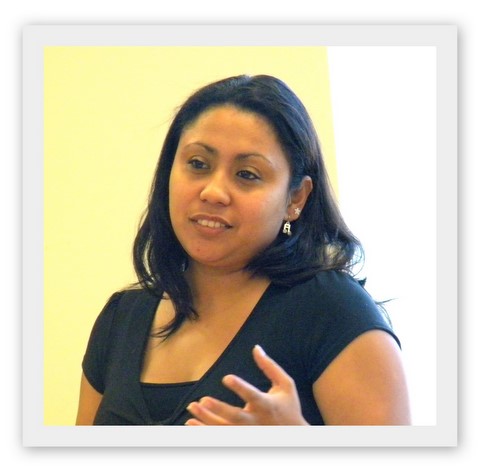
helping people help
themselves
Maria Arteaga has her work cut out for her.
In August, Arteaga was given the momentous task of becoming the sole community organizer in Southwest Kansas for Sunflower Community Action, a Garden City-based organization designed to help people help themselves.
In listening to her speak, it’s quickly apparent how the collection of the Catholic Campaign for Human Development (see Page 12) will help the organization, which was initiated in Garden City through the support of Catholic Social Service in the Diocese of Dodge City.
“We are a grass roots organization,” she said of Sunflower, which also has offices in Wichita. “We go from place to place, door to door, to find real issues from the people who are living them. We try to get a group together and bring out the leadership skills of every single person so that their voice can be heard.”
The 'Francis effect' takes hold at a notorious Bolivian prison
By Alvaro de Juana
La Paz, Bolivia, Jul 28, 2015 / 04:39 pm (CNA/EWTN News) - Pope Francis’ July 10 visit to a prison in Bolivia was just one of several dozen events over the course of the recent papal trip to Latin America.
But for many of the inmates and workers present at the notorious Palmasola Prison in Santa Cruz de la Sierra, Bolivia, the Pope’s visit was a turning point and an invitation to make a new start.
“The man who is standing before you is one who has been forgiven. A man who was and is saved from his many sins,” Pope Francis told the prisoners that day.
Father Leonardo da Silva Costa, the National Coordinator for Prison Ministry in Bolivia, said many of the prisoners took the Pope’s words to heart.
“It was a thrill to see him at ease and speaking his native language. I was moved by his expression when he saw the statue of the Virgin of Copacabana on the way between the women’s section, the prison administration offices, and the men’s section,” the priest recounted to CNA.
After the Pope departed, Fr. Da Silva – who was in charge of the visit – said he noted that the inmates were talking among themselves. “They wanted to tell about what they heard, what moved them, how they felt, what they were thinking and how life would be going forward.”
“People cried together, and their eyes were filled with joy and hope. Some of them wondered how it could be possible that the representative of Christ on earth would come to see them,” the priest explained. “The police, the security guards, came away from the meeting with a joy that was unusual, brotherly, a smile unlike any other…it was a revolution of love. Even non-Catholics were saying, ‘What a grace!’”
Even so, it was not an easy encounter. Three of the prisoners offered their testimony to the Pope, speaking about the rough prison conditions and the government’s prison policy.
Palmasola Prison is a maximum security facility notorious for its corruption, bribery and gang activity. Security guards are stationed only outside the facility; the inside is a “prison village,” run by gangs of prisoners themselves. Might makes right for the 3,000 inmates who are able to move about freely in the facility. Securing one’s own prison cell costs money, as do blankets, decent food, and protection from other prisoners. Two years ago, a riot killed more than 30 people, most of them burned to death.
“This is real life in the prisons in Bolivia. I even think they really toned down their complaints. They didn’t tell everything,” Fr. Da Silva said of the testimonies.
“All the authorities that have the power to manage, administer, decide upon and implement prison policy in the whole country were there,” he continued. “They didn’t hear anything new or surprising. It was a cry for help, aid, relief, to the point of desperation, taking advantage of the Pope’s presence to bring about structural change.”
While those in the prison are separated from society, “they haven’t lost their ability to analyze reality, to provide thoughtful contributions, knowing prison conditions from the inside with the goal of improving them,” the priest said.
Asked whether they were afraid of reprisals or if they had received any warning, he replied, “I still believe in democracy, in good intentions, in an ethical conscience, in morality and in the recovery of the values that are dormant in everyone. They asked the Pope to ‘be their spokesman and to make known the constant violations of fundamental rights.’”
Now, a few weeks after the Pope’s visit, Fr. Da Silva said, “it’s expected that there will be an evaluation of everything that was organized, articulated and experienced with the representatives of the inmates, the authorities and the Church.”
He voiced hope that all of those present for the encounter with the Pope will not merely return to their everyday routine.
“We want to get the most we can out of this pastoral visit, reducing the bars, going forward with restorative justice, reducing the walls, and closing up the open wounds,” he explained. “(W)hat we have to do now is publish the Pope’s messages, re-read them, listen to them over and over again, pray, give thanks, form committees and working groups.”
Concerning possible changes in the country’s prison ministry, Fr. Da Silva said, “We have to keep on listening, show them love, and set in motion actions to improve the system and the lives of the prisoners.”
This requires “pastoral ministry with a prophetic visibility, involving comprehensive evangelization, proclamation, condemnation (of evil), witness, and commitment, with the feelings, thoughts and actions of Jesus Christ.”
Additionally, “we’re going to need to help the authorities respond with greater sensitivity to the prison problem, revising the inconsistencies in legislation, addressing social inequalities, poverty and violence, and working on prevention, not just rehabilitation,” he said.
Wichita author balances faith and
marketing; shares devotion to Mary
Editor's Note: For more information, see the ad on Page 10 of Register, above.
Charlie Traffas is president, co-owner and operator of Chart Marketing, Inc., an advertising agency, marketing firm and publishing company that he co-owns with his wife, Brenda. Both are members of St. Francis of Assisi Parish in Wichita.
It wasn’t until after he and his wife lost their youngest son, Dusty, in a freak and tragic accident on Nov. 4, 2001, that he thought about writing a book. Dusty was killed as he veered to miss a motor cyclist who had lost control of his bike, riding in front of him, in a Toys for Tots’ parade – an effort for which he had volunteered. He was thrown from his bike, hitting his head on a bridge abutment and was killed instantly.
Cardinal O’Malley: Planned Parenthood’s Work
Reflects ‘Throwaway Culture’ Decried by Pope Francis
July 29, 2015
WASHINGTON—Cardinal Seán O’Malley, OFM Cap., archbishop of Boston and chairman of the Committee on Pro-Life Activities of the U.S. Conference of Catholic Bishops (USCCB), responded, July 29, to recent videos showing leaders from Planned Parenthood discussing the provision of fetal organs, tissues, and body parts from their abortion clinics.
Pope Francis has called abortion the product of a “widespread mentality of profit, the throwaway culture, which has today enslaved the hearts and minds of so many.” The recent news stories concerning Planned Parenthood direct our attention to two larger issues involving many institutions in our society. The first is abortion itself: a direct attack on human life in its most vulnerable condition. The second is the now standard practice of obtaining fetal organs and tissues though abortion. Both actions fail to respect the humanity and dignity of human life. This fact should be the center of attention in the present public controversy.
If the Planned Parenthood news coverage has caused anyone to experience revived trauma from their own involvement in abortion, be assured that any and all persons will be welcomed with compassion and assistance though the Church’s post-abortion healing ministry, Project Rachel. If you or someone you know would like confidential, nonjudgmental help, please visit www.projectrachel.com.